

Trivia and fun facts about Niigata Prefecture: history, industries, and even some surprising national number ones?

In this article, we’ll be sharing lots of fun facts about Niigata Prefecture! From industry, agriculture, and history and culture to more casual topics like local gourmet foods, we’ve gathered a wide range of trivia related to Niigata.
We’ll also provide explanations for each piece of trivia throughout the article.
Please use this as a reference and deepen your knowledge! We think there will be things that even residents of Niigata will learn for the first time here, not just those from outside the prefecture—so please enjoy reading along.
- [For Elementary School Students] Niigata Prefecture Local Quiz Collection
- Trivia & Fun Facts About Gifu Prefecture
- So interesting you’ll want to tell someone! December Trivia & Fun Facts Special
- A quiz for elementary school students about Japan’s number ones. Guess the “most ___” things in Japan!
- Trivia about Tokyo: A collection of fun facts useful for sightseeing
- Fun facts you’ll want to share! A special feature on November trivia and tidbits
- Trivia you think you know but surprisingly don’t? August trivia and fun facts quiz!
- A classic song that celebrates Niigata. The enduring spirit of our hometown passed down through song.
- Trivia & Fun Facts about Miyazaki Prefecture
- [Challenge] Stimulate your intellectual curiosity with a general knowledge quiz you might not know!
- Trivia quiz about schools: a roundup of fun facts you’ll want to brag about
- Fun facts you’ll want to share! January trivia and tidbits special
- A quiz of fun trivia: bite-sized knowledge that leads to new insights.
Trivia and fun facts about Niigata Prefecture: history, industries, and some surprising national number ones? (1–10)
At the Katakai Festival in Niigata Prefecture, the world’s largest launched fireworks are set off.
Fireworks are a quintessential symbol of summer.
At the Katakai Festival held in Ojiya City, Niigata Prefecture, the world’s largest fireworks—recognized by Guinness—are launched.
The Katakai Festival is also known as the Fireworks Festival.
It is a traditional event that has continued for 400 years since the mid-Edo period.
The world-class, perfectly spherical four-shaku shell expands to a diameter of about 800 meters when it bursts.
The fireworks are offerings to Asahara Shrine in Ojiya, made by individuals and companies.
They are launched with prayers and wishes—such as for health, memorials for the deceased, and celebrations of children’s births—and dedicated as offerings.

Niigata Prefecture is the birthplace of Nishikigoi (koi carp).
Named after its beautiful patterns that resemble luxurious silk textiles, Nishikigoi (koi carp) captivate enthusiasts not only in Japan but around the world.
In fact, they originated in Niigata Prefecture! Their history dates back to the Edo period, and the area around present-day Ojiya and Nagaoka is considered the birthplace.
It’s said that breeding began by cultivating koi that were natural mutations from ordinary carp.
Koi farming continued to flourish within Niigata, and by the early Showa era they were even being exported overseas.
Today, there are said to be as many as 130 varieties of Nishikigoi.

“Hegi” in hegi soba refers to a wooden serving tray.
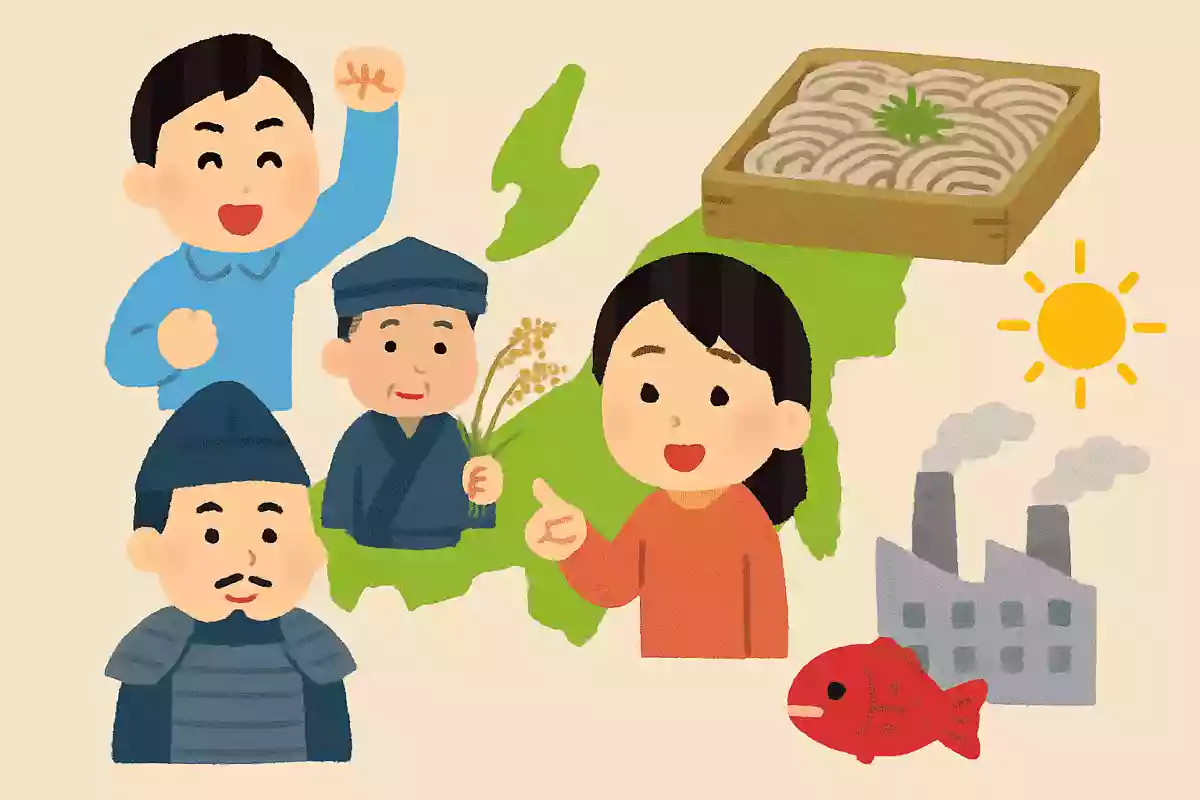
Hegisoba, which has even been featured on television, has recently become well-known throughout Japan.
Hegisoba is a local specialty of Niigata Prefecture; it uses funori seaweed as a binding agent for the buckwheat noodles, giving them a distinctive flavor and a smooth, firm, springy texture.
Do you know what “hegi” means in hegisoba? In fact, “hegi” refers to a wooden serving tray made from peeled wooden boards.
It’s said that the verb haku (to peel) shifted in pronunciation to hegu.
These trays were originally used at sericulture sites, which were once widespread in Japan, and were repurposed for serving soba.
The tray, made from peeled wooden boards, is piled with enough soba for three to four people.
It’s common for everyone to gather around and share hegisoba together.
Trivia & Fun Facts about Niigata Prefecture: History, Industry, and Some Surprising Nation-Leading Facts? (11–20)
There is no city called “Tsubame-Sanjō City.”
There is a Shinkansen station called Tsubame-Sanjo Station in Niigata Prefecture.
You might wonder, “Is there a city called Tsubame-Sanjo?” However, there is no such city in Niigata.
Tsubame City and Sanjo City are said to have been in a rivalrous relationship for over 300 years.
In the past, Tsubame was a town of craftsmen and Sanjo was a town of merchants; goods made in Tsubame were sold in Sanjo.
However, since Sanjo also produced handicrafts and sold Tsubame’s goods at low prices, relations apparently deteriorated.
When the name of the Shinkansen station was decided, both cities voiced their opinions, and it became Tsubame-Sanjo Station.
Incidentally, the name of the highway interchange, which was built before the Shinkansen, is the reverse: Sanjo-Tsubame Interchange.
The model for Niigata Prefecture’s mascot character, Mr. Lerch, is a real person.
Mr.
Lerch, the mascot character of Niigata Prefecture.
With his distinctive yellow hat and outfit, he has facial features that evoke a foreigner.
He is said to be involved in promoting Niigata’s ski resorts and tourist attractions.
Although he’s a mascot character, he gives off a somewhat surreal vibe, doesn’t he? In fact, Mr.
Lerch is modeled after a foreign person.
The model is Mr.
Lecher (Lehr), a soldier of the Austro-Hungarian Empire who taught skiing in Joetsu City, Niigata.
Because he was the first to teach skiing in Japan, the mascot Mr.
Lerch also has the nickname “Japan’s Original Ski Man.”
There are five types of flavors in Niigata ramen.
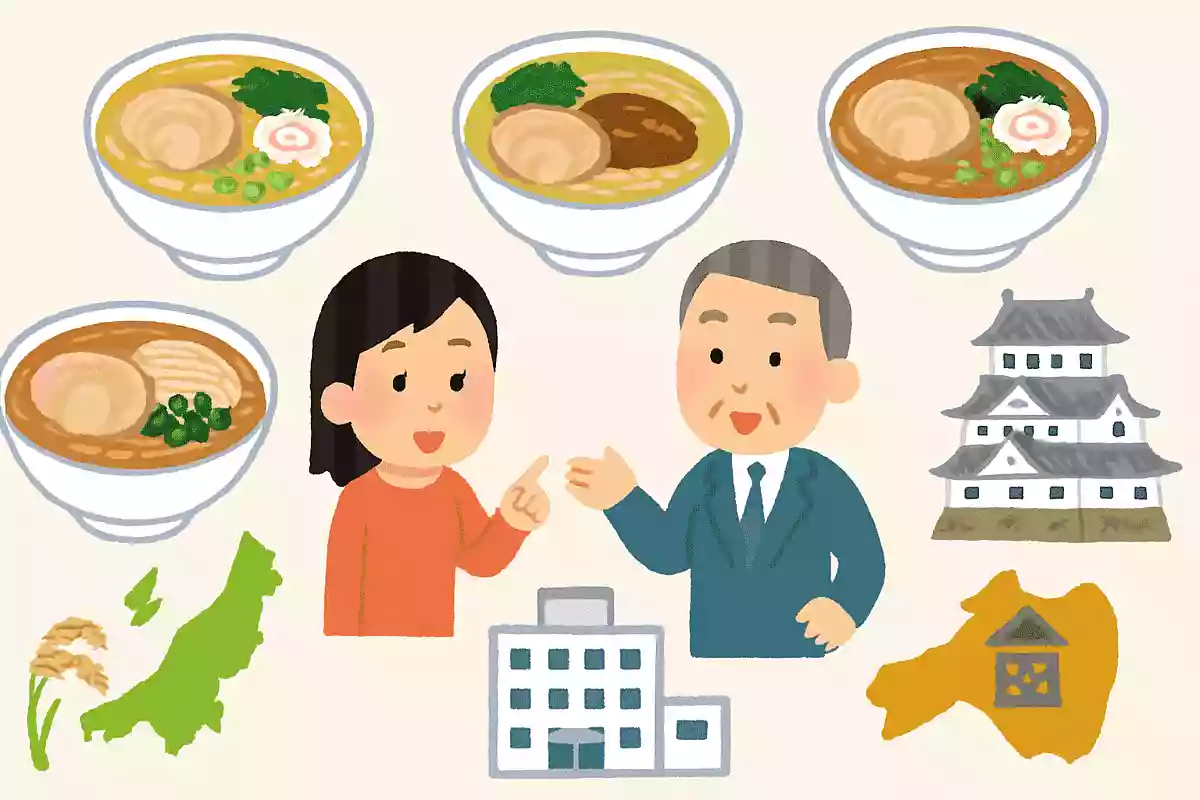
When you think of Niigata, you might picture rice and seafood, but did you know it’s also a fiercely competitive ramen hotspot? Niigata Prefecture is home to many delicious ramen shops, from classic styles to bowls with unique character.
There are five distinct ramen styles in Niigata, each reflecting the history and local culture of the area where it’s served.
For example, Tsubame City’s Tsubame back-fat ramen is known for adding pork back fat to keep the soup from cooling during frequent factory deliveries, and the noodles are made thick to prevent them from getting soggy.
Recently, beyond these five types, new styles of ramen have also been gaining attention.
If you have the chance, be sure to savor Niigata’s ever-evolving ramen scene.
In Niigata Prefecture, there is a strawberry-flavored ice cream that contains apple juice.
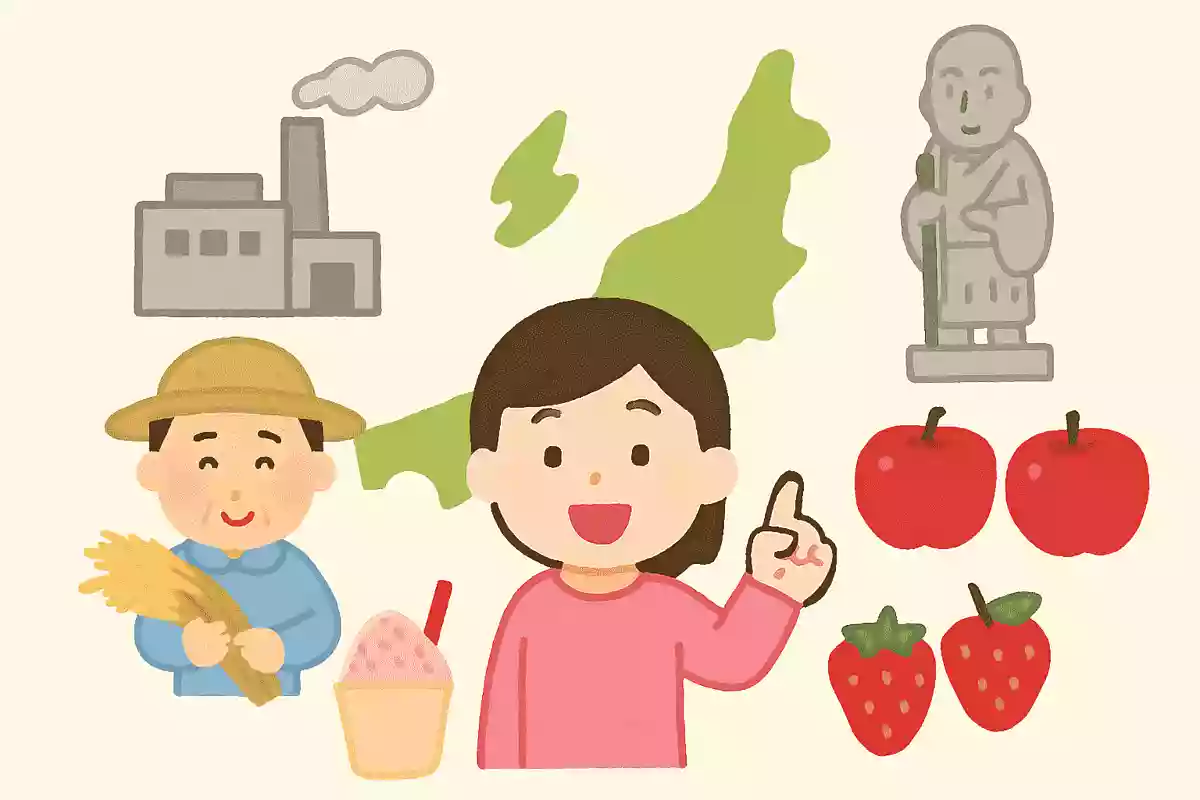
Have you heard of Momotarō Ice? From the name, you might imagine a peach-flavored ice pop, but the Momotarō Ice sold in Niigata Prefecture is strawberry-flavored.
It even has a hint of apple added.
You may be wondering, “Where’s the peach element?” In fact, at festivals in Niigata during the early Shōwa era, red-syrup shaved ice treats were sold at stalls and booths.
These frozen treats were shaped like an upside-down heart, which people affectionately called “peach-shaped.” Over time, stick-based frozen treats came to be called “Momotarō.” Around the 1940s–50s, a company in Niigata commercialized the product, and it became the strawberry-flavored Momotarō Ice known today.