


We’re introducing a variety of ways to play with ohajiki.
Like beanbags and marbles, ohajiki have long been popular as a traditional toy and pastime.
You’re probably familiar with the classic game where you flick the pieces with your finger to make them collide.
This time, we’ve gathered not only flicking games, but also fun ways to play that don’t involve flicking.
If you want to play with ohajiki or learn new ways to use them, be sure to check this out.
It’s packed with the many charming qualities of ohajiki!
- [Elementary School] Quick and Easy! Indoor Recreational Activities Perfect for Lower Grades
- How to play with marbles
- Old-time play: fun children's games
- [Card Game] Fun! A Guide to Playing Hanafuda
- Fun games using rubber bands. Recreational games.
- [For Adults] Fun Hand-Clapping Games: A Curated Selection of Ideas Great for Brain Training Too!
- Recommended for upper elementary grades! Exciting indoor recreation and games
- [Simple Games] Recommended Indoor Recreational Activities for Adults
- Fun for kids and adults alike! A collection of DIY beanbag (otedama) ideas
- Enjoy traditional games with your kids! A collection of DIY stilts (made from bamboo) ideas
- Nostalgic games that were popular when we were kids
- Kids and adults alike will be captivated! A collection of DIY marble run ideas
- New Year’s Games: Traditional Play and Fun Activities That Excite Everyone from Kids to Adults
How to Play Ohajiki (1–10)
Ohajiki Soccer

Ohajiki soccer enjoys a quiet popularity, with tournaments held around the world! In this game, you treat sets of ohajiki pieces as a team of 11 soccer players and flick them to roll the ball.
Since the detailed rules are quite similar to soccer, it might be a fun alternative to try ohajiki soccer on rainy days when you can’t play outside.
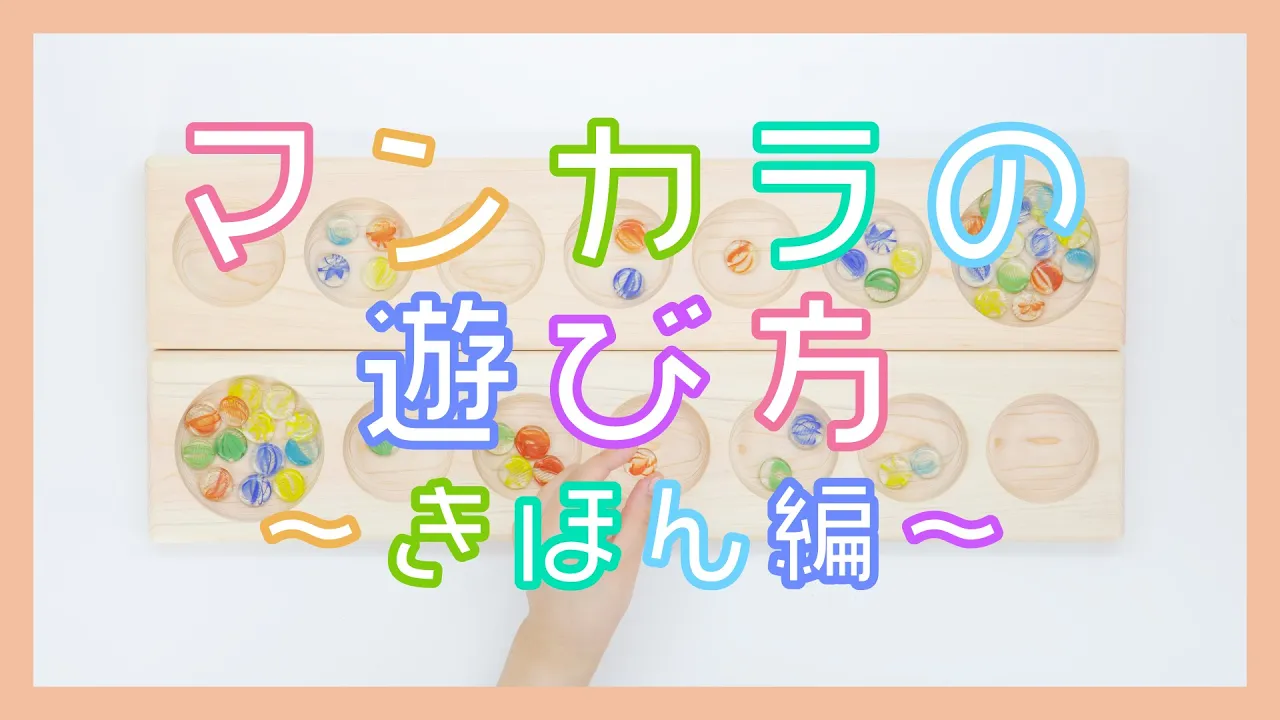
Mancala

Mancala is a game you play while using your head.
You place marbles in the small pits, then choose one pit, pick up all the marbles from it, and drop them one by one into the neighboring pits in a clockwise direction.
If the last marble lands in the big pit, you get to choose another small pit and repeat.
If the last marble does not land in the big pit, your turn ends and it’s the other player’s turn.
You win if you can move all the marbles from your side into the big pit.

Stacking Game
It’s a very simple game: just stack up the little counters.
It sounds easy, but the counters are small and not perfectly flat—they’re slightly curved—so stacking a lot of them is surprisingly tricky.
Kids with smaller hands might even be better at it.
Let’s see who can build the tallest stack!
Ohajiki Shoot

Prepare a piece of backing board such as cardboard and attach a small box to one end to serve as the goal.
Then flick marbles (ohajiki) to see if you can get them into the goal—this is the “Ohajiki Shoot.” Decide on the number of flicks allowed and compete to see how many you can score.
You can also add your own rules to make it more exciting, such as deducting points if a piece goes out of bounds.
Sound play with ohajiki

Let’s make maracas using bottle caps and empty plastic bottles! It’s easy: make two bottles by putting bottle caps into empty plastic bottles, tie the two bottles together with a string, and secure the caps firmly with tape so they won’t come off—that’s it! The colorful bottle caps will make beautiful maracas.
They’re great as toys for kids and also as party accessories.
OHajiki Curling

Let’s try a mini curling game on a tabletop—“ohajiki curling”! Draw a circle on a sheet of paper and write the point values inside it.
Tape the paper to the desk with cellophane tape and start the game! Line up each player’s ohajiki (game pieces) at opposite edges of the paper and decide who goes first.
Flick your pieces aiming for the higher point areas.
You can also hit your own pieces to nudge them into higher-scoring zones or knock your opponent’s pieces out of the circle.
Have fun!
Pogs hitting game

Here’s the basic way to play Ohajiki.
Scatter the pieces randomly on a desktop, then choose two that are next to each other.
Run your finger between the two as if drawing a line on the desk.
If your finger touches any piece, you’re out and it’s the next player’s turn.
If you get your finger through cleanly, flick one piece with your finger to hit the other.
If you hit it, you succeed and those pieces become yours.
If you hit a different piece or make a mistake, you’re out and it’s the next player’s turn.