

[Elementary School] Games and Recreational Activities to Enjoy at a Forest School Camp

Forest school is a big event for elementary school children.
Some kids might already be bubbling with excitement and feeling fidgety, even though it’s still quite a while away on the calendar.
In this article, we’ve put together games and recreational activities we’d love for you to enjoy at forest school.
We’ve selected options you can enjoy outdoors and activities you can do gathered around a campfire.
Let’s all make the most of this extraordinary experience that’s different from everyday school life!
- Recommended for upper elementary grades! Exciting indoor recreation and games
- Play ideas kids can enjoy from 1st to 6th grade [indoors & outdoors]
- Recreation Popularity Rankings for Elementary School Students
- Outdoor Recreation Popularity Rankings
- Recommended outdoor recreation for junior high school students: A roundup of fun outdoor activities
- Great for field trips too! Outdoor recreation and games for elementary school kids: hands-on play
- Recommended outdoor games and recreational activities for lower elementary school children
- Get the Fun Going! Easy Classroom Games You Can Play at School: Recreational Activities for the Whole Class
- [For Kids] Exciting Class-vs-Class Games: Team Competition Activities
- [Elementary School] Indoor Games and Recreational Activities Recommended for Upper Primary Grades
- Recreation popularity rankings for junior high school students
- No worries even in the rain! Fun recreational activities you can do in the gym
- [Simple but Fun] Penalties That Hype Up Elementary School Classrooms
[Elementary School] Games and Recreational Activities to Enjoy at Camp (11–20)
Drop the Handkerchief

A classic Showa-era game.
All you need is a handkerchief, so it won’t get in the way even on a gear-heavy nature school trip.
You can play it in short breaks, so it’s worth slipping into the program! Everyone sits in a circle, and the “it” person places a handkerchief behind someone’s back.
If the person doesn’t notice, they lose; if they do notice, they chase the “it” person, and if they tag them, “it” loses.
It’s simple but fun, and suitable even for lower grades.
The lighter the handkerchief, the livelier the game, so prepare a thin one.
Orienteering
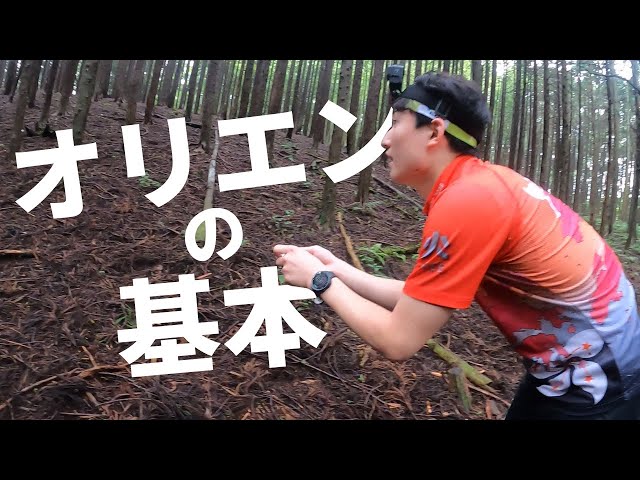
Orienteering is a sport where you use a map and compass to travel through fields and mountains, pass through checkpoints, and aim for the finish.
Some say it originated as training in the Swedish military.
Since entering unfamiliar mountains can be dangerous for elementary school children, make sure to customize the course so they can follow proper trails.
Adding a bit of a puzzle-solving element can give it a modern twist.
If everyone just races to be the fastest, the fun can sometimes be reduced, so you might consider ideas like “the team that finishes in exactly 60 minutes wins.”
Dodgebee

Have you heard of “Dodgebee”? It’s a sport like dodgeball played with a disc similar to a Frisbee.
Some of you might even say, “We play it at school!” There are detailed rules—like using a court the same size as a volleyball court and having 13 players per team—but if you’re enjoying it at a camp, all you really need is a Dodgebee disc.
Unlike a regular Frisbee, this disc is made of a very soft material, so it’s safe even if it accidentally hits someone’s face.
You can’t play when it’s very windy, so having a gymnasium makes it even better.
Gesture Game

All things considered, this gesture game has been enjoyed since the early days of television.
Even in the Reiwa era, you still see it as a segment on TV shows.
Let’s get everyone excited with a gesture game as a fun activity for outdoor school trips or around the campfire at night! Ask the class favorite to demonstrate first to warm up the crowd.
Be sure to prepare drawing paper or flip cards with the prompts written on them in advance.
The key to having fun is to choose prompts that aren’t too difficult.
Everyday things like dogs, cats, or fish work well.
Recommended for upper elementary grades.
Hand-push sumo

By the time kids reach the upper grades of elementary school, there’s quite a noticeable difference in their sizes, and that makes regular sumo a bit too imbalanced.
In that case, how about playing “hand-push sumo” instead? Surprisingly, this game can be enjoyed regardless of size differences.
It might even be trending among kids now—NHK Educational TV’s popular show “Suiensā” did a special on hand-push sumo techniques.
It could be nice to secretly teach these tips to smaller students.
Since you can play it even on rainy days, it might be a good idea to prepare a backup plan for rainy weather, like a tournament bracket!
long rope jumping

A long-rope jump (group jump rope) is an event often featured at high school sports festivals and company-wide athletic meets.
It’s really simple—everyone just jumps together—but for some reason it always gets people excited.
Maybe it’s the feeling of teamwork? All you need is a single rope and you can start right away, so it’s perfect for a quick recreational activity.
It also sounds fun to have groups—like cabin groups at camp or tent teams—compete to see who can get the most jumps.
You can do it in the gym on rainy days, too, so the weather won’t be an issue.
It’s suitable for all grade levels.
[Elementary School] Games and Recreational Activities for Enjoyment at Forest School (21–30)
Rock-Paper-Scissors Train

Rock-Paper-Scissors Train is also a recreation activity held on the first day of welcome mixers for new students or during onboarding.
It’s a game that helps people quickly break the ice even with those they don’t know, so it’s really handy for events like camp exchange programs.
The rules are simple: play rock-paper-scissors, and the loser lines up behind the winner like a train.
As you repeat the game, the line gets longer, and in the end it becomes one single train.
It’s highly recommended—even upper-grade elementary school students, who are a bit more grown up, can easily feel like kids again.