

[Elementary School] Games and Recreational Activities to Enjoy at a Forest School Camp

Forest school is a big event for elementary school children.
Some kids might already be bubbling with excitement and feeling fidgety, even though it’s still quite a while away on the calendar.
In this article, we’ve put together games and recreational activities we’d love for you to enjoy at forest school.
We’ve selected options you can enjoy outdoors and activities you can do gathered around a campfire.
Let’s all make the most of this extraordinary experience that’s different from everyday school life!
- Recommended for upper elementary grades! Exciting indoor recreation and games
- Play ideas kids can enjoy from 1st to 6th grade [indoors & outdoors]
- Recreation Popularity Rankings for Elementary School Students
- Outdoor Recreation Popularity Rankings
- Recommended outdoor recreation for junior high school students: A roundup of fun outdoor activities
- Great for field trips too! Outdoor recreation and games for elementary school kids: hands-on play
- Recommended outdoor games and recreational activities for lower elementary school children
- Get the Fun Going! Easy Classroom Games You Can Play at School: Recreational Activities for the Whole Class
- [For Kids] Exciting Class-vs-Class Games: Team Competition Activities
- [Elementary School] Indoor Games and Recreational Activities Recommended for Upper Primary Grades
- Recreation popularity rankings for junior high school students
- No worries even in the rain! Fun recreational activities you can do in the gym
- [Simple but Fun] Penalties That Hype Up Elementary School Classrooms
[Elementary School] Games and Recreational Activities for Enjoyment at Forest School (21–30)
Red Light, Green Light!

The ultimate high-tension game that brings out your inner child: “Daruma-san ga Koronda!” The rules are simple: while the tagger says “Daruma-san ga koronda” and turns around, the other players quietly move forward.
If you’re caught moving, you’re out! It’s a classic children’s game, but when adults play, things heat up fast.
A battle of stillness and motion—a psychological showdown.
It’s perfect for company recreation, too.
Sprinting in suits, and that unexpected colleague is surprisingly agile…? With nonstop laughter and surprises, this fresh take on a “stop-and-go” game will bring your team closer together.

Southern Cross Expedition

It’s an exciting theme where you become a member of the Southern Cross Expedition Team and go on a treasure hunt.
It begins when you receive a message from a teammate saying, “I found treasure on a southern island, but it’s heavy—please help.” However, communication is cut off partway through, and the story revolves around completing the remaining map.
Each member holds different pieces of information, and you can’t reach the answer unless everyone shares what they know.
The key is not to keep your own information to yourself, but to share it and work cooperatively with your teammates.
While enjoying the fun of deduction and organizing information, you also learn the importance of trusting your companions.
The very process of completing the map through repeated discussions is a stimulating theme that lets you experience a real sense of accomplishment.

[Elementary School] Games and Recreational Activities to Enjoy at Outdoor School (31–40)
You can play it in the classroom too! Haiihadon

Sit in a circle and stack your left hands in order.
Decide the order, and when someone says “Hai,” the person whose hand is at the very bottom moves it to the very top.
When they say “Iha,” the person whose hand is at the very top keeps it at the top.
When they say “Don,” the person with the bottom hand lightly taps everyone’s hands from above.
Through this game, children develop concentration, quick reactions, and a sense of unity with those around them.
It’s a game that fills the classroom with laughter even when mistakes happen and instantly livens things up.
No tools or preparation are needed, so you can start right away.
It’s recommended as a quick communication activity for class recreation or morning time.
Adults can enjoy it together, too.
Rock-Paper-Scissors Game Jump!
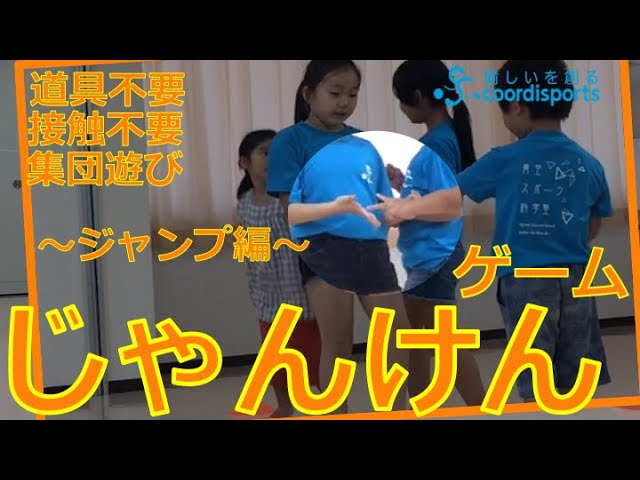
Participants split into two teams and face each other from opposite ends of the room.
When the signal to start is given, play rock-paper-scissors with a teammate; those who win move toward the opposite side by jumping.
Once you reach the other side, play rock-paper-scissors again, and repeat.
It’s a very simple game, so incorporate different types of jumps for the movement: a “rock” jump where you hop with both feet together, then a “scissors” jump that’s like practicing skipping, and next a “paper” jump with your legs spread wide.
It feels like you’re evolving as you go, and it’s a lot of fun.

Have fun with variations! The ‘Wild Beast Hunting Game’
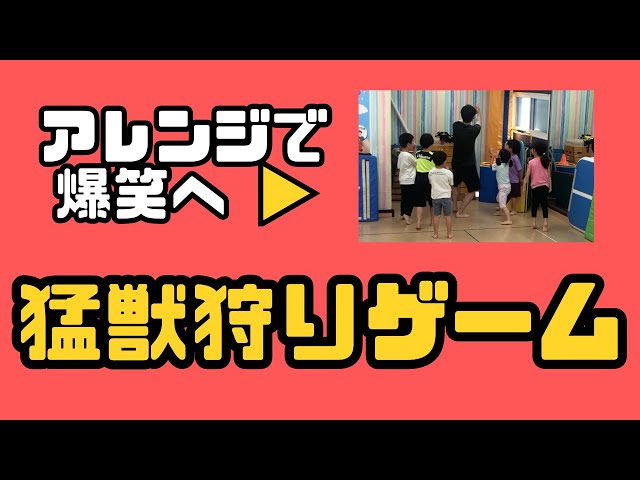
In the classic Beast Hunt game, you form groups based on the number of letters in the beast’s name, but this is a remixed version! It starts the same with the leader’s call, “Let’s go hunt beasts!” followed by everyone shouting out weapon names in a call-and-response.
From there, the leader and the children head out to slay the beasts.
There are small beasts and big ones, so choose your weapons as you go and take them down.
The adult acting as the leader will need some performance skills, but kids love pretend battles.
Let your inner child out and have fun together!
Jump, everyone!

It’s a game where everyone forms a circle, holds hands, and jumps in different directions.
Jumping helps develop concentration and a sense of balance.
By moving while listening to the teacher’s instructions, children can build their listening skills and their ability to think about how to move.
When calling out, speak clearly, loudly, and energetically.
Let’s enjoy jump play together—moving our heads as we jump and trying things like hopping on one foot or jumping with both feet.

Clap-Clap Game
@mimasakadaigaku A clapping game you can use for class activities! It’s super easy, so give it a try!#Mimasaka University#Pachi-Pachi GameClass party/activity
♬ Pretty and fun Marimba song – Azuline
Here are six quick games you can enjoy in short spare moments: “Pat-and-Rub,” where your left and right hands do different movements; the “Rock-Paper-Scissors Game,” where the right hand always has to win; and the “Command Game,” in which you move according to a leader’s instructions, among others.
All of these can be played indoors and work for small to large groups, so everyone can have fun together.
The simple rules make them suitable for children from the early elementary grades, and it’s great that they help develop motor skills.
Because the rules are simple, you can also add variations to adjust the difficulty.