

[For Intermediate Players] Challenge Yourself! Recommended Masterpieces That Shine at Piano Recitals


A recital you perform in after you’ve been playing piano for a good while.
Based on having participated a few times already, this may be the time when ideals for your recital piece start to take shape—like “I want to play that piece I heard last year!” or “I’ve played a lot of slow, relaxed pieces so far, but I want to try something up-tempo!”
In this article, we’ll introduce piano pieces that really shine on stage and are perfect for players who have cleared the beginner level and are moving into the intermediate range.
We hope this helps you choose your next recital piece as you compare options with your own ideals in mind.
- [Intermediate Level] Cool Piano Pieces You Can Play [Great for Recitals Too]
- [Piano Recital] Perfect Pieces for Middle Schoolers! A Curated Selection of Impressive, Audience-Pleasing Works
- [For Adults] Recommended for Piano Recitals! A Curated Selection of Impressively Sounding Masterpieces
- [Intermediate Level] A curated selection of piano masterpieces featuring strikingly brilliant melodies!
- Piano Masterpieces: Surprisingly Easy Despite Sounding Difficult!? A Curated Selection Perfect for Recitals
- [For Advanced Players] A Curated Selection of Classical Masterpieces to Tackle at Piano Recitals
- [Piano Recital] Recommended for Boys! A Curated Selection of Cool, Impressive, and Popular Pieces
- [For Elementary School Students] Brilliant, Showy Masterpieces That Sound Impressive at Piano Recitals
- [Intermediate] Recommended Piano Duets | A Curated Selection of Cool and Dazzling Pieces
- Beginner to Intermediate: Chopin pieces with relatively low difficulty. Recommended works by Chopin.
- [Low Difficulty] Recommended Tchaikovsky Piano Pieces [Intermediate]
- [Piano Recital] Recommended for Middle Schoolers! A Comprehensive Introduction to Classical Masterpieces
- For Advanced Players: Showstopping Classics to Play at a Piano Recital
[For Intermediate Players] Challenge! Recommended Masterpieces That Sound Impressive at Piano Recitals (21–30)
Lyric Pieces, Book VIII, Op. 65, No. 6: “Wedding Day at Troldhaugen”Edvard Hagerup Grieg

Grieg’s masterpiece, Lyric Pieces Book VIII, Op.
65 No.
6 “Wedding Day at Troldhaugen.” It’s said to embody Grieg’s characteristic style and is widely beloved among performers.
As for difficulty, it’s roughly on par with the latter half of the sonatina level, or perhaps slightly more challenging.
In the passage where five-note groupings appear in sixteenth notes, the score marks triple forte, so you must produce considerable power and impact.
This section is quite difficult, so I recommend focusing your practice on it.

Fantasy Pieces: Prelude in C-sharp minor, Op. 3 No. 2 “The Bell”Sergei Rakhmaninov
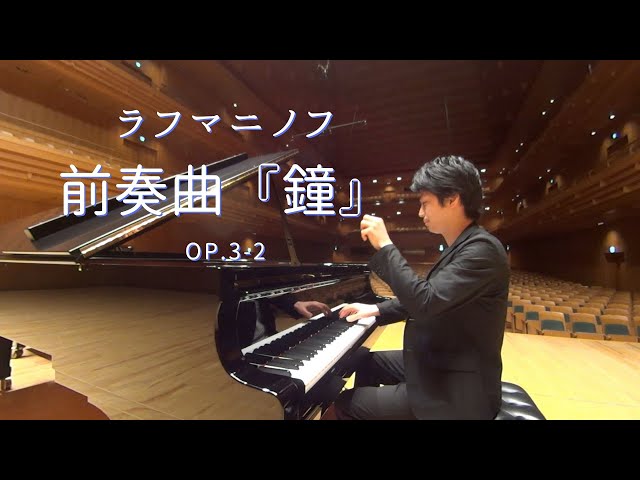
Sergei Rachmaninoff, a Russian composer who was hugely active in the 1890s.
His Prelude in C-sharp minor, Op.
3 No.
2 from the Morceaux de fantaisie, known as “The Bells,” is among his most famous works.
Its difficulty is on the higher end of the intermediate level, though for some players it can rise to an advanced level.
Rachmaninoff had very large hands, and this piece requires the ability to play tenths comfortably.
Conveying the sound of bells on the piano is also challenging, and with its abundance of octaves, the piece is difficult overall.
For those well-versed in piano, however, it makes for a highly impressive listen.
[For Intermediate Players] Challenge! Recommended Masterpieces That Sound Impressive at Piano Recitals (31–40)
Five Pieces (Tree Suite), Op. 75: No. 5 “The Spruce”Jean Sibelius

A work by Jean Sibelius, Finland’s celebrated national composer.
Its serene beauty evokes the nature of the Nordic countries.
Composed in 1914, this piece concludes a suite of five works themed around trees.
The delicately rendered melody seems to depict a fir tree standing quietly in a snowy landscape.
It is popular among adult piano learners and is often chosen as an encore piece for recitals and concerts.
As you play each note with care, why not let your thoughts wander to the grand natural landscapes of the North?
Nocturne No. 2, Op. 9-2Frederic Chopin

Frederic Chopin’s masterpiece Nocturne No.
2, Op.
9-2 purifies the heart with its beautiful melody.
With its gentle rhythm and intricately crafted shifts in melody, it’s an ideal piece for intermediate pianists who want to refine their expressiveness and take the next step.
To highlight the changes in melody and expression, it is important to play the left-hand accompaniment softly.
While keeping an eye on the balance between hands, aim for a soft, warm performance so the music doesn’t become mechanical.

Piano Sonata in E-flat major, Hob. XVI:52, 1st movementFranz Joseph Haydn

Franz Joseph Haydn, a master of Classical-era music, composed the Piano Sonata in E-flat major in his later years.
The first movement opens with powerful chords and unfolds into a second theme distinguished by light, graceful melodies.
Its energetic, vibrant character seems to reflect Haydn’s joy and fulfillment in life.
Written in London in 1794, this work is a masterpiece that showcases Haydn’s mature compositional technique.
Constant shifts in dynamics impart a sense of lively vitality.
With its rich musicality, the piece continues to be cherished by many performers and audiences alike.
12 Variations on “Ah, vous dirai-je, Maman” (Twinkle, Twinkle, Little Star Variations)Wolfgang Amadeus Mozart

Some of you might be thinking, “Isn’t ‘Twinkle, Twinkle, Little Star’ way too easy?” Not so fast! It’s true that simple arrangements combining the melody with a minimal left-hand part appear in almost every beginner piano method book.
However, Wolfgang Amadeus Mozart’s set of variations—commonly known as the ‘Twinkle, Twinkle Little Star Variations’—is a highly sophisticated work packed with techniques that even intermediate players find challenging.
Enjoy performing it as the familiar tune gradually transforms into arrangements that demand advanced technique and expressive nuance!
Nocturne No. 13 in C minor, Op. 48 No. 1Frederic Chopin

One of the masterpieces by Frédéric Chopin, a composer emblematic of the Romantic era.
Structured in three sections, this work is characterized by intense emotional fluctuations steeped in sorrow.
Beginning with a relaxed tempo, it moves through a brighter key in the middle section and concludes with a succession of virtuosic chords.
Composed in 1841, the piece is said to reflect Chopin’s complex state of mind.
Perform it on a piano recital stage, and it’s sure to captivate the audience.
Be sure to practice carefully, attuning yourself to Chopin’s sentiments as you play.