

Masterpieces of the Romantic Era: A sweeping introduction to soul-stirring, celebrated gems!
The new musical trend that spread across Europe in the 19th century, known as the Romantic movement.
Often called “the most dazzling era in the history of classical music,” the Romantic era saw many composers—foremost among them Chopin and Liszt—leave behind a wealth of masterpieces that have been celebrated for generations.
In this article, we highlight some of the most famous works from the Romantic era, particularly those with high recognition and popularity.
We introduce them alongside insights into each composer’s characteristics, the background in which the pieces were created, and key points to listen for in the works.
Playlist
| Masterpieces of the Romantic Era: A sweeping introduction to soul-stirring, celebrated gems! | |||
|---|---|---|---|
| show_chart | Title | Playlist | Review |
| 1east | Liebesträume No. 3Franz Liszt |  play_arrow play_arrow | Liszt’s passionate dream of love, a heart-soothing masterpiece |
| 2east | Wedding March from the opera “A Midsummer Night’s Dream”Felix Mendelssohn |  play_arrow play_arrow | Composed by Mendelssohn, a classic wedding song |
| 3east | Hungarian Dance No. 5 in F-sharp minorJohannes Brahms |  play_arrow play_arrow | Introducing Brahms’s Hungarian Dances No. 5 |
| 4east | Prelude from the opera ‘Die Meistersinger von Nürnberg’Richard Wagner |  play_arrow play_arrow | Wagner's only comic opera |
| 5east | Introduction from the symphonic poem “Also sprach Zarathustra”Richard Strauss |  play_arrow play_arrow | A famous symphonic poem composed by Strauss |
| 6east | Radetzky March, Op. 228Johann Strauss I |  play_arrow play_arrow | Radetzky March, composed by Strauss |
| 7east | Erlkönig, Op. 1, D 328Franz Schubert |  play_arrow play_arrow | Features and expressive techniques of Schubert’s song “Erlkönig” |
| 8east | Rakoczi March from the dramatic tale The Damnation of FaustHector Berlioz |  play_arrow play_arrow | A Hungarian folk song popularized by Berlioz |
| 9east | Grandes études de Paganini, S.121, No. 3 “La Campanella”Franz Liszt |  play_arrow play_arrow | Liszt’s ultra-difficult arrangement of Paganini (piece) |
| 10east | Fantaisie-ImpromptuFrederic Chopin |  play_arrow play_arrow | Performance techniques for Chopin's Fantaisie-Impromptu |
| 11east | ‘Toreador Song’ from Carmen Suite No. 2Georges Bizet |  play_arrow play_arrow | The Toreador Song is a famous classical piece. |
| 12east | Triumphal March from the opera AidaGiuseppe Verdi |  play_arrow play_arrow | Triumphal March from Verdi's Aida |
| 13east | Kinderszenen, Op. 15, No. 7: “Träumerei”Robert Schumann |  play_arrow play_arrow | Schumann’s Life and Signature Piece, Träumerei |
| 14east | Violin Concerto in E minor, Op. 64, MWV O 14Felix Mendelssohn |  play_arrow play_arrow | A masterpiece of Mendelssohn's Violin Concerto |
| 15east | Overture to the opera “Der Freischütz,” Op. 77, J. 277Carl Maria von Weber |  play_arrow play_arrow | Weber’s Der Freischütz is a masterpiece. |
| 16east | String Quartet No. 2, Movement 1Alexander Borodin |  play_arrow play_arrow | A sweet and ephemeral masterpiece for string quartet |
| 17east | Prelude, Op. 45 in C-sharp minorFrederic Chopin |  play_arrow play_arrow | A short piano piece where Chopin’s delicate modulations shine |
| 18east | Like a melodyJohannes Brahms |  play_arrow play_arrow | Expressing warm, delicate emotions through music |
| 19east | Twelve Etudes in All Minor Keys No. 2 in D minor, in a Morossian rhythmCharles Valentin Alkan | 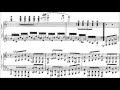 play_arrow play_arrow | A piano solo piece characterized by triple meter |
| 20east | “Grandes études de Paganini,” No. 6: “Theme and Variations”Franz Liszt |  play_arrow play_arrow | A masterpiece of piano arrangement of a work by Paganini |
| 21east | Piano Sonata No. 21 in B-flat major, D 960 — Movement III: Allegro vivace con delicatezzaFranz Schubert |  play_arrow play_arrow | The profound emotion and beauty of Schubert’s masterpieces |
| 22east | Piano Quintet in A major, Op. 114, D 667 “Trout” — III. Scherzo: PrestoFranz Schubert |  play_arrow play_arrow | The charm of chamber music like spring |
| 23east | Piano Quintet in A major, Op. 114, D. 667 “Trout” — IV. Theme and Variations: AndantinoFranz Schubert |  play_arrow play_arrow | Schubert’s captivating chamber piece “The Trout” |
| 24east | String Quartet No. 13, Op. 29, D 804 “Rosamunde,” Movement IIFranz Schubert |  play_arrow play_arrow | Gem-like chamber music works that resonate with the heart |
| 25east | String Quartet No. 13, Op. 29, D. 804 “Rosamunde,” Movement IIIFranz Schubert |  play_arrow play_arrow | Masterpieces from the Classical to the Romantic era, graceful melodies |
| 26east | String Quartet No. 13, Op. 29, D. 804 “Rosamunde,” Movement IVFranz Schubert |  play_arrow play_arrow | Beautiful, moving chamber music |
| 27east | Prelude in A minor, Op. 28 No. 2Frederic Chopin |  play_arrow play_arrow | A mystical prelude in dissonance |
| 28east | Prelude in C minor, Op. 28 No. 20Frederic Chopin |  play_arrow play_arrow | Chopin piano piece, characterized by funeral-like qualities and emotional expression |
| 29east | Prelude in D-sharp major, Op. 28 No. 13Frederic Chopin |  play_arrow play_arrow | Chopin’s quiet, introspective piano piece |
| 30east | Prelude No. 6 in B minor, Op. 28-6Frederic Chopin |  play_arrow play_arrow | A short piece captivating for Chopin’s delicate expression of emotion |
| 31east | String Quartet No. 1, Second Movement: Andante cantabilePyotr Tchaikovsky |  play_arrow play_arrow | A masterpiece that moves you, inspired by a Ukrainian folk song |
| 32east | Symphony No. 2, Movement IIISergei Rachmaninov |  play_arrow play_arrow | A masterpiece whose beautiful melody stirs the heart |