

Alexander Scriabin Popular Songs Ranking [2026]

Alexander Scriabin, a Russian-born composer whose influence has recently been recognized as spreading internationally.
Although he was considered a promising pianist, an injury to his right hand during his student years prompted him to embark in earnest on a career as a composer.
In his later works, he employed the “mystic chord,” creating pieces that cemented his reputation as an avant-garde composer.
This time, we present a ranking of Alexander Scriabin’s most popular pieces—enjoy the beauty of modern music!
- Scott Joplin Popular Song Rankings [2026]
- Dmitri Shostakovich Popular Songs Ranking [2026]
- Olivier Messiaen Popular Songs Ranking [2026]
- Déodat de Séverac Popular Song Rankings [2026]
- Manuel de Falla Popular Song Rankings [2026]
- Sibelius’s famous piece. Popular classical music.
- Arnold Schönberg Popular Songs Ranking [2026]
- Mily Balakirev Popular Songs Ranking [2026]
- Dmitri Kabalevsky Popular Song Rankings [2026]
- Jean Sibelius Popular Songs Ranking [2026]
- César Franck Popular Songs Ranking [2026]
- Ottorino Respighi Popular Songs Ranking [2026]
- [Scarlatti] Introducing masterpieces and signature works from his many keyboard compositions!
Alexander Scriabin Popular Songs Ranking [2026] (1–10)
24 Preludes, Op. 11 No. 1Alexander Scriabin8rank/position

Alexander Scriabin was a Russian composer active from the late 19th to the early 20th century.
Familiar with the piano from childhood, he displayed remarkable talent and evolved from a Romantic style into a more original musical language.
The 24 Preludes, Op.
11 is one of his early works; while it shows the influence of Chopin, it also shines with Scriabin’s unique expressive power.
Comprising 24 pieces in all keys, each work is short yet demands deep emotion and high technical skill.
Among them, No.
1, as indicated by “Vivace,” has a bright and lively character and allows performers to fully express their musical sensibility.
Though it is an indispensable study piece in piano training, this collection is also highly compelling musically, making it a work that advanced players are strongly encouraged to tackle.
Two Pieces for Left Hand, Op. 9 No. 1 “Prelude”Alexander Scriabin9rank/position

Two Pieces for the Left Hand, Op.
9 is a masterpiece that showcases Scriabin’s originality.
Displaying pianistic talent from childhood and later forging a highly individual musical language, he composed this challenging work while his right hand was injured.
The first piece, Prelude, interweaves deep introspection and passion; within the limitation of using only the left hand, one can sense Scriabin’s commitment to complex harmonies and profound emotional expression.
Offering a glimpse into the composer’s psyche as he ventures into uncharted territory, this work is recommended for those who wish to explore new possibilities in piano performance.
Piece for Two Left Hands, Op. 9 No. 2 “Nocturne”Alexander Scriabin10rank/position
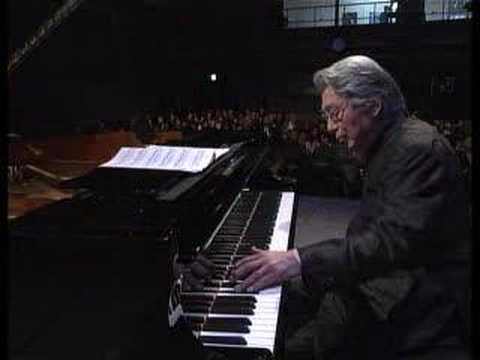
Alexander Scriabin, a Russian composer and pianist, is known as one of the most innovative composers of the 20th century.
Having lost his mother in childhood and been raised by his aunt, he studied at the Moscow Conservatory and became an outstanding pianist.
However, due to his small stature and small hands, he felt limitations as a pianist and began to devote himself to composition.
Prompted by an injury to his right hand, Scriabin composed Two Pieces for the Left Hand, Op.
9, to be performed with the left hand alone.
The second piece, Nocturne, is notable for its beautiful melody and Scriabin’s distinctive harmonies.
Why not experience Scriabin’s innovative musicality for yourself?
Alexander Scriabin Popular Songs Ranking [2026] (11–20)
Fantasy in A minor for Two PianosAlexander Scriabin11rank/position

Alexander Scriabin was a Russian composer and an outstanding pianist.
Among his works, which evolved from an early style influenced by Chopin to a uniquely personal musical language, the Fantasy for Two Pianos, composed in 1889, stands out as a masterpiece brimming with youthful Romantic ardor.
The themes, as if exchanged in dialogue while the two pianos intertwine and respond to one another, are imbued with Scriabin’s distinctive, innovative harmonies and formal elegance.
With its emotionally stirring lyrical melodies and a succession of virtuosic passages, the piece reveals both his musical genius and his spirit of exploration.
Three Pieces, Op. 2: No. 1 “Etude”Alexander Scriabin12rank/position
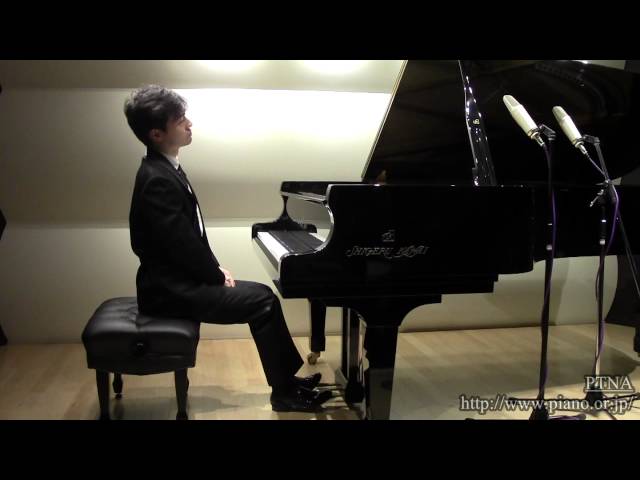
The Russian composer Alexander Scriabin is one of the last great masters of Romantic piano music.
A work that reveals Scriabin’s youthful talent is the first piece from his Three Pieces, composed when he was fifteen.
This passionate piano solo demands deep emotion and technical expressiveness, hinting at the budding style he would later develop.
While influenced by Chopin, it establishes a distinctly Scriabinesque, mystical world through its unique harmonies and melodies.
By engaging with this work, you can fully savor the allure of his music.
Allegro appassionato in E-flat minor, Op. 4Alexander Scriabin13rank/position

Alexander Scriabin, one of the great composers of the 20th century born in Russia.
Also active as a pianist, he pursued a unique musical style.
His early work Allegro Appassionato is a piece captivating for its passionate expression and dramatic development.
Savor a worldview that stirs the listener’s heart, filled with Scriabin’s signature creativity and musical ambition.
Offering the shock and excitement of opening the door to unknown music, this work is recommended both for those who want to grow more familiar with classical music and for those eager to try a genre that may still feel unfamiliar.
Etude Op. 2 No. 1Alexander Scriabin14rank/position

A short piece composed by the Russian composer Alexander Scriabin—active from the late 19th to the early 20th century—when he was 14 years old.
It’s a work filled with youthful talent and passion, characterized by rich harmonies and emotive melodies rooted in the Romantic tradition.
A simple melody expressing a longing for distant goals and the repeated chords played by both hands leave a strong impression.
Its tone—imbued with youth, passion, and a touch of melancholy—has captured the hearts of many pianists.
One can also feel the influence of Russian Gypsy music, making it perfect for those who value emotional expression.
Be sure to play it with care for the resonance of each note, and pour your heart into the performance!