

J.S. Bach Popular Songs Ranking [2026]

A composer who laid the foundations of Western music and is also regarded as a source of contemporary music.
This time, we focused on some of his popular pieces.
We’ve listed the most-played tracks in a ranking format, so please take a look.
- J.S. Bach Popular Songs Ranking [2026]
- J.S. Bach | Introducing Famous and Representative Works
- Ludwig van Beethoven Popular Songs Ranking [2026]
- Handel Popular Songs Ranking [2026]
- [Masterpiece Classics] A special showcase of gem-like masterpieces so beautiful they’ll move you to tears
- Compilation of Sad BGM You've Heard Somewhere [Famous]
- Jean-Philippe Rameau Popular Songs Ranking [2026]
- Johann Pachelbel Popular Song Rankings [2026]
- Antonio Vivaldi Popular Song Ranking [2026]
- Johannes Brahms Popular Songs Ranking [2026]
- Georg Philipp Telemann Popular Songs Ranking [2026]
- Wolfgang Amadeus Mozart Popular Song Rankings [2026]
- Georg Friedrich Handel Popular Songs Ranking [2026]
J.S. Bach Popular Songs Ranking [2026] (21–30)
Musette in D majorJ.S.Bach22rank/position

This piece, born from the Notebook for Anna Magdalena Bach, where one can fully savor the charm of Baroque-era domestic music, is notable for its left-hand accompaniment pattern that imitates bagpipes.
Structured in ternary form, its bright and approachable melody moves between D major and A major, featuring rhythmically dance-like motion.
Compiled as part of the 1725 notebook and written with home music education in mind, it is not overly virtuosic and is easy to play.
It is especially recommended for those interested in Baroque music or for pianists looking to tackle a classical work.
The piece is also used in the anime Curious George, which likely explains why its familiarity continues to be loved today.
Nine Little Preludes in C major, BWV 927J.S.Bach23rank/position

When it comes to Bach’s little preludes, the Six Little Preludes and the Nine Little Preludes are well known.
This time, I’d like to introduce the Nine Little Preludes in C major, BWV 927.
This piece is simply structured and short, and its difficulty places it around the middle of the beginner level.
The left hand from measure 9 might seem challenging, but since there are few leaps and it’s relatively easy overall, even beginners who feel less confident with the left hand should find it approachable to play.

Come, let us praise God together.J.S.Bach24rank/position
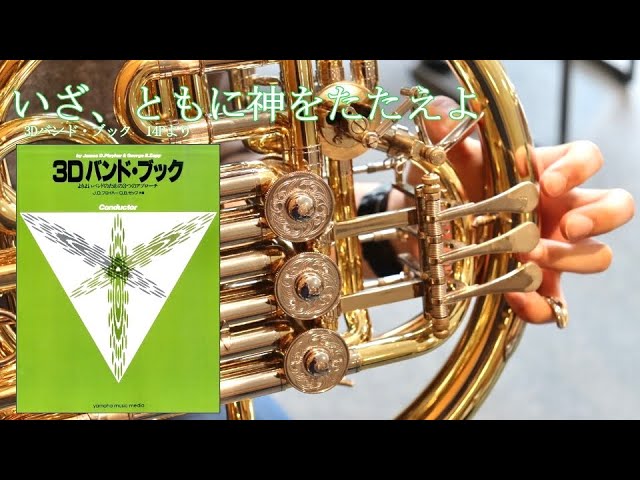
A majestic chorale composed by Bach, the father of music.
Born in Germany in 1685, Bach created works suffused with profound spirituality.
This piece evokes a powerful yet warm vision of communal prayer in praise of God.
Its four-part texture weaves rich harmonies that recall the sound of an organ resounding through a church, filling the heart with purity.
The work has also been included in educational collections for wind band and has been performed by many who are learning ensemble fundamentals.
It’s perfect for moments when you want to immerse yourself in music in a quiet space or enjoy performing while feeling a sense of unity with your companions.
Lend your ear to this musical treasure, where beautiful melodies interlace.
O Thou, God the FatherJ.S.Bach25rank/position

Johann Sebastian Bach, the father of music.
The Orgelbüchlein, a collection of organ pieces that Bach left around 1713 during his Weimar period, contains many masterpieces.
This work, one of the pieces from that collection, is an arrangement of a chorale based on the Lord’s Prayer.
Its calm yet noble melody, together with the delicately ornamented inner voices, seems to embody the very spirit of deep prayer.
It was originally performed in church services as an introduction to hymns sung by the congregation.
On a night when you wish to quiet your heart, or in the morning when you want to begin the day with a pure mind, imagine the sound resonating in a church and listen, savoring each and every note.
Italian Concerto in F major, BWV 971J.S.Bach26rank/position

A work for solo harpsichord composed by Johann Sebastian Bach and published as part of the Clavier-Übung II.
It is characterized by vividness and lightness influenced by the Italian concerto form.
Consisting of three movements, each presents a distinct musical character.
Through indications of forte and piano, it imitates the contrasting instrumental groups of a concerto, realized by using a two-manual harpsichord.
Popular even during Bach’s lifetime, it was praised by the critic Scheibe as “the greatest and finest concerto to be played on a single instrument.” Its bright and lively melodies, beautiful lyricism, and brilliant rhythms are captivating; it is widely performed on piano and harpsichord and is so popular that it is often arranged for other instruments as well.
Christmas OratorioJ.S.Bach27rank/position

This is a collection of cantatas composed by Bach with German lyrics, consisting of six parts and a total of 64 movements, intended to be performed in church during the Christmas season.
Following the liturgical calendar, one part is performed each day over six Sundays and feast days between December 25 (Christmas) and January 6 (Epiphany).
Today, in concerts and similar settings, it has become common to perform all six parts at once with intermissions.

Toccata, Adagio and Fugue in C major, BWV 564J.S.Bach28rank/position

A masterpiece crafted by the Baroque master Johann Sebastian Bach.
Its magnificent structure and performance techniques brilliantly showcase the organ’s full allure.
With the Toccata’s brilliance, the Adagio’s poignancy, and the Fugue’s lightness, each of the three movements presents a distinct character.
Composed around 1708 to 1714, this work overwhelms audiences in a performance lasting approximately 16 minutes and 30 seconds.
In the 20th century, it was arranged for piano and orchestra by Busoni and Stokowski, gaining broader performance opportunities.
Highly recommended for those who wish to savor the essence of organ music or delve into the depth of Baroque music.