

![J.S. Bach Popular Songs Ranking [2026]](https://i.ytimg.com/vi_webp/5nD8SKNI8GQ/maxresdefault.webp)

A composer who laid the foundations of Western music and is also regarded as a source of contemporary music.
This time, we focused on some of his popular pieces.
We’ve listed the most-played tracks in a ranking format, so please take a look.
- J.S. Bach Popular Songs Ranking [2026]
- J.S. Bach | Introducing Famous and Representative Works
- Ludwig van Beethoven Popular Songs Ranking [2026]
- Handel Popular Songs Ranking [2026]
- [Masterpiece Classics] A special showcase of gem-like masterpieces so beautiful they’ll move you to tears
- Compilation of Sad BGM You've Heard Somewhere [Famous]
- Jean-Philippe Rameau Popular Songs Ranking [2026]
- Johann Pachelbel Popular Song Rankings [2026]
- Antonio Vivaldi Popular Song Ranking [2026]
- Johannes Brahms Popular Songs Ranking [2026]
- Georg Philipp Telemann Popular Songs Ranking [2026]
- Wolfgang Amadeus Mozart Popular Song Rankings [2026]
- Georg Friedrich Handel Popular Songs Ranking [2026]
J.S. Bach Popular Songs Ranking [2026] (1–10)
Air on the G StringJ.S.Bach1rank/position

Johann Sebastian Bach’s masterpiece “Air on the G String” features a gentle melody that resonates in the heart, evoking a boundless, crystal-clear sky.
When this graceful and refined tune is played on a music box with its pure, bell-like timbre, it sparkles as if tiny particles of light were raining down from heaven.
The steady yet tender sequence of notes gently eases a baby’s little worries, offering a deep sense of reassurance.
Embraced by this soothing melody, both the baby and the family are guided into a peaceful dream world—a truly magical lullaby.
Jesu, Joy of Man’s DesiringJ.S.Bach2rank/position

Johann Sebastian Bach’s works are cherished both as healing music and as pieces that color the many moments of life.
This composition conveys an unwavering devotion to the object of one’s faith—and the inner peace it brings—through warm, majestic harmonies.
The lyrics depict a deep sense of gratitude toward a sustaining presence, one that helps us keep hope even in difficult circumstances.
This piece is the closing chorale of the church cantata “Herz und Mund und Tat und Leben,” which Bach composed in 1723.
Its popularity has transcended the classical realm; it’s also well known for the hit 1971 cover by the British band Apollo 100.
Perfect for celebratory occasions like weddings, it also offers a cleansing, moving experience when listened to in quiet moments of self-reflection.
The Well-Tempered Clavier, Book I, No. 1 in C major, BWV 846, PreludeJ.S.Bach3rank/position

Bach’s The Well-Tempered Clavier is renowned as a masterpiece for keyboard instruments.
The Prelude No.
1 from Book I is also famous as the accompaniment to Charles Gounod’s Ave Maria.
Compiled in 1722, Book I is said to have originated from a collection of short pieces that Bach began writing for his son’s education.
With its natural and beautiful harmonic progressions, this piece is relatively approachable within a collection that includes many complex works.
Playing at a relaxed tempo with an awareness of the horizontal flow brings out its charm even more.
It is a calming masterpiece—why not immerse yourself in the world of Baroque music?
Chromatic Fantasia and Fugue in D minor, BWV 903J.S.Bach4rank/position

A masterpiece by Johann Sebastian Bach, a representative composer of the Baroque era.
It is characterized by chromatic motion and is known for its innovative harmonic structure and bold expressiveness.
Composed between 1717 and 1723, this work consists of two parts—a fantasia and a fugue—brilliantly fusing free improvisatory elements with strict formal beauty.
Although it requires advanced technique and is intended for skilled performers, its musical depth is sure to resonate strongly with listeners.
Highly regarded even during Bach’s lifetime, this is a piece well worth the challenge.
Come, sweet deathJ.S.Bach5rank/position

This work, which expresses deep religious sentiment, was included as part of a collection of sacred songs that the Baroque-era composer Johann Sebastian Bach published in collaboration with Georg Christian Schemelli in 1736.
The piece conveys both the depth of Bach’s faith and the universality of the message he sought to communicate through music, singing of the Christian teaching that one need not fear death; rather, by welcoming a peaceful death, one attains eternal rest.
Its simple and beautiful melody leaves a profound impression on listeners and continues to convey the timeless appeal of Bach’s music today.
It is a recommended piece for those seeking peace of mind or wishing to explore the world of Bach’s sacred music.
Invention No. 8, BWV 779J.S.Bach6rank/position

This piece in F major, set in 3/4 time, begins with ascending broken chords brimming with the lively energy of a fanfare and exudes a bright, spirited atmosphere.
The distinctive rhythm created by the interplay of upper and lower voices, chasing each other with a one-measure delay, is pleasing and makes the listener’s heart dance.
Although composed for educational purposes, the work’s musical appeal captivates audiences.
The left-hand passages using the 3rd, 4th, and 5th fingers are somewhat challenging, but with practice, it’s a wonderful piece that allows you to feel tangible improvement in two-hand technique.
With its bright, festive character and a well-balanced technical challenge, it’s an ideal choice for a recital.
Goldberg Variations, BWV 988J.S.Bach7rank/position
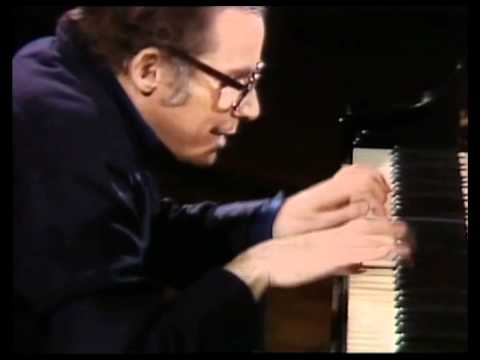
Johann Sebastian Bach, a composer who epitomizes the Baroque era.
Known as the “father of music,” he composed this set of variations in 1741.
Written for a two-manual harpsichord, the work consists of an aria and 30 variations, each variation structured in two sections with repeats.
Every third variation employs a canon, with the interval progressively widening—a distinctive feature.
Bach’s fascination with mathematics and numerology is evident throughout, ensuring the listener never grows weary.
Performances on the piano are just as common as on the harpsichord, and Glenn Gould’s 1955 recording greatly contributed to the work’s popularity.
Highly recommended for anyone interested in Bach’s music.