

[40s] Popular Japanese Music / J-POP Rankings [By Generation]

We present the latest top 100 rankings of Japanese music/J-POP for people in their 40s, showcasing the songs in order of most to least views! As life may be settling down for those in their 40s, are they seeking peace and comfort, or craving extraordinary excitement? What kinds of songs are being listened to most? The playlist is updated weekly.
- Ranking of Popular Japanese Music and J-POP Artists Among People in Their 40s [2026]
- [40s] Popular Songs Ranking by Generation [2026]
- Popular Japanese songs among women in their 40s: recommended classics and standard hits
- Band Rankings Popular Among People in Their 40s [2026]
- Songs popular among men in their 40s. Timeless classics that bring back memories.
- Nostalgic Japanese Pop Hits That Get 40-Something Men and Women Excited
- [50s] Popular Song Ranking by Generation [2026]
- Ranking of Popular Japanese Pop (J-Pop) Artists Among People in Their 50s [2026]
- [40s] Karaoke Crowd-Pleasers Ranking [2026]
- Ranking of Popular Band Songs Among People in Their 40s [2026]
- [2026 Edition] Karaoke Songs That Will Get the Crowd Going—Perfect for Women in Their 40s
- [2026 Edition] Youth Anthems for Your 40s! A Roundup of Popular Heart-Pounding × Heartwarming Songs
- Nostalgic Songs Perfect as Driving BGM for People in Their 40s
[40s] Popular Japanese Music / J-POP Rankings [By Generation] (31–40)
beetle (specifically, a rhinoceros beetle)aiko36rank/position

Aiko’s signature love song “Kabutomushi.” The overall vocal range is quite wide, from F3 to F5, but it’s very easy to sing if you switch between chest voice and falsetto.
The A and B sections sit firmly in a lower range, and while the chorus climbs higher than you might expect, it may help to switch decisively to a falsetto base from there.
To switch smoothly between registers, stable pitch is essential.
If you keep your eyebrows raised or make a surprised face, you can maintain accurate pitch centered between your eyebrows without letting it drop into your throat.
Also, when singing high notes, if you hold back and produce the sound halfway, it will definitely be harder to hit, so try projecting your voice solidly!

Don’t give upZARD37rank/position

ZARD is an indispensable presence in the Japanese music scene of the ’90s, and for many women in their 40s today, their songs undoubtedly evoke the soundtracks of youth.
The late Izumi Sakai’s clear vocals and heartfelt lyrics never lose their luster, and they’re still hugely popular at karaoke.
“Makenaide” is one of ZARD’s most famous songs, a true classic with nationwide acclaim.
While the pitch is slightly on the higher side, it’s generally average overall, and the melody is straightforward without large leaps in range, making it a good candidate for high karaoke scores.
Aim to articulate each word of the lyrics clearly, and sing the chorus with crisp, powerful delivery!

A Midsummer Night’s DreamMatsutōya Yumi38rank/position

With its exquisite key and tempo that suit a wide range of singers, “A Midsummer Night’s Dream” is a fun, confidence-boosting song for karaoke-loving women in their 40s.
The sophisticated melody and lyrics by Yumi Matsutoya have been loved across generations, and when paired with the comfortable accompaniment, you’ll feel as if the karaoke room instantly transforms into a magical summer world.
Enjoy a wonderful moment with this song, which is upbeat yet composed, and cherished by a broad audience.
innocent worldMr.Children39rank/position

Mr.
Children’s iconic song “innocent world,” which reigned at the center of 1990s J-pop, continues to be loved across generations for its moving message.
It’s a karaoke staple that still evokes fresh emotion every time you hear it.
With its exhilarating sound and comfortable vocals, singing it at karaoke is sure to brighten the atmosphere around you.
It’s a tune that not only appeals to a specific audience but is easy for a wide range of listeners to hum along to, leading many to reevaluate it as a memorable classic.
While some parts are not easy to sing, that challenge makes it all the more rewarding—so we hope you’ll give it a try at least once.
Kiss me right nowLINDBERG40rank/position

LINDBERG is a rock band that was hugely successful in the 1990s.
Known for their energetic, upbeat pop-rock sound, the group has produced many classic songs.
Among them, “Ima Sugu Kiss Me” stands out as a particularly memorable piece.
While the song leans toward pop rock and maintains tremendous energy throughout, it surprisingly doesn’t feature sustained long notes in the mid-to-high or higher registers.
The overall vocal range isn’t especially wide, so even women with lower voices should be able to sing it comfortably in an appropriate key.
[Forties] Popular Japanese Music / J-POP Rankings [By Generation] (41–50)
At all times.Makihara Noriyuki41rank/position

A signature work by Noriyuki Makihara that delivers a universal message about living true to yourself, carried by a powerful yet gentle melody.
It’s a classic imbued with a strong resolve to value your true self, even while grappling with doubts and anxieties in life.
Also included on the album “Who Will You Share a Happy Yawn With?”, it became a massive hit, surpassing one million copies within six months of its June 1991 release.
It was chosen as the entrance march for the 64th National High School Baseball Invitational Tournament in spring 1992.
The melody is marked by an acoustic guitar and a calm tempo, making it easy to sing.
It’s a song that resonates at life’s crossroads or when you feel you might lose yourself, and it’s cherished by many.
Promise of SunflowersHata Motohiro42rank/position
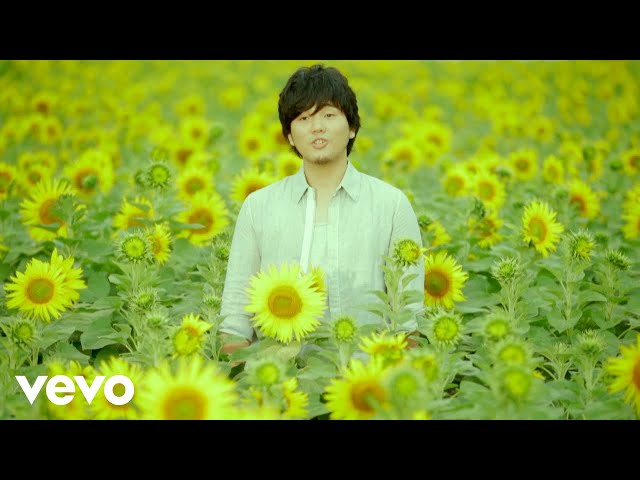
This is a song whose gentle vocals and guitar tones resonate in the heart.
The lyrics, which sing about the bond with a loved one and caring for each other, can bring you to the verge of tears.
Released in 2014 as the theme song for the film “STAND BY ME Doraemon,” it moved many people.
Motohiro Hata’s warm singing voice deepens the emotion of the story.
It’s a song you’ll want to listen to when you want to express gratitude to someone important to you, or when you want to be there for someone.
Also recommended as wedding background music.