

Franz Joseph Haydn Popular Song Rankings [2026]

I’ve put together a popularity-ranked list of Haydn’s masterpieces that I especially recommend for anyone who wants to enjoy classical music with a solemn atmosphere! The grand orchestral sound and harmonies might just make you feel as if you’re walking through a palace!
- [Haydn] Pick up famous and representative pieces!
- Franz Schubert Popular Songs Ranking [2026]
- Handel Popular Songs Ranking [2026]
- George Frideric Handel Popular Songs Ranking [2026]
- Georg Friedrich Handel Popular Songs Ranking [2026]
- Wolfgang Amadeus Mozart Popular Song Rankings [2026]
- Ludwig van Beethoven Popular Songs Ranking [2026]
- Anton Bruckner Popular Songs Ranking [2026]
- Franz Liszt Popular Song Ranking [2026]
- Antonio Vivaldi Popular Song Ranking [2026]
- Johann Nepomuk Hummel Popular Song Rankings [2026]
- Johannes Brahms Popular Songs Ranking [2026]
- Antonín Dvořák Popular Songs Ranking [2026]
Franz Joseph Haydn Popular Song Rankings [2026] (41–50)
Symphony No. 3 in G majorFranz Joseph Haydn50rank/position

Symphony No.
3 in G major: I.
Allegro; II.
Andante moderato; III.
Minuet & Trio; IV.
Finale, alla breve, composed in 1761.
Performed by the Downtown Sinfonietta, conducted by Vincent Lionti.
Franz Joseph Haydn Popular Song Ranking [2026] (51–60)
Symphony No. 44 in E minor “Mourning”Franz Joseph Haydn51rank/position

It is said that Haydn expressed a wish for the slow movement of this piece to be performed at his funeral.
Indeed, this movement was performed at the commemorative memorial event for Haydn in 1809.
The nickname “Trauer” (Sorrow) for this work originates from that.
Symphony No. 45 in F-sharp minor, “Farewell”Franz Joseph Haydn52rank/position
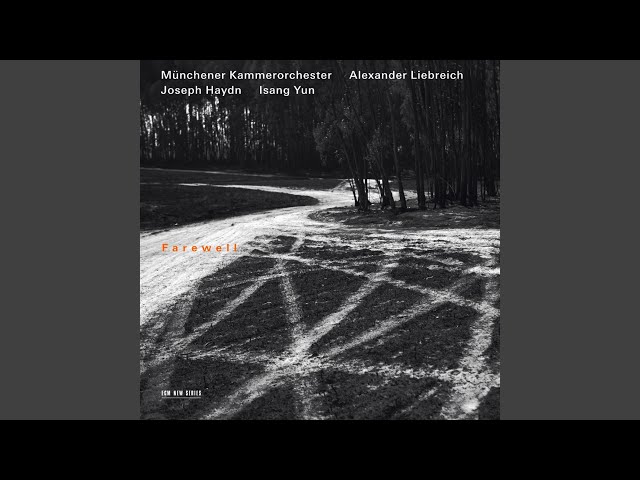
Composed in 1772, the Symphony No.
45 is a masterpiece that fully showcases Haydn’s genius.
It was born from an original idea: to convey through music that the musicians, whose performance season at the Esterházy family’s summer palace had dragged on, wished to see their families.
Remarkably, in the final movement the players finish one by one and leave the stage, until only a violinist and the conductor remain, an effect that vividly reflects Haydn’s witty character.
From the tense first movement to the emotionally rich second movement and the surprise-filled finale, it never lets the listener grow weary.
One cannot help but be moved by the skill with which it communicates people’s feelings through music.
Symphony No. 6 in D major “Morning”Franz Joseph Haydn53rank/position

Symphony No.
6 in D major [Morning]: I.
Adagio – Allegro; II.
Adagio – Andante – Adagio; III.
Minuet; IV.
Finale, Allegro.
Together with Nos.
7 and 8, it forms a trilogy.
Performed by the Norwegian Chamber Orchestra.
Symphony No. 7 in C Major [Day]Franz Joseph Haydn54rank/position
![Symphony No. 7 in C Major [Day]Franz Joseph Haydn](https://i.ytimg.com/vi/m7TjWJTYL4w/sddefault.jpg)
Symphony No.
7 in C major [Day]: I.
Adagio – Allegro; II.
Recitative; III.
Minuet; IV.
Finale, Allegro.
This is the second work of the trilogy.
Performed by the Corpus Christi Chamber Orchestra, conducted by Mr.
John Landis.
Symphony No. 83 in G minor “The Hen”Franz Joseph Haydn55rank/position

It is affectionately nicknamed “The Hen” because the second theme of the first movement is reminiscent of a chicken’s clucking, but it seems this was not a name given by Haydn himself.
The nickname came into use from the late 18th to the early 19th century.
Symphony No. 85 in B-flat major “The Queen”Franz Joseph Haydn56rank/position
Composed around 1785, it is the fourth of the six Paris Symphonies.
It is known by the French nickname “La Reine” (The Queen).
The origin of the name is uncertain, but it is said that Queen Marie Antoinette of France was particularly fond of it.