

![Franz Joseph Haydn Popular Song Rankings [2026]](https://i.ytimg.com/vi_webp/jZ5oIMR4ax8/maxresdefault.webp)

I’ve put together a popularity-ranked list of Haydn’s masterpieces that I especially recommend for anyone who wants to enjoy classical music with a solemn atmosphere! The grand orchestral sound and harmonies might just make you feel as if you’re walking through a palace!
- [Haydn] Pick up famous and representative pieces!
- Franz Schubert Popular Songs Ranking [2026]
- Handel Popular Songs Ranking [2026]
- George Frideric Handel Popular Songs Ranking [2026]
- Georg Friedrich Handel Popular Songs Ranking [2026]
- Wolfgang Amadeus Mozart Popular Song Rankings [2026]
- Ludwig van Beethoven Popular Songs Ranking [2026]
- Anton Bruckner Popular Songs Ranking [2026]
- Franz Liszt Popular Song Ranking [2026]
- Antonio Vivaldi Popular Song Ranking [2026]
- Johann Nepomuk Hummel Popular Song Rankings [2026]
- Johannes Brahms Popular Songs Ranking [2026]
- Antonín Dvořák Popular Songs Ranking [2026]
Franz Joseph Haydn Popular Songs Ranking [2026] (1–10)
Piano Sonata No. 35 in C major, Hob. XVI:35Franz Joseph Haydn1rank/position

Franz Joseph Haydn, a master of Classical-era music, is celebrated as the father of the symphony and the string quartet, but he also left many masterpieces in the realm of piano music.
Published in 1780, the Piano Sonata No.
35 in C major, Hob.
XVI:35 is a captivating work that, while of intermediate difficulty, showcases Haydn’s distinctive structural ingenuity and refined musicality.
While fundamentally in sonata form, the first movement brims with variety in themes and key changes; the second movement is gentle and lyrical; and the third movement, a bright and lively rondo, rounds out the piece—all balanced with exquisite poise.
It’s a highly recommended work not only for piano students but also for classical music enthusiasts.
String Quartet No. 77 in C major, Op. 76 No. 3, Hob. III:77 “Emperor”, II. MovementFranz Joseph Haydn2rank/position

A string quartet composed by the Classical master Franz Haydn.
Among his works, this piece—affectionately known as the “Emperor”—is distinguished by its grand melody that later became the German national anthem.
Inspired by the national anthem he encountered during his stay in England, Haydn composed it in 1797.
Infused with patriotism for Austria, which was threatened by Napoleon’s invading forces, its powerful yet beautiful character captivates listeners.
Even those unfamiliar with classical music will surely be drawn into the allure of the string quartet when they hear this piece.
Andante and Variations in F minor, Hob. XVII/6Franz Joseph Haydn3rank/position

Composed in 1793 by Franz Joseph Haydn—often called the father of the symphony and the string quartet—the piano work Andante and Variations in F minor, Hob.
XVII/6 is written in a double-variation form alternating F minor and F major, and is renowned as a masterpiece where poignancy and brightness interweave.
It is said that the death of Marianne von Genzinger, a close acquaintance of Haydn and one of his keenest admirers, cast a shadow over the work’s background.
Filled with refined techniques such as rising and falling chromatic motives and octave leaps, this piece offers pianists a perfect opportunity to showcase their artistry.
Why not experience the essence of classical music while savoring Haydn’s subtle emotions and creativity?
Cello Concerto No. 2 in D majorFranz Joseph Haydn4rank/position
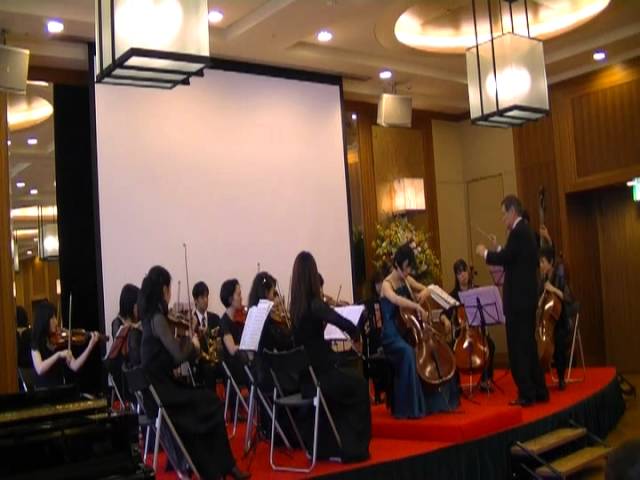
Haydn’s Cello Concerto No.
1 in C major, Hob.
VIIb:1, was written for Joseph Weigl, the cellist of the Esterházy orchestra, while the Cello Concerto No.
2 in D major, Hob.
VIIb:2 (Op.
101), was composed for Anton Kraft, a virtuoso cellist in the same ensemble.
As for my preference, I favor No.
2.
Bach lived on the grounds known as the “Hungarian Versailles,” where he created numerous works.
One can indeed sense the aura of medieval European nobility.
Trumpet Concerto in E-flat major, Hob. VIIe:1Franz Joseph Haydn5rank/position

The masterpiece Trumpet Concerto in E-flat major, Hob.
VIIe:1, composed by the Classical-era master Haydn at the age of 64, was written for the trumpeter Anton Weidinger.
Showcasing the full appeal of the newly developed chromatic trumpet of the time, this three-movement work delights with its exquisite interplay between soloist and orchestra.
Beloved by trumpeters as a staple for concerts and competitions, it has also been featured as the theme music for a Hong Kong variety show and in a Netflix drama, making it a highly recommended piece not only for classical music fans but for a wide audience.
Piano Sonata No. 60 in C major, Hob. XVI:50Franz Joseph Haydn6rank/position

Franz Joseph Haydn, who wrote more than 65 piano sonatas, composed his Piano Sonata No.
60 in C major, Hob.
XVI:50, between 1794 and 1795.
It can be regarded as a masterpiece that epitomizes his late style.
Consisting of three movements, the sonata showcases Haydn’s musical genius and originality throughout.
The ornate melody of the first movement, the lyrical expressiveness of the second, and the humor-filled development of the finale captivate listeners and do not let go.
the four seasonsFranz Joseph Haydn7rank/position

This is a magnificent oratorio that crowns the later years of Franz Joseph Haydn, known as the “Father of the Symphony.” From the breath of spring to the severity of winter, it vividly depicts the cycle of the seasons and the lives of the people who dwell within them.
The way it uses music to portray natural sounds—like birdsong and the roar of storms—makes it feel as if the scenery is changing right before your eyes.
The anecdote that Haydn composed his first “chorus in praise of labor” in this work also lends it profound depth.
Since its premiere in April 1801, many outstanding performances have been preserved, so if you want to experience the beauty of the seasons through grand music, this is well worth a listen.