

Johann Strauss II Popular Song Ranking [2026]

Johann Strauss II, who produced numerous famous waltzes such as “The Blue Danube,” “Tales from the Vienna Woods,” and “Emperor Waltz.”
This time, we’re focusing on him.
We’ve compiled a ranked list of his most-played tracks so far, so please take a look.
- Johann Strauss II | Introducing Famous and Classic Pieces
- Franz Schubert Popular Songs Ranking [2026]
- A masterpiece by Richard Strauss. Popular classical music.
- Gustav Mahler Popular Songs Ranking [2026]
- Jean Sibelius Popular Songs Ranking [2026]
- Johannes Brahms Popular Songs Ranking [2026]
- Johann Burgmüller Popular Song Rankings [2026]
- Franz Liszt Popular Song Ranking [2026]
- Franz Joseph Haydn Popular Song Rankings [2026]
- Wolfgang Amadeus Mozart Popular Song Rankings [2026]
- Ludwig van Beethoven Popular Songs Ranking [2026]
- J.S. Bach Popular Songs Ranking [2026]
- Johann Nepomuk Hummel Popular Song Rankings [2026]
Johann Strauss II Popular Songs Ranking [2026] (1–10)
Emperor WaltzJohann Strauss II8rank/position

Composed in 1889, this piece is distinguished by its brilliant orchestration and rich instrumentation.
It begins with a grand introduction, passes through a variety of expressively characterized movements, and builds toward a moving climax.
It was reportedly written under the title “Hand in Hand” to celebrate the friendship between the Austrian Emperor and the German Emperor.
Seamlessly blending a Prussian-style march with a Viennese waltz, the work transcends its political intent and continues to captivate many listeners today.
Highly recommended for those interested in Viennese music and culture.
Champagne PolkaJohann Strauss II9rank/position

This piece was composed in a short period of time in Saint Petersburg, Russia.
Its original title was “Champagne at the Ball,” but it was later changed to the current title.
The sound of a champagne bottle being opened appears multiple times throughout the piece, making it a lively number.
The Blue DanubeJohann Strauss II10rank/position
In this commercial introducing Calorie Mate Jelly in apple flavor, a close-up of apples is shown with classical music playing in the background, overlaid with numerous numbers.
These numbers are actually taken solely from the numerical portions of Calorie Mate Jelly’s nutrition facts, and the corresponding nutrient names are revealed afterward.
It’s a presentation unique to Calorie Mate Jelly, which provides a wide range of nutrients.
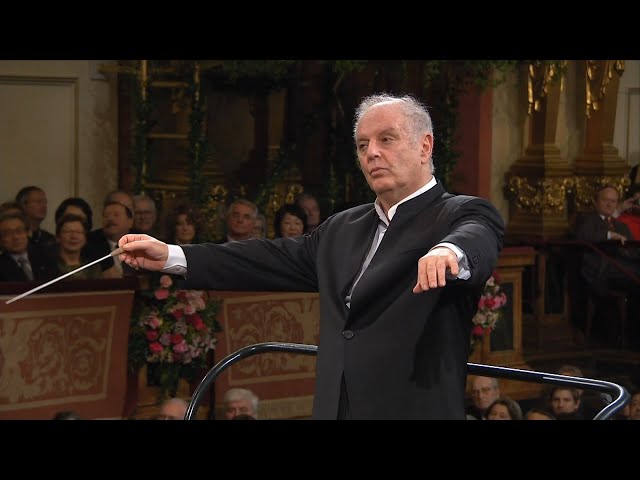
The background music is The Blue Danube, a famous classical piece by Johann Strauss II, also beloved as a staple of the Vienna Philharmonic’s New Year’s Concert.

Johann Strauss II Popular Songs Ranking [2026] (11–20)
Viennese TemperJohann Strauss II11rank/position

The waltz composed by Johann Strauss II in 1866 is a masterpiece that expresses the charm of Vienna through music.
It is characterized by a light, lively rhythm and a brilliant melody, vividly capturing the atmosphere of Viennese high society.
It begins with the tense sounds of clarinet and pizzicato in the introduction, then unfolds into a stately first waltz theme.
In the latter half, cheerful sections are contrasted with gentle melodies, captivating the listener.
Celebrating the spirit and life of Vienna, this piece is recommended for anyone who wants to experience the atmosphere of a glittering ball.
Roses of the TropicsJohann Strauss II12rank/position

A masterpiece by Johann Strauss II, known as the “Waltz King,” where elegance and pathos coexist.
Reworked from songs in his own operetta The Queen’s Lace Handkerchief, it is a concert waltz first performed in November 1880.
The “southern” in the title symbolizes Italy, with which Austria enjoyed friendly relations at the time, and it is famously said to have been dedicated to King Umberto I of Italy.
From the melancholic timbre of the introduction, the piece gradually gathers heat and unfolds toward a dazzling climax—truly breathtaking.
Give it a listen when you want to forget the everyday and bask in elegance, or when you wish to create an atmosphere of refined grace.
The Blue and Beautiful DanubeJohann Strauss II13rank/position
Here is a Viennese waltz composed by Johann Strauss II in 1867.
The Viennese waltz is a style of waltz that was popular in 19th-century Vienna, characterized by uneven lengths within the three beats, with the second beat played slightly early.
Along with “Tales from the Vienna Woods” and the “Emperor Waltz,” it is regarded as one of the three great waltzes by Johann Strauss II and is affectionately known in Austria as a second national anthem.
It was originally written as a choral work, but its lyrics have been rewritten several times to suit the times.

Annen PolkaJohann Strauss II14rank/position

It is said that Johann Strauss II had something of a mother complex, and this piece is also said to have been secretly dedicated to his mother, Anna.
His father, Johann Strauss I, also composed a piece with the same title, the Annen-Polka, in 1842, which is also well known, but it has an entirely different musical character.