

Johann Strauss II Popular Song Ranking [2026]

Johann Strauss II, who produced numerous famous waltzes such as “The Blue Danube,” “Tales from the Vienna Woods,” and “Emperor Waltz.”
This time, we’re focusing on him.
We’ve compiled a ranked list of his most-played tracks so far, so please take a look.
- Johann Strauss II | Introducing Famous and Classic Pieces
- Franz Schubert Popular Songs Ranking [2026]
- A masterpiece by Richard Strauss. Popular classical music.
- Gustav Mahler Popular Songs Ranking [2026]
- Jean Sibelius Popular Songs Ranking [2026]
- Johannes Brahms Popular Songs Ranking [2026]
- Johann Burgmüller Popular Song Rankings [2026]
- Franz Liszt Popular Song Ranking [2026]
- Franz Joseph Haydn Popular Song Rankings [2026]
- Wolfgang Amadeus Mozart Popular Song Rankings [2026]
- Ludwig van Beethoven Popular Songs Ranking [2026]
- J.S. Bach Popular Songs Ranking [2026]
- Johann Nepomuk Hummel Popular Song Rankings [2026]
Johann Strauss II Popular Song Ranking [2026] (21–30)
Waltz of TreasureJohann Strauss II29rank/position

Composed by Johann Strauss II and premiered in 1885, this piece is a masterpiece born from the operetta The Gypsy Baron.
Its light, elegant melody is striking.
The structure, which builds gradually from the introduction and unfolds into a beautiful main theme, evokes the splendor of a ballroom.
The exotic atmosphere—tinged with influences from Hungarian and Gypsy culture—is also captivating.
Expressing hidden treasure, a spirit of adventure, and romantic love through music, this work is recommended not only for fans of classical music but for anyone who wishes to immerse themselves in an elegant world.
Perpetual MotionJohann Strauss II30rank/position

Composed in 1861, Perpetuum Mobile is a piece that gives the impression of moving forever.
Also known as a “perpetual motion” work, it is characterized by a continuous stream of notes played at a steady tempo, employing virtuosity in a form that can, in principle, repeat infinitely.
Showcasing Johann Strauss II’s originality and sense of humor, this work remains fresh today and continues to be loved by many.
It is frequently performed at New Year’s Concerts and is highly recommended for those seeking light, delightful music.
Johann Strauss II Popular Song Ranking [2026] (31–40)
Perpetuum mobile, Op. 257Johann Strauss II31rank/position

This is a charming miniature by Johann Strauss II, brimming with a sense of motion that seems on the verge of stopping yet never does.
Short rhythmic figures repeat with machine-like precision as instruments take turns in quick succession—pure, unending movement.
Premiered in Vienna in April 1861, this orchestral work remains a staple today, often heard at New Year’s concerts, and it was even featured alongside the short film “Birmingham to London in 5 minutes.” In its compact, roughly four-minute span, it packs both humor and irresistible drive.
It’s perfect as background music for events like sprints or relays that rush forward without a moment to breathe, sure to electrify the atmosphere of any venue.
Voices of Spring, Op. 410Johann Strauss II32rank/position
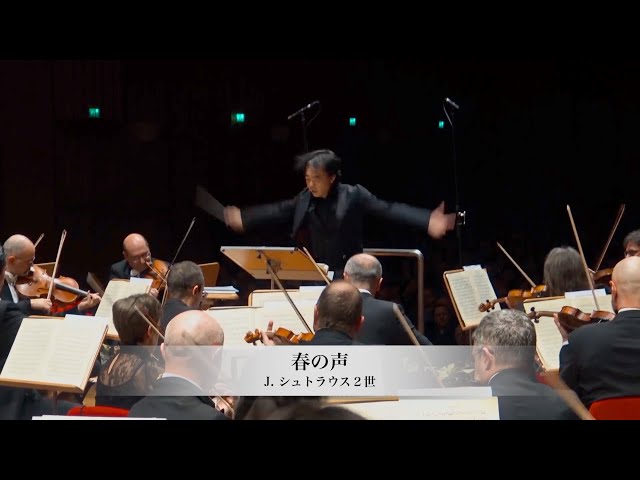
A celebrated orchestral piece by the “Waltz King,” Johann Strauss II, it vividly depicts the arrival of spring.
Premiered in Vienna in March 1883, the work was originally written for the popular soprano Bianca Bianchi.
Over a dazzling orchestral backdrop, flowing melodies evoke birdsong and gentle breezes.
It is a beloved staple at events like the Vienna Philharmonic’s New Year’s Concert and often graces films and other visual media.
Its bright atmosphere and elegant strains make it perfect for concluding a sports day at the closing ceremony, creating a serene moment that warmly honors the hardworking athletes while allowing everyone to cool down comfortably.
The morning newspaperJohann Strauss II33rank/position

The waltz composed by Johann Strauss II in 1864 is an orchestral piece themed around the morning newspaper.
Also known as “The Morning Edition,” it has no lyrics, yet its rhythmic melody conveys the quiet pleasure of picking up a newspaper and the sense of anticipation for a new day.
This brilliant and lively work was performed at Viennese balls, captivating audiences.
A distillation of Strauss II’s exceptional compositional skill and mid-19th-century Viennese culture, it’s also recommended for those who want to savor a morning moment through music.
Explosive PolkaJohann Strauss II34rank/position

The title of the piece became “Explosions Polka” after the invention of nitro.
It seems that Johann Strauss II also incorporated trendy elements into his works.
At the time, the word “explosive” was popular among young people.
It was composed for a charity concert called “The Joyful Explosions Festival.” Throughout the polka, many effects evoke explosions, and especially at the end, there is a loud explosive sound.
Polka of the HuntJohann Strauss II35rank/position

The “Hunting Polka” is a piece Johann Strauss II built as new hunting music, drawing on a story that appears within a stage work.
A polka is a Czech folk dance characterized by a fast rhythm.
The piece itself is very unique, featuring wind instruments that play hunting signals and even expressing whip cracks and gunshots within the music.
Because it is composed around the theme of the hunt, the strings convey a sense of speed while the winds evoke power and bravery.
In fast events or split-second relays, this piece seems likely to heighten the tension.