

Johann Strauss II Popular Song Ranking [2026]

Johann Strauss II, who produced numerous famous waltzes such as “The Blue Danube,” “Tales from the Vienna Woods,” and “Emperor Waltz.”
This time, we’re focusing on him.
We’ve compiled a ranked list of his most-played tracks so far, so please take a look.
- Johann Strauss II | Introducing Famous and Classic Pieces
- Franz Schubert Popular Songs Ranking [2026]
- A masterpiece by Richard Strauss. Popular classical music.
- Gustav Mahler Popular Songs Ranking [2026]
- Jean Sibelius Popular Songs Ranking [2026]
- Johannes Brahms Popular Songs Ranking [2026]
- Johann Burgmüller Popular Song Rankings [2026]
- Franz Liszt Popular Song Ranking [2026]
- Franz Joseph Haydn Popular Song Rankings [2026]
- Wolfgang Amadeus Mozart Popular Song Rankings [2026]
- Ludwig van Beethoven Popular Songs Ranking [2026]
- J.S. Bach Popular Songs Ranking [2026]
- Johann Nepomuk Hummel Popular Song Rankings [2026]
Johann Strauss II Popular Song Ranking [2026] (31–40)
Goddess of ReasonJohann Strauss II36rank/position

Johann Strauss II was unenthusiastic about the composition from the outset, and his creative work progressed slowly; even by the time of the premiere, the overture had still not been completed.
While the music received a certain amount of praise, the critics’ assessment of the libretto was unfavorable.
After his death, Ferdinand Stollberg completely rewrote the libretto while leaving the music unchanged, and when it was performed, it achieved a great success surpassing the original work, “The Goddess of Reason.”
Emperor Franz Joseph I Rescue Celebration MarchJohann Strauss II37rank/position

Johann Strauss II, who had been disliked by the court, took advantage of a ceremony to compose a piece, dedicated it to the Emperor, and at last was permitted to conduct dances at court.
He then composed works such as the Emperor Franz Joseph I Life-Saving Celebration March, and thus was able to secure work at the court.
The Blue Danube, Op. 314Johann Strauss II38rank/position
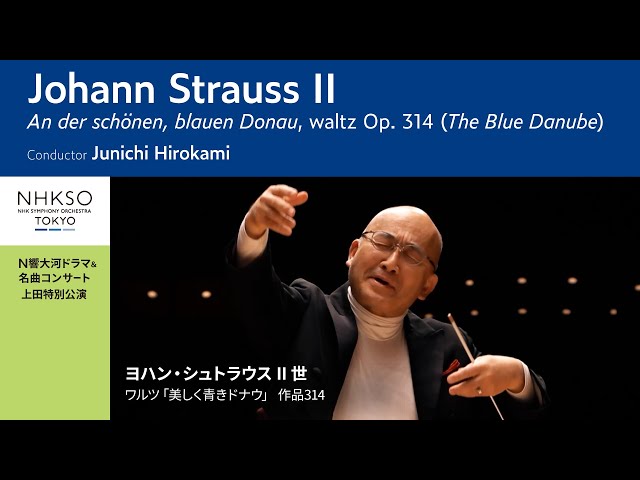
The Blue Danube by Johann Strauss II, synonymous with the Viennese waltz, is cherished as Austria’s unofficial national anthem and was premiered in February 1867 as a choral work written for the Vienna Men’s Choral Association.
Its graceful triple-meter sway and smooth melodies captivate listeners.
Famous, too, for its tie-in with visual media, it colored the space scenes in the film 2001: A Space Odyssey.
With a structure that unfolds from a quiet introduction into a brilliant display, it’s perfect for competitions resembling elegant dances or for large-scale mass performances by an entire student body.
The beautiful resonance of the orchestra will envelop a sports day venue with refinement and impart a special sense of exhilaration.
The Blue Danube, Op. 314 (Arrangement)Johann Strauss II39rank/position

When you think of iconic scenes from the fairy tale Cinderella, the beautifully blooming ball probably comes to mind.
But in this Bold commercial, it’s a different kind of “hana”: a “Nose Ball.” While the other women desperately try to make their noses more appealing, Cinderella, who has been diligently doing laundry, encounters a witch and gains a delightful fragrance.
Thanks to that lovely scent, her fate is completely reversed—she wins the prince’s favor and lives happily ever after… or so the story presumably unfolds from here.
It’s a Bold commercial that drags even the world of fairy tales into its orbit, leaving you curious about what comes next—or rather, about this whole “Nose Ball” concept.
The background music is Johann Strauss’s The Blue Danube.

The life of an artistJohann Strauss II40rank/position

It is said to be a waltz that was written in just a few days.
Its premiere was very poorly received, and Johann Strauss II reportedly lamented to his younger brother Josef about the disappointment of having failed as a composer, saying he had wanted to make it a success somehow.
Today, however, it has completely turned around and become a popular waltz.
Johann Strauss II Popular Song Rankings [2026] (41–50)
Commemorative PoemJohann Strauss II41rank/position

At Johann Strauss II’s debut concert, he premiered the waltz “Gedicht zur Feier,” the “Debut Quadrille,” the polka “To Your Heart’s Content,” and the waltz “Please Favor Us.” In particular, the waltz “Gedicht zur Feier” so captivated the audience that it was encored 19 times.
Other Japanese titles for it include “Epigrammatic Poem,” “Commemorative Song,” and “Aphorisms.” The debut concert was a great success, and newspapers hailed it with the words: “Good night, Strauss I; good morning, Strauss II!”
Wine, women, and songJohann Strauss II42rank/position

Published in 1869, this work is characterized by its lively rhythm and captivating melody.
Symbolizing the hedonistic phrase “wine, women, and song,” the piece celebrates the joys and pleasures of life.
Although it was composed for the Vienna Men’s Choral Association, it is now often performed without vocal parts.
This is one of the pieces that solidified Johann Strauss II’s reputation as the “Waltz King,” and it remains widely beloved at classical concerts and festivals.
Do give it a listen.