

Popularity ranking of recreational activities for children

We introduce kids’ recreational activities in a ranked list.
From indoor and outdoor play to large-group activities for schools and events, we’ve gathered the most popular options among the kinds of recreation kids love.
If you’re thinking, “There are so many activities that I don’t know which ones are popular,” or “I want to learn lots of different games,” be sure to check out this article.
Research the most popular activities and enjoy a great time with the kids!
- [Play Right Away!] Exciting Recreation Games Recommended for Elementary School Students
- [Children’s Club] Easy and fun indoor games. Exciting party games
- Play ideas kids can enjoy from 1st to 6th grade [indoors & outdoors]
- [Elementary School] Quick and Easy! Indoor Recreational Activities Perfect for Lower Grades
- Recommended for upper elementary grades! Exciting indoor recreation and games
- [Elementary School Rec] Recommended Games and Performances for a Fun Party
- Recreation Popularity Rankings for Elementary School Students
- [For Kids] Today's Recommended Recreation Idea Collection
- A big hit at after-school childcare! A special feature on group games and activities you can play without any equipment
- Liven up your children’s club event! A collection of ideas everyone can enjoy
- Indoor recreation popularity ranking
- [For Kids] Exciting Class-vs-Class Games: Team Competition Activities
- [For Kids] Fun Indoor Game Ideas for After-School Day Services
Children’s Recreation Popularity Rankings (11–20)
human disentanglement puzzle11rank/position

The human knot game is a simple, crowd-pleasing activity that kids and adults can enjoy together.
Participants form a circle and hold hands—but you must hold hands with people who are not next to you, and you can only hold the same person with one hand.
Without letting go, twist and maneuver your bodies to untangle the human knot.
As everyone talks and works together to solve it, the excitement naturally builds.
When you succeed, the shared sense of accomplishment brings everyone together and strengthens team unity, making this a highly recommended game.

Epicenter Game12rank/position

If you’re looking for an indoor recreation activity for about 5 to 10 people, the “Epicenter Game” is recommended.
In this game, one person becomes the “epicenter,” and everyone else imitates the actions of the person in that role.
The tagger watches everyone’s movements and tries to guess who the epicenter is.
The epicenter role is especially fun if you time your changes in movement while watching the tagger’s line of sight.

paper airplane13rank/position

Origami that you can make and play with is popular among children.
How about making a paper airplane out of origami and giving it as a gift? There are many ways to fold a paper airplane, but this time we’ll share an idea for one that flies smoothly.
All you need is a rectangular sheet of paper and a stapler.
The steps are simple, so it’s great that you can make it quickly with things you already have at home! After giving it as a present, you can have fun flying the paper airplanes together or folding them together.
Definitely give it a try!
Group shiritori14rank/position

Group Shiritori is a more challenging game than playing Shiritori one-on-one.
Its appeal is that anyone can join regardless of grade level, and you can play it indoors! The key to this game is how quickly the members of a group can communicate with each other.
If the group is too large, communication becomes difficult, so forming groups of two or three is ideal.
Because it tests how well the team can work together, it can also help foster strong bonds among the children.

A game where everyone matches their answers15rank/position

This is a game where everyone thinks of an answer to a given prompt and tries to match those answers.
Since the prompts allow for multiple correct answers, your teamwork in aligning responses will be put to the test.
If you can discuss too thoroughly, it becomes easier to match answers, so it’s recommended to set clear boundaries for how much discussion is allowed.
It’s not only about testing whether your thoughts align; progressing with strategies—such as choosing to match a specific person’s answers—may also be important.

Gesture Game16rank/position
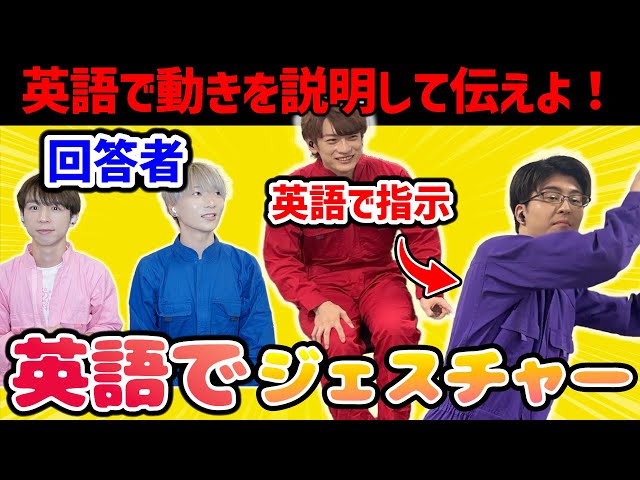
Let’s play a gesture game! It’s that game you often see on variety shows where you hold up a card with a prompt so the guesser can’t see it, then try to convey it through gestures and have them guess.
Of course, you mustn’t speak or make any sounds—gestures only.
Splitting into teams and setting a time limit, like seeing how many you can guess in 30 seconds, will make it even more exciting.

Spinning Kaleidoscope17rank/position

Many kaleidoscopes are the type you view by rotating the body, but this “Kurukuru Kaleidoscope” is one you watch by turning a glass case containing the objects with your hand.
As you turn it, the objects move too, letting you enjoy a variety of shapes and motions.
What’s shown here is a DIY kit, but it’s essentially just mirrors joined into a triangle with a mirror holder attached and a glass case fixed to it, so once you understand the structure, you could probably make one from scrap materials.
Give this different kind of kaleidoscope a try!
One character each! A game where everyone matches the answer together18rank/position

It’s a game where you give a word whose number of characters matches the number of participants.
It sounds simple, but since everyone has to match their answers, it’s surprisingly tricky and very exciting.
You start with two people and a two-character answer; if you get it right, one more person joins and it becomes three characters, and so on, increasing both people and characters.
For example, if you start with two people and the prompt is “Name a fruit,” you have to answer with a two-character fruit and match answers.
Examples include momo (peach), nashi (pear), kaki (persimmon), and kuri (chestnut).
The more people you have, the more difficult it gets.
a shootable origami gun19rank/position

Many origami weapons focus on appearance, so their movement can feel a bit lacking.
This is an origami gun that’s satisfying even in its mechanical aspects, featuring a mechanism that actually fires a projectile.
You make the barrel piece for loading the bullet and the trigger piece separately, then assemble them together with the handle piece to complete the whole structure.
It’s important to secure everything firmly so it won’t break when you pull the trigger or fire a shot.
Finally, attach a rubber band, place a straw or a thin paper bullet in the barrel, and pull the trigger to launch the projectile.
Gorilla Game20rank/position

Let me introduce a game that will have your class roaring with laughter: the Gorilla Game.
Choose one child in the classroom, and have them answer every question from the questioner with the word “Gorilla.” For example, if the question is, “What did you eat for breakfast today?” the child answers, “Gorilla.” Of course, the questioner should react with a funny comeback to the “Gorilla” answer.
This back-and-forth will make the kids burst into laughter.
Make sure the final question sets up a punchline.
Also, the questioner’s reactions are key—add some facial expressions to make it even more exciting.
