

Showa Era Popular Artist Rankings [2026]

This time, we’ll be introducing Showa-era artists all at once in a ranking format!
The Showa period was also a time when the spread of television gave rise to many music stars.
Be sure to check out which artists were popular.
- Top Male Singer-Songwriter Hits of the 1980s: Ranking [2026]
- Ranking of Popular Songs by Japanese Male Singers from the 1990s [2026]
- Showa-era nostalgic songs: Popular ranking
- Top 1980s Female Singer-Songwriters: Popular Songs Ranking [2026]
- Popular Enka Singers Ranking [2026]
- Ranking of Popular Japanese Music and J-POP Artists Among People in Their 60s [2026]
- [50s] Popular Song Ranking by Generation [2026]
- Ranking of Popular Nostalgic Songs and Classics [2026]
- Ranking of Popular Japanese Music and J-POP Artists Among People in Their 40s [2026]
- Popular Japanese Music / J-POP Artist Rankings [2026]
- Ranking of Popular Japanese Pop (J-Pop) Artists Among People in Their 50s [2026]
- Cool songs from the Showa era. Masterpieces from Showa that shine with sensuality, passion, and rugged charm.
- Male-Popularity Artist Rankings [2026]
Showa Era Popular Artist Rankings [2026] (61–70)
Two People’s Love IslandIshikawa Yuko & Chage64rank/position
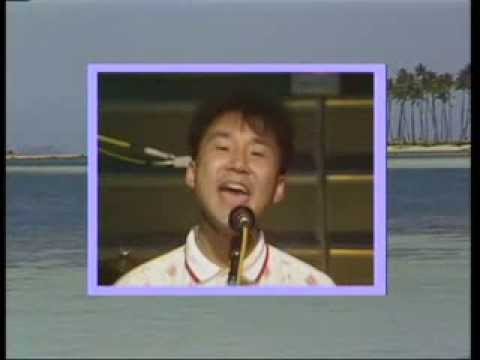
One of the duet songs that represents the Showa era is “Futari no Airando” by Yuko Ishikawa and Chage.
Released as a single in 1984, it reached No.
3 on the Oricon Singles Chart.
It was used in a JAL commercial, and both the lyrics and the musical style were created with Okinawa in mind.
Although “coconuts” appear in the lyrics, there were actually no coconuts in Okinawa; there’s even an anecdote that they got around this by making a pun, linking “kokonattsu” (coconuts) with “koko wa natsu” (it’s summer here).

You are in full color.Ohtaki Eiichi65rank/position

It’s a classic that blends nostalgia with freshness.
Showcasing Eiichi Ohtaki’s delicate musicality, this work was released in March 1981 and included on the album “A LONG VACATION.” It paints the ache of a lost love with vividly colorful expressions.
The unusual twist of lowering the key only in the chorus is also captivating.
After 40 years, a music video was produced for the first time in March 2021, and it has garnered over 6 million views.
While evoking the Showa era, the piece has a timeless appeal that resonates today.
It’s perfect for when you want to bask in nostalgia or reflect on someone dear.
Use it as BGM for your Instagram Reels, and your post will have a wonderful atmosphere.
High-Teen BoogieKondō Masahiko66rank/position

A classic song that captures the brilliance and transience of youth was released in June 1982.
With lyrics by Takashi Matsumoto and composition/arrangement by Tatsuro Yamashita, the piece was also used as the theme song for a Toho film of the same title, becoming a major hit that reached No.
1 on the Oricon charts.
Beneath its seemingly defiant lyrics lies a message that champions love, freedom, and the importance of self-determination, resonating deeply with the youth of the time.
Combined with Masahiko Kondo’s powerful vocals, it became a defining track of 1980s youth culture.
It’s a timeless song that speaks to the heart—recommended both for those who wish to look back on their youthful memories and for younger generations unfamiliar with that era.
Until we meet againOzaki Kiyohiko67rank/position
Known as one of Kiyohiko Ozaki’s signature songs, this piece is a masterpiece that, while centered on parting, conveys a sense of forward-looking resolve.
Yu Aku’s carefully woven lyrics portray a mature breakup that spares each other pain, while Kyohei Tsutsumi’s melody resonates deeply in the heart.
Released in March 1971, it won both the Japan Record Award and the Japan Kayō Award.
It was also selected as the entrance march for the 1972 National High School Baseball Invitational Tournament, and it continues to be cherished across generations.
It’s a moving song that I hope you’ll listen to not only if you’ve experienced a farewell, but also when you want to feel the bond with someone important to you.
White ChristmasJUN SKY WALKER(S)68rank/position

A legendary rock band that boosted their profile through street performances in pedestrian zones and helped lead the band boom of the 1980s, JUN SKY WALKER(S).
Their third single, “Shiroi Christmas,” used in a Matsushita Electric (Panasonic) commercial for a CD radio-cassette player, became their first number-one hit on the Oricon singles chart.
The expansive strings and lyrical guitar ensemble evoke the wintry Christmas sky, just as the title suggests.
With sentimental vocals and a moving melody, it stands as a classic among Christmas songs.

foreignerKUBOTA Saki69rank/position

“So you only ever see me as someone just passing by….” Foreign Visitor (Ihōjin) poetically captures a woman’s wistful, unrequited love.
Released in 1979 as singer-songwriter Saki Kubota’s debut single, the song’s enigmatic lyrics can make it hard to recognize at first listen as a love song—perhaps one of the charms of Showa-era romance music.
On top of that, it features meticulous compositional craft, shifting from a darker verse to a bright key change in the chorus.
Give it multiple listens and savor the profound depth of Showa kayō!

Get WildTM NETWORK70rank/position
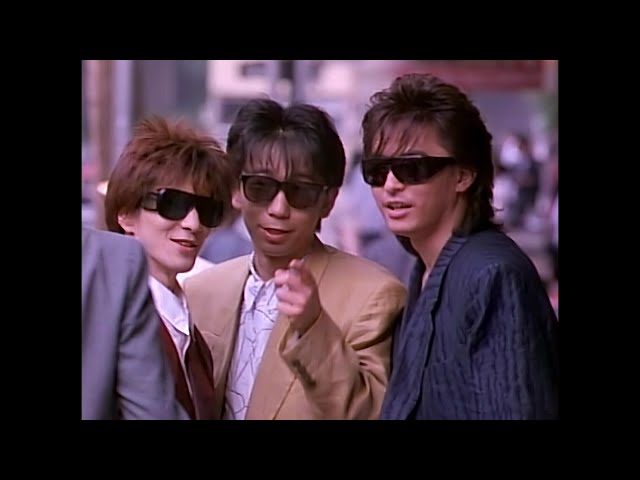
An innovative sound that begins with the roar of tires racing through the city night.
Featured as the ending theme of the anime City Hunter, this song instantly boosted TM NETWORK’s recognition.
Its lyrics—singing of adventurous spirit, the challenge of the unknown, and the importance of becoming strong for someone else—resonate with many.
Since its release in April 1987, it has remained a staple of karaoke and anime songs, radiating timeless charm even 35 years later.
Performed live in various arrangements, it reveals new appeal each time.
It’s also a popular track on YouTube Shorts.