

Showa Era Popular Artist Rankings [2026]

This time, we’ll be introducing Showa-era artists all at once in a ranking format!
The Showa period was also a time when the spread of television gave rise to many music stars.
Be sure to check out which artists were popular.
- Top Male Singer-Songwriter Hits of the 1980s: Ranking [2026]
- Ranking of Popular Songs by Japanese Male Singers from the 1990s [2026]
- Showa-era nostalgic songs: Popular ranking
- Top 1980s Female Singer-Songwriters: Popular Songs Ranking [2026]
- Popular Enka Singers Ranking [2026]
- Ranking of Popular Japanese Music and J-POP Artists Among People in Their 60s [2026]
- [50s] Popular Song Ranking by Generation [2026]
- Ranking of Popular Nostalgic Songs and Classics [2026]
- Ranking of Popular Japanese Music and J-POP Artists Among People in Their 40s [2026]
- Popular Japanese Music / J-POP Artist Rankings [2026]
- Ranking of Popular Japanese Pop (J-Pop) Artists Among People in Their 50s [2026]
- Cool songs from the Showa era. Masterpieces from Showa that shine with sensuality, passion, and rugged charm.
- Male-Popularity Artist Rankings [2026]
Showa Era Popular Artists Ranking [2026] (91–100)
Tsubpari High School Rock ’n’ Roll (Going-to-School Edition)Yokohama Ginbae92rank/position
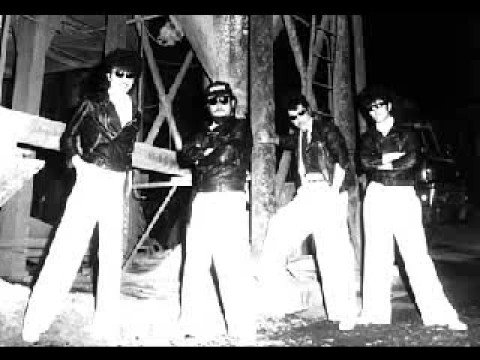
This is a single released in January 1981 that portrays the relationship between a headstrong high schooler and their parent with lively rock ’n’ roll.
The lyrics follow a 7-7-7-5 meter, creating a pleasing sense of rhythm and comically expressing the inner world of a rebellious youth.
While it vividly depicts the style and behavior of a delinquent, it’s also a nuanced work that reveals glimpses of care for the mother and a search for one’s own way of life.
It has remained beloved across generations, appearing in a 2008 commercial for Suntory’s canned chuhai “Calori.” and covered in a 2011 Asahi Soft Drinks “Jurokucha” ad featuring Yui Aragaki.
Today, it’s a trending track for posting dance videos on social media with simple, modern choreography.
Wax MuseumSeikima II93rank/position

Seikima-II’s songs, created as part of their long-running mission to conquer the Earth since the Showa era, are perfect for Halloween.
This particular track, a shocking piece released in April 1986, depicts the terror of a girl being turned into a wax doll in a mansion deep in the forest.
The lyrics hint at a brutal incident and the fear of losing tomorrow within it, sending chills down the listener’s spine.
The song was also used as an insert track in the anime Beelzebub.
It’s a highly recommended pick when you want to create a scary atmosphere at a Halloween party.
240 Million Eyes -Exotic Japan-Gō Hiromi94rank/position

This is one of Hiromi Go’s signature songs, blending lyrics that celebrate the beauty and culture of Japan with an energetic disco-style rhythm.
Released in November 1984, the track coincided with a time when Japan was beginning to attract international attention, and it became a major topic of conversation.
Through this work, Hiromi Go expressed a strong desire to share the uniqueness and allure of Japanese culture with the world.
In live performances, flashy staging further enhances the song’s atmosphere, continuing to captivate audiences.
It’s a recommended track for anyone who wants to rediscover what makes Japan special or needs a boost of energy.
ChampionArisu95rank/position

A signature song by Alice that dominated Japan’s music scene in the late 1970s.
With its distinctive fusion of folk and rock, it became their only single to reach No.
1 on the Oricon charts.
The lyrics, said to mirror the figure of boxer Cassius Naito, portray a veteran champion in decline and deftly capture the emotions of someone facing a turning point in life.
The song also drew major attention on television, spending four consecutive weeks at No.
1 on TBS’s “The Best Ten.” Featuring Shinji Tanimura’s powerful vocals and the exquisite harmonies of Takao Horiuchi and Toru Yazawa, this is a track we recommend to anyone standing at a crossroads in life.
A café in a student districtGaro96rank/position

A classic song that portrays youthful days spent in a beloved coffee shop.
Its gentle melody and delicate lyrics resonate deeply with many listeners.
Released in June 1972, it became a major hit, topping the Oricon Singles Chart for seven consecutive weeks the following year.
Known as one of Garo’s signature songs, it has since been covered by various artists.
Set against the backdrop of Bob Dylan’s music, this piece evokes memories of the casual conversations shared with friends and lovers.
It’s a recommended track for when you want to rekindle nostalgic memories or reflect on time spent with someone special.
Rainy BlueTokunaga Hideaki97rank/position

This is the major debut single by singer-songwriter Hideaki Tokunaga, who has earned enduring popularity with his distinctive high-tone voice and lyrical singing.
Given how many prominent musicians have covered it, chances are everyone has heard it at least once.
The lingering feelings for an unforgettable, precious person intertwine with the rainy scenery, and Tokunaga’s androgynous, translucent vocals double the sense of poignancy.
Its fragile, beautiful melody soothes a wounded man’s heart, making it a quintessential unrequited-love song.
SHOW MEMorikawa Yukari98rank/position

Released in 1987 and a big hit as the theme song for the TV drama “Danjo 7-nin Aki Monogatari,” this is one of Yukari Morikawa’s signature tracks.
It’s a cover of a song by the Western artist The Cover Girls.
With a sound that exudes a glamorous vibe and evokes the end of the Showa era and the bubble economy, it may be a song that even shifted the dynamics of relationships between men and women.
Reading the lyrics, you can sense a dependable strength, as if she’s the one leading the man.
At the same time, there’s a gentleness in lines like “I’ll stay by your side when times are tough,” making it perhaps a revolutionary love song for its time.
