

Showa Era Popular Artist Rankings [2026]

This time, we’ll be introducing Showa-era artists all at once in a ranking format!
The Showa period was also a time when the spread of television gave rise to many music stars.
Be sure to check out which artists were popular.
- Top Male Singer-Songwriter Hits of the 1980s: Ranking [2026]
- Ranking of Popular Songs by Japanese Male Singers from the 1990s [2026]
- Showa-era nostalgic songs: Popular ranking
- Top 1980s Female Singer-Songwriters: Popular Songs Ranking [2026]
- Popular Enka Singers Ranking [2026]
- Ranking of Popular Japanese Music and J-POP Artists Among People in Their 60s [2026]
- [50s] Popular Song Ranking by Generation [2026]
- Ranking of Popular Nostalgic Songs and Classics [2026]
- Ranking of Popular Japanese Music and J-POP Artists Among People in Their 40s [2026]
- Popular Japanese Music / J-POP Artist Rankings [2026]
- Ranking of Popular Japanese Pop (J-Pop) Artists Among People in Their 50s [2026]
- Cool songs from the Showa era. Masterpieces from Showa that shine with sensuality, passion, and rugged charm.
- Male-Popularity Artist Rankings [2026]
Showa Era Popular Artist Rankings [2026] (71–80)
The Day the Seagulls FlewWatanabe Machiko71rank/position
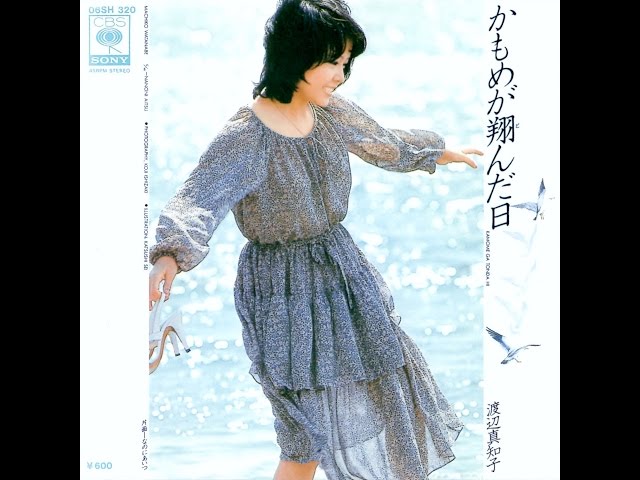
Set in a port town, this gem of a ballad poignantly portrays the pain of heartbreak.
Against the glittering morning seascape, the singer overlays her feelings for a departing lover onto a single seagull, creating a moving masterpiece.
Released in April 1978, it became one of Machiko Watanabe’s signature songs, peaking at No.
5 on the Oricon charts.
The track won numerous music awards and drew attention to her as a rising talent among female singers.
In 2007, it was adopted as a Chiba Lotte Marines cheer song, with a special stadium version also released.
A performance by Japan’s dance team Avantgardey, featuring their unique choreography, garnered significant buzz and boosted the song’s recognition among younger audiences.
It’s a recommended listen for anyone who can relate to a woman quietly accepting the pain of lost love, or for those who wish to revisit youthful memories alongside the scenery of a harbor town.
YOUNG MAN (Y.M.C.A.)Saijō Hideki72rank/position

This is a song that delivers an energetic, uplifting message.
Aimed at young people, it gives them the courage to pursue their dreams.
Hideki Saijo’s powerful vocals resonate deeply with listeners.
Released in February 1979, it held the No.
1 spot on the Oricon charts for five consecutive weeks and became a massive hit, selling 1.808 million copies.
This work is perfect for those starting a new chapter in life or standing at a crossroads.
It’s also ideal for boosting motivation or getting pumped up with friends.
Saijo’s passionate, heartfelt singing is sure to lift your spirits.
A street corner where even lovers get wetNakamura Masatoshi73rank/position

This is a song that portrays a mature romance set against the backdrop of Yokohama.
Masatoshi Nakamura’s deep, rugged vocals are a perfect match for the erotic lyrics crafted by Keisuke Kuwata of Southern All Stars.
Released in September 1982, the track vividly reflects the atmosphere of Yokohama at the time, with iconic scenery woven into the lyrics as part of its charm.
The lyrics delicately capture the bittersweet emotions of lovers on a rainy street corner, resonating deeply with listeners.
It’s a recommended track for those who want to feel the complex emotions unique to adult relationships and the passion sparked by a fleeting, one-night encounter.
You are more beautiful than a rose.Fuse Akira74rank/position

It sings of that dramatic feeling when you’re suddenly taken aback by the beauty of someone you haven’t seen in a long time.
Released in January 1979 as Japanese singer Akira Fuse’s 42nd single, the song features a very urbane sound crafted by Godiego’s Mickey Yoshino that blends perfectly with Fuse’s overwhelming sustained notes.
At the time, it was used in a Kanebo cosmetics commercial and drew attention for featuring Olivia Hussey.
The lyrics can be read as a paean to women, making it perfect for moments like a bride’s re-entrance after a costume change, when you want to highlight her radiant presence.
It will instantly brighten the whole venue.
My lover is Santa ClausMatsutōya Yumi75rank/position

How about a catchy winter song that heightens the festive Christmas spirit? It’s a track by the singer Yumi Matsutoya, known for numerous hits like “A Midsummer Night’s Dream” and “Spring, Come,” included on her 1980 album “SURF & SNOW.” The song was also featured in the film “Take Me Out to the Snow.” Just as the title suggests, the cute lyrics likening a lover to Santa will grab your heart.
If you’re spending this Christmas with someone special, be sure to listen to this song together.

You’re 1000%1986 omega toraibu76rank/position

A classic that colored Japan’s music scene in the 1980s is once again capturing the hearts of a new generation.
The debut single by 1986 Omega Tribe is marked by its urban, sophisticated sound and breezy melody.
Carlos Toshiki’s smooth vocals beautifully convey the flutter and poignancy of being in love.
Released on May 1, 1986, the track quickly drew attention as the theme song for the TV drama “Shin Netsuchu Jidai Sengen.” With lyrics that feel like snapshots of youth—summer by the sea, the courage to make a phone call—it’s sure to resonate across generations.
Blending nostalgia with freshness, this work is also a perfect entry point into city pop.
SOMEDAYSano Motoharu77rank/position

A classic by Motoharu Sano that sings of the radiance of youth and hope for the future.
Its poetic lyrics capture the struggles of being young and a nostalgic longing for days gone by.
Released as a single in June 1981 and included on an album of the same name the following year, it gained renewed attention in 1989 when it was featured in a JR Tokai commercial.
Characterized by a Phil Spector–style Wall of Sound, it has been covered by many artists.
A recommended track for those stepping into a new environment or looking back on their past selves.