

![Showa Era Popular Artist Rankings [2026]](https://i.ytimg.com/vi_webp/-8ti65TXzP8/maxresdefault.webp)

This time, we’ll be introducing Showa-era artists all at once in a ranking format!
The Showa period was also a time when the spread of television gave rise to many music stars.
Be sure to check out which artists were popular.
- Top Male Singer-Songwriter Hits of the 1980s: Ranking [2026]
- Ranking of Popular Songs by Japanese Male Singers from the 1990s [2026]
- Showa-era nostalgic songs: Popular ranking
- Top 1980s Female Singer-Songwriters: Popular Songs Ranking [2026]
- Popular Enka Singers Ranking [2026]
- Ranking of Popular Japanese Music and J-POP Artists Among People in Their 60s [2026]
- [50s] Popular Song Ranking by Generation [2026]
- Ranking of Popular Nostalgic Songs and Classics [2026]
- Ranking of Popular Japanese Music and J-POP Artists Among People in Their 40s [2026]
- Popular Japanese Music / J-POP Artist Rankings [2026]
- Ranking of Popular Japanese Pop (J-Pop) Artists Among People in Their 50s [2026]
- Cool songs from the Showa era. Masterpieces from Showa that shine with sensuality, passion, and rugged charm.
- Male-Popularity Artist Rankings [2026]
Showa Era Popular Artists Ranking [2026] (1–10)
ShipwreckNakamori Akina1rank/position

An emotionally rich ballad depicting a woman’s heart adrift in deep loneliness after losing the one she loves.
Originally released by Tokiko Kato in 1984, the song was covered by Akina Nakamori in 1987 and performed at the 38th NHK Kōhaku Uta Gassen.
While her mind tells her to “give up,” her emotions overflow and drive her to want to chase after her beloved—feelings that Nakamori’s sultry vocals express to perfection.
The song won the Gold Prize at the 29th Japan Record Awards and topped the Oricon charts, achieving an astonishing 410,000 copies sold.
It has also inspired numerous covers by renowned artists such as Kaori Momoi and Tomomi Kahala.
A gem of a masterpiece to listen to alone, quietly, when heartbreak leaves you on the verge of breaking.
Blue Coral ReefMatsuda Seiko2rank/position

It’s a classic with a striking intro that seems to carry the sparkle of the sun and the scent of the sea breeze.
You can picture a summer day by the ocean with someone you love—the racing heartbeat and the little burst of boldness that comes with it.
It evokes scenes of a sweet and dazzling romance.
This song, which propelled Seiko Matsuda to the status of “eternal idol,” was released in July 1980 as her second single and is also included on her debut album, SQUALL.
As the theme for Glico’s ice cream commercial, it brightened living rooms across the nation and topped The Best Ten for three consecutive weeks.
It’s a refreshing track that instantly paints listeners’ hearts in summer hues.
Be kind to othersTHE BLUE HEARTS3rank/position

A classic that’s been at the core of the band since their indie days and has continued to be loved long after their major-label debut.
Hiroto Kōmoto’s earnest vocals and straightforward encouragement deeply move everyone who listens.
Although it was released as a single in 1988, it was also used as an insert song for the 2002 TV drama “Be Nice to People” and as a jingle for the Calorie Mate commercials, making it popular across generations.
Included on best-of collections like “SUPER BEST,” this piece shines with a universal brilliance that transcends the punk genre.
In the school admission season, when hope and anxiety mix, listening to this song will surely give you courage.
It’s a powerful track that will firmly push you forward as you take your first step into a new environment.
Do whatever the hell you want.sawada kenji4rank/position

When it comes to Kenji Sawada’s signature songs that dominated the music scene of the ’70s, this is the one.
It portrays the complex emotions of a man after a breakup, expressing a free-spirited mindset alongside resignation and loneliness.
It held the No.
1 spot on the Oricon weekly chart for five consecutive weeks, ranked No.
4 for the year, and sold an impressive 890,000 copies.
Released in May 1977, the song features lyrics by Yū Aku and composition by Katsuo Ōno.
Its bold structure—shifting from ballad to hard rock—is a defining trait, strongly reflecting arranger Motoki Funayama’s influence.
The sophisticated, bittersweet lyrics capture the youth culture and views on love of the time with vivid clarity, and it’s sure to resonate just as powerfully even today.
Two People’s Summer Story – NEVER ENDING SUMMER –Sugiyama Kiyotaka & Omega Tribe5rank/position

A landmark of city pop by Kiyotaka Sugiyama & Omega Tribe, this song paints a sweet yet bittersweet love story set on summer seashores.
Against backdrops of sandy beaches and marinas, the fleeting arc of a romance—from meeting to parting—is beautifully portrayed with an urbane, sophisticated sound.
Released in March 1985, it was featured in a Japan Airlines JALPAK ’85 commercial.
It reached No.
5 on the Oricon charts and achieved the remarkable feat of placing second in the 1985 annual rankings of The Best Ten.
An eternal classic to revisit alongside summer memories, it’s a song that accompanies seaside dates and moments spent reflecting on an unforgettable love.
MPRINCESS PRINCESS6rank/position

The heartrending ballad that depicts the pain of heartbreak remains a beloved hidden gem among Princess Princess’s fans.
Inspired by drummer Kyoko Tomita’s own experiences, the lyrics leave a strong impression, centering on lingering feelings and sorrow for a past lover.
Released in April 1989 as the B-side to “Diamonds,” it went on to achieve remarkable commercial success, including becoming the first million-selling single CD in history.
It’s a song we highly recommend not only to those who have experienced heartbreak, but to anyone who has ever felt the ache of longing for someone.
I can’t stop this sadnessAnri7rank/position
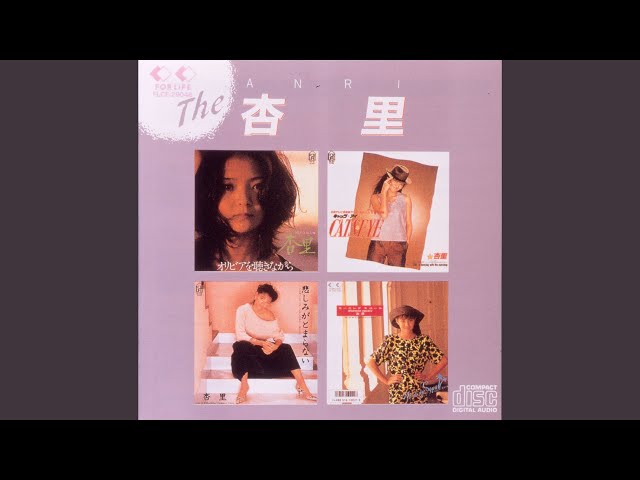
Anri, a city pop songstress who was active from the late Showa era to the early Heisei era.
Centered on the theme of heartbreak, this work is her 14th single, released in November 1983.
The contrast between the bright, quintessentially ’80s piano melody and the sorrowful lyrics is striking.
The painful turn of events—having a lover taken by a friend—is conveyed through Anri’s clear, translucent voice.
It was a major hit, ranking within the top 10 on the Oricon Singles Chart and appearing on TBS’s “The Best Ten” for nine consecutive weeks.
It’s a recommended track for when you want to heal the pain of heartbreak or sink into a wistful mood.