

A masterpiece by Richard Strauss. Popular classical music.

Richard Strauss is a composer who represents the German late Romantic period.
Strauss’s representative work, the symphonic poem Thus Spoke Zarathustra, is known as the theme music for the film 2001: A Space Odyssey.
His symphonic poems Macbeth and Till Eulenspiegel’s Merry Pranks are also frequently performed by wind ensembles, making him a familiar composer to many wind band musicians.
In his early period, under the influence of his father, Strauss wrote many works that adhered to classical styles like those of Mozart and Schumann.
After meeting Alexander Ritter—who married one of Wagner’s nieces—he began composing more innovative works.
Here, I will introduce pieces that let you enjoy both Strauss’s classical side and his transformation into a master of the symphonic poem.
Listening in chronological order makes it easier to appreciate the changes in his style, so I hope you’ll keep the period of composition in mind as you listen.
- Johann Strauss II | Introducing Famous and Classic Pieces
- Classical Masterpieces: Recommended Works You Should Hear at Least Once
- [Masterpiece Classics] A special showcase of gem-like masterpieces so beautiful they’ll move you to tears
- A masterpiece by Richard Wagner. Popular classical music.
- [Quartet] Masterpieces and Popular Pieces for String Quartet
- Brahms's masterpieces. Popular classical music.
- Masterpieces of the Romantic Era: A sweeping introduction to soul-stirring, celebrated gems!
- Elgar’s masterpiece. Popular classical music.
- Timelessly beautiful classical masterpieces. Recommended classical music.
- Stravinsky’s masterpiece. Popular classical music.
- Masterpieces by Gustav Mahler. Popular classical music.
- [Orchestra] Introducing famous and popular pieces
- Rimsky-Korsakov’s Masterpieces | The Vividly Colorful World of Russian Music
Masterpieces by Richard Strauss: Popular classical music (21–30)
Double Little Concerto in F major, TrV 293, for Clarinet and Bassoon with String Orchestra and HarpRihyarto Shutorausu

Let me introduce a late work by Richard Strauss.
Composed in 1947, this piece is a double concerto for clarinet and bassoon, featuring the unusual scoring of string orchestra and harp as accompaniment.
It was originally intended to include a narrative element—something like “The Swineherd and the Princess”—but ultimately was completed as a purely instrumental work.
Lasting about 20 minutes, its three movements are performed without a break, and the beautiful dialogue between clarinet and bassoon is especially striking.
It reflects Strauss’s mature style and is a highly recommended piece for classical music enthusiasts.
All Souls’ DayBarbara Bonney
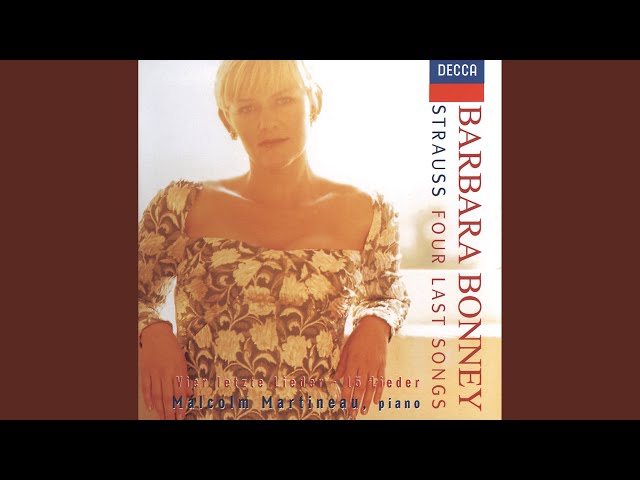
Richard Strauss, a composer emblematic of the German Late Romantic era.
Among his works, the final song of the Eight Songs to Poems by Hermann von Gilm’s “Letzte Blätter,” published in 1885, is especially beautiful.
This piece is associated with All Souls’ Day on November 2, a day for remembering the departed, and it depicts the yearning to rekindle an old romance.
Though it is a song with piano accompaniment, it is renowned as a masterful ballad that distills the decadent beauty characteristic of the Late Romantic period.
Fully showcasing Strauss’s early lyricism, the work has long been cherished by classical music enthusiasts, and in 1932 it was arranged for orchestra by Heger.
Stirring deep emotion and empathy, this song is recommended for those who wish to reflect quietly on life and love.
Don QuixoteJōji Seru shiki, Kurīburando Kangengakudan

This is also a symphonic poem.
The original story is Don Quixote, written by the Spanish author Miguel de Cervantes.
This piece is famous for featuring solo cello and viola within the orchestra, and it drew attention not only for the music itself but also for its compositional techniques.
Suite for 13 Wind InstrumentsRihyarto Shutorausu

Composed when he was 20, this work is an ambitious piece by Richard Strauss that follows the classical suite form while incorporating elements of Romanticism.
Scored for 13 wind instruments, it consists of four movements.
It showcases Strauss’s mastery of instrumental writing, meticulous motivic development, and skillful counterpoint throughout, and is highly regarded as a substantial achievement by the young composer.
It premiered in Munich in October 1884, conducted by Strauss himself.
Highly recommended for those interested in classical music or wishing to savor the appeal of wind instruments.
Horn Concerto No. 2 in E-flat majorRihyarto Shutorausu

This is a late masterpiece by Richard Strauss.
Strauss’s father was a horn player, and Strauss was familiar with the horn’s timbre from an early age.
This work reflects Strauss’s mature compositional technique and deep musical insight.
It consists of three movements, with the third movement in particular conveying a lightness and brightness that feel like an homage to Mozart.
Premiered at the Salzburg Festival on August 11, 1943, the piece maintains a hopeful atmosphere despite the wartime context.
It fully draws out the horn’s rich expressive capabilities, making it recommended not only for classical music fans but also for anyone captivated by the charm of the horn.
Violin SonataRihyarto Shutorausu

Richard Strauss, a leading figure of the late Romantic era, was a composer born in Munich in 1864.
His musical career accelerated through his father’s connections, and he also rose to prominence as a conductor.
This work is his only violin sonata, composed between 1887 and 1888.
While it follows the classical three-movement form, it strongly reflects Strauss’s distinctive individuality.
In particular, the second movement, “Improvisation,” is characterized by its sweet, beautiful melodies and conveys a romantic passion that evokes his meeting with the soprano Pauline de Ahna, whom he would later marry.
For classical music enthusiasts, this is a compelling piece that epitomizes a turning point in Strauss’s style, and one I highly recommend listening to.
Domestic SymphonyRihyarto Shutorausu

This is a programmatic symphony depicting domestic life by Richard Strauss, a composer who represents the late Romantic period in Germany.
Born in Munich in June 1864, Strauss began serious composition at the age of six under his father’s influence.
Composed between 1902 and 1903, the work premiered in New York in March 1904.
It is scored for a large orchestra with quadruple winds and has a performance time of about 43 minutes.
Three principal themes portray Strauss himself, his wife Pauline, and their son Franz, with everyday family life expressed through music.
The piece showcases Strauss’s outstanding orchestration and his deep affection for family life.
It is recommended for those interested in classical music or who enjoy works that portray daily life through music.