

Fuyumi Sakamoto’s famous and popular songs

Let me introduce the songs of enka singer Fuyumi Sakamoto.
She has released many well-known masterpieces, such as “Mata Kimi ni Koishiteru.”
Her greatest appeal is, of course, her vocal ability.
Her clear, pristine voice is simply captivating.
It’s said that in a middle school essay she wrote, “I want to become an enka singer,” so you could say she was destined to become one.
Now, please enjoy Fuyumi Sakamoto’s many masterpieces in this playlist.
- [Wakayama’s Treasure] Fuyumi Sakamoto’s Easy-to-Sing Songs
- Fuyumi Sakamoto's Most Popular Karaoke Songs Ranking [2026]
- Fuyumi Sakamoto Popular Song Ranking [2026]
- Miyako Otsuki Popular Songs Ranking [2026]
- [2026] Enka to Listen to in Winter: A Collection of Classic Enka Songs Depicting Snow and Cold
- Great enka masterpieces and hit songs of the 1970s
- Classic enka songs you’ll want to sing at karaoke: recommended popular tracks
- Cool masterpieces of enka, the heart of Japan
- Women’s Enka: A collection of classic enka songs expressing women’s emotions
- [2026] Representative Famous Enka Songs: A Compilation of Classic Favorites [Beginner-Friendly]
- [2026] A Collection of Classic Enka Songs Depicting Winter Scenery
- Nostalgic enka. A collection of classic enka hits from the Showa era.
- Queen of Enka: A roundup of Aki Yashiro’s easy-to-sing songs
Fuyumi Sakamoto’s classic and popular songs (21–30)
Whimsical JourneySakamoto Fuyumi
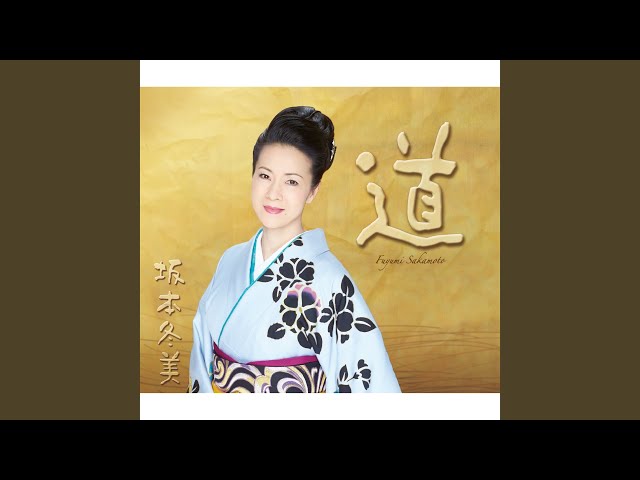
In 2003 (Heisei 15), she resumed her activities, and on September 3 released “Kimagure Dōchū.” As the title suggests, it’s an enka song evoking the sentiments of travel.
Around this time, Kiyoshi Hikawa had debuted, and there may have been some influence from his early songs.
Rather than a trip to a specific place, however, it conveys a message of taking life as a journey—easygoing and relaxed.
It peaked at No.
17 and sold 67,000 copies.
The B-side of the next single, “Sui-Kazura (Honeysuckle)” (released November 12, 2003), includes a duet version with composer Chiaki Oka.
celebratory sakeSakamoto Fuyumi

Released on April 6, 1988 (Showa 63).
In his second year after debut, the pivotal song was Iwaizake (Celebration Sake), which celebrates a bright new start in life.
Sales grew steadily, reaching a peak of No.
16 on the Oricon chart with 335,000 copies sold.
He made his first appearance on the Kohaku Uta Gassen.
The lyrics were written by Takashi Taka, and the music was composed by Kimitsune Inomata.
For a while after his debut, songs continued to be composed by Kimitsune Inomata.
Fuyumi Sakamoto’s Famous and Popular Songs (31–40)
with dignified composureSakamoto Fuyumi

Released on April 11, 2001 (Heisei 13).
Following “Taishi (Ambition)” and “Kaze ni Tatsu,” this is another anthem that cheers on life.
Up to now, many of the songs tended to support men in particular, but this one feels less confined by gender and conveys a message of elevating oneself as a human being.
It peaked at No.
30 and sold 90,000 copies.
O-Shichi and the Night Cherry BlossomsSakamoto Fuyumi

Released on September 7, 1994 (Heisei 6).
Since her debut, she had been releasing singles at a pace of roughly one per year, but perhaps due to the accelerating trend of pop CDs selling rapidly right after release, the cycle began to shorten around this time.
This song, released in the completely opposite season, became a hit and one of her signature works.
It peaked at No.
24 and sold 149,000 copies.
Although it didn’t have the immediate momentum of her debut, it revived her previously sluggish sales.
It also matched well with her image as a sensuous, alluring woman.
Like cherry blossomsSakamoto Fuyumi

Released on May 17, 2011 (Heisei 23).
It includes the signature song “Yozakura Oshichi,” but overall it feels more like a cheer song aimed at listeners across Japan.
Rather than praising the beauty of cherry blossoms, its message seems to be: live strong and resilient like a cherry tree.
It peaked at No.
21, with sales of 18,000 copies.
Kinokawa (Kii River)Sakamoto Fuyumi

Released on March 19, 2008.
The literary novel series continues, and it seems that “Kinokawa” is based on a novel by Sawako Ariyoshi.
It portrays the lives of women set in Wakayama.
This appears to be the first time she has sung about her hometown.
Peaked at No.
18, with 27,000 copies sold.
RashōmonSakamoto Fuyumi

Released on June 7, 2006 (Heisei 18).
A song created to commemorate the 20th anniversary of the debut.
It sings of a man who fights at the risk of his life.
In the music video, he wore a stern expression with a Japanese sword in one hand, and the song is finished with a heavy, dramatic feel.
Peak position: 29th; sales: 16,000 copies.