

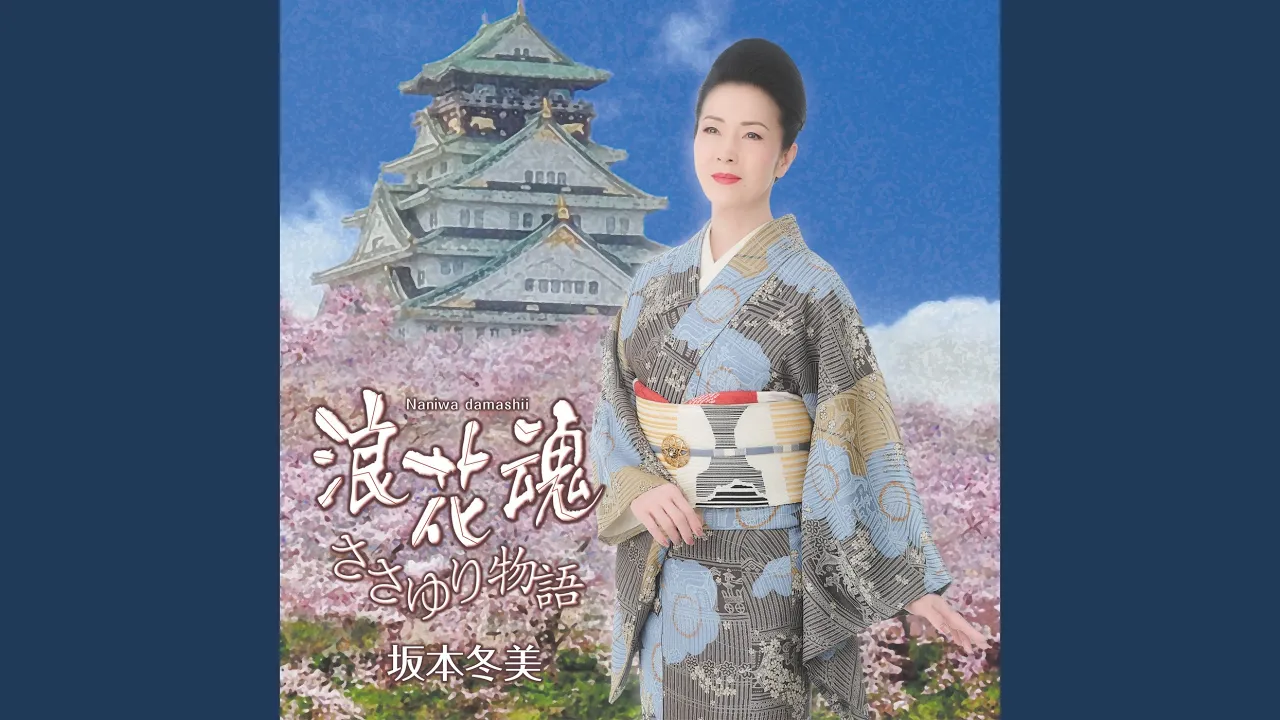

Let me introduce the songs of enka singer Fuyumi Sakamoto.
She has released many well-known masterpieces, such as “Mata Kimi ni Koishiteru.”
Her greatest appeal is, of course, her vocal ability.
Her clear, pristine voice is simply captivating.
It’s said that in a middle school essay she wrote, “I want to become an enka singer,” so you could say she was destined to become one.
Now, please enjoy Fuyumi Sakamoto’s many masterpieces in this playlist.
- [Wakayama’s Treasure] Fuyumi Sakamoto’s Easy-to-Sing Songs
- Fuyumi Sakamoto's Most Popular Karaoke Songs Ranking [2026]
- Fuyumi Sakamoto Popular Song Ranking [2026]
- Miyako Otsuki Popular Songs Ranking [2026]
- [2026] Enka to Listen to in Winter: A Collection of Classic Enka Songs Depicting Snow and Cold
- Great enka masterpieces and hit songs of the 1970s
- Classic enka songs you’ll want to sing at karaoke: recommended popular tracks
- Cool masterpieces of enka, the heart of Japan
- Women’s Enka: A collection of classic enka songs expressing women’s emotions
- [2026] Representative Famous Enka Songs: A Compilation of Classic Favorites [Beginner-Friendly]
- [2026] A Collection of Classic Enka Songs Depicting Winter Scenery
- Nostalgic enka. A collection of classic enka hits from the Showa era.
- Queen of Enka: A roundup of Aki Yashiro’s easy-to-sing songs
Fuyumi Sakamoto’s Classic and Popular Songs (1–10)
A love song from long agoSakamoto Fuyumi

This piece portrays a scene where memories of past love intersect with a present reunion.
Written and composed by Yuka Kawamura, it is a commemorative single marking the 40th anniversary of her debut.
Its supple, jazz-inflected resonance leaves a strong impression.
The song also carries a delicate atmosphere that only a seasoned performer can truly convey.
With its calm mood, it feels perfect for moments when you want to quietly reflect on the journey of life.
Naniwa SpiritSakamoto Fuyumi

Its powerful sound, reminiscent of the debut single “Abare Daiko,” blends beautifully with her lustrous vocals.
Released in March 2025, this work is the first song in which Ms.
Sakamoto, who hails from Kansai, sings with Osaka as its theme.
Created by an all-star team, it reunites Yo Yashiro after 20 years and Chiaki Oka after 9 years.
It vividly portrays, with deep emotion, the importance of facing forward and moving on precisely when you hit a wall.
It truly feels like a song that stays close to the hearts of those striving to overcome difficult times in life.
When I turn around, it’s YokohamaSakamoto Fuyumi

With her overwhelming vocal and expressive power, Fuyumi Sakamoto has led Japan’s enka scene since her debut in 1987.
“Furimukeba Yokohama” is a famous song by Marcia, and Sakamoto included a cover version on her 2018 album ENKA III: Shinika (Commemorating the 80th Anniversary of Komasa Inomata’s Birth).
The piece portrays love, parting, and thoughts about the road ahead through the scenery of Yokohama.
Sakamoto’s richly expressive voice and the lyrics of “Furimukeba Yokohama” blend beautifully, creating a song that resonates deeply with listeners.
It is especially recommended for those who have experienced a bittersweet romance or who stand at a turning point in life.
Through this work, Sakamoto looks back on lost love while giving us the courage to face forward and take the next step.
Lingering SnowSakamoto Fuyumi

Nagori Yuki is strongly associated with the image of guitar-and-vocal performances.
The version sung by Fuyumi Sakamoto is arranged for piano and orchestra.
With the effective use of violins, it becomes a brilliant, vibrant rendition.
A slightly enka-flavored Nagori Yuki is nice, too.
It’s a recommended number for older listeners.

A woman, embraced, becomes an ayu (sweetfish).Sakamoto Fuyumi

It was released in 2016 as Fuyumi Sakamoto’s 45th single.
It was selected as the theme song for the TBS drama “The Man with the God Tongue” starring Osamu Mukai, and in the final episode, Fuyumi Sakamoto herself appeared in a scene singing and dancing to the theme song together with the Hanayanagi Ito no Shachu troupe.
Sakamoto Fuyumi

Fuyumi Sakamoto has long been a leading figure in the enka world as a popular female enka singer.
She is also well known for covering numerous classic pop songs, not just enka.
You could say she is an artist who transcends the boundaries of enka.
Tipsy Full MoonSakamoto Fuyumi

Fuyumi Sakamoto’s masterpiece “Tipsy Full Moon,” which gained popularity for its bewitching yet passionate melody.
The piece leans more toward kayōkyoku (Japanese popular song) than traditional enka, and the hallmark enka vocal ornament kobushi hardly appears.
The only instance is at the very end of the chorus, but even there it feels more like a slightly strong vibrato than a true kobushi, so there’s no need to clearly bend the pitch up and down.
Of course, vibrato is essential, so it’s more challenging than typical pop songs; however, for a song by an enka singer, it is exceptionally easy to sing.
