

Fuyumi Sakamoto’s famous and popular songs

Let me introduce the songs of enka singer Fuyumi Sakamoto.
She has released many well-known masterpieces, such as “Mata Kimi ni Koishiteru.”
Her greatest appeal is, of course, her vocal ability.
Her clear, pristine voice is simply captivating.
It’s said that in a middle school essay she wrote, “I want to become an enka singer,” so you could say she was destined to become one.
Now, please enjoy Fuyumi Sakamoto’s many masterpieces in this playlist.
- [Wakayama’s Treasure] Fuyumi Sakamoto’s Easy-to-Sing Songs
- Fuyumi Sakamoto's Most Popular Karaoke Songs Ranking [2026]
- Fuyumi Sakamoto Popular Song Ranking [2026]
- Miyako Otsuki Popular Songs Ranking [2026]
- [2026] Enka to Listen to in Winter: A Collection of Classic Enka Songs Depicting Snow and Cold
- Great enka masterpieces and hit songs of the 1970s
- Classic enka songs you’ll want to sing at karaoke: recommended popular tracks
- Cool masterpieces of enka, the heart of Japan
- Women’s Enka: A collection of classic enka songs expressing women’s emotions
- [2026] Representative Famous Enka Songs: A Compilation of Classic Favorites [Beginner-Friendly]
- [2026] A Collection of Classic Enka Songs Depicting Winter Scenery
- Nostalgic enka. A collection of classic enka hits from the Showa era.
- Queen of Enka: A roundup of Aki Yashiro’s easy-to-sing songs
Fuyumi Sakamoto’s Classic and Popular Songs (41–50)
A Man’s Love StorySakamoto Fuyumi

Released on June 7, 1989 (Heisei 1).
In the third year since debut.
A classic masculine enka song that carries on the world of “Abare Daiko” and “Iwai-zake.” It finally broke into the Oricon Top 10, peaking at No.
7, with sales of 281,000 copies.
On The Best Ten, it climbed as high as No.
13, coming close to the Top 10, marking a remarkable rise amid a slump in enka.
Would you like some Noto?Sakamoto Fuyumi

May 9, 1990 (Heisei 2).
In the fourth year since her debut, the stage shifts to the Sea of Japan.
Compared to her earlier, more masculine songs, her singing here is gentler and more feminine, yet the worldview remains intact, with references to Wajima’s sake and the Gojinjo taiko drums.
It has become established as a local anthem of Noto, alongside Sayuri Ishikawa’s “Noto Hantō.” It peaked at No.
13 on the Oricon chart and sold 227,000 copies.
The sun rises.Sakamoto Fuyumi

Released on May 11, 2005 (Heisei 17).
It’s a song very characteristic of Fuyumi Sakamoto, along the same lines as her more manly, chivalrous style from three years earlier.
Right after her debut she often sang about the subtleties of men’s and women’s hearts, but around this time she began incorporating plenty of natural imagery into her lyrics—things like spring, summer, autumn, winter, and flowers such as yamakawa-bana.
It peaked at No.
27 and sold 35,000 copies.
wind chimeSakamoto Fuyumi

The first release of 2000 was “Yasha Kaikyō” (peaked at No.
38, 24,000 copies sold), in which she delivered a powerful performance of a weighty, profound theme.
“Fūrin,” released six months later on September 6, explored a completely different world, focusing on feelings toward one’s mother—similar to the world of “Cosmos (Akizakura).” With a melody that matched the autumn atmosphere, she performed “Fūrin” at that year’s Kōhaku.
It peaked at No.
39 and sold 22,000 copies.
Love is a dance of fire, a dance of bladesSakamoto Fuyumi

Released on April 28, 1993 (Heisei 5).
It passionately conveys a woman’s emotions in a style similar to “Hi no Kuni no Onna.” Sales gradually began to stall, peaking at No.
26 with 65,000 copies sold.
That year’s Japan Record Award went to Kaori Kozai’s “Mugon-zaka,” and it was a period when other female enka artists were slowly but steadily encroaching.
Migratory Birds of HarimaSakamoto Fuyumi
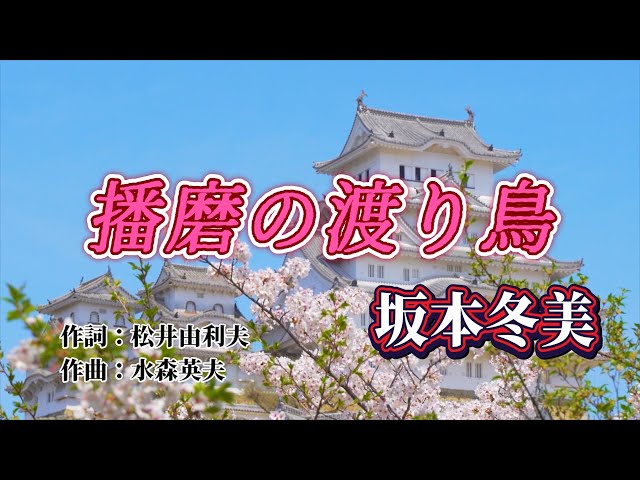
Released on September 8, 2004 (Heisei 16).
Following the previous work “Kimagure Dōchū,” this is an enka about a traveler’s journey.
This time, it highlights the Harima color of the Seto Inland Sea.
The previous year, Kaori Mizumori broke through with “Tottori Sand Dunes” and appeared on the Kōhaku Uta Gassen, after which she came to be called the queen of local-theme songs.
It was a period when the entire enka world seemed to conform to the trend of regional songs, which also tied in with tourism.
It peaked at No.
24 and sold 67,000 copies.
chivalry (manly valor); manly spiritSakamoto Fuyumi
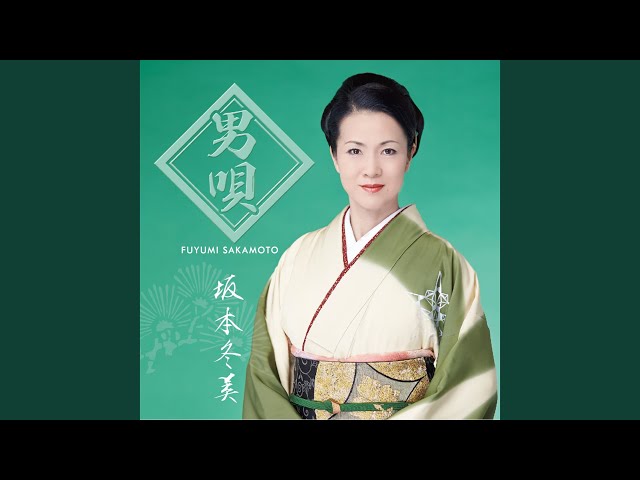
Released on January 17, 2002 (Heisei 14).
Since his debut, he has sung songs themed around men—starting with “Otoko no Jowa” and “Otoko-bore”—while also continuing a line of life-affirming anthems such as “Taishi,” “Kaze ni Tatsu,” and “Rin to Shite.” This song seems to have been created with both of those currents in mind.
It also features local place names from Kyushu, giving it a back-to-basics feel—perhaps a culmination of his work to date.
It peaked at No.
37 and sold 53,000 copies.
That year, he suffered from pancreatitis, which affected his health, and he suspended his activities for a while.