

Trivia quiz about Sanjusangendo: a collection of questions to deepen your knowledge

Sanjusangen-do in Higashiyama, Kyoto, is a temple famous for its long hall and statues of the Thousand-Armed Kannon.
In addition to being a well-known tourist spot for its awe-inspiring Kannon statues and New Year’s annual events, you may also have learned about Sanjusangen-do in history class.
In this article, we’ll introduce fun trivia about Sanjusangen-do in a quiz format! If you come across any new facts, we hope you’ll remember them—doing so will let you enjoy your visit to Sanjusangen-do on a deeper level.
Now, let’s dive into the quiz!
- Quiz for junior high school students
- Let's take on a four-choice quiz that everyone can enjoy together!
- Fun facts quiz about Kiyomizu-dera: a three-choice quiz to learn its history and appeal
- [World Heritage] 3-choice quiz to deepen your trivia about Nijo Castle
- Tidbits Quiz about Tōdai-ji: Questions related to the Great Buddha of Nara, too!
- Let’s take on the challenge! A multiple-choice history quiz for elementary school students. Review your history lessons.
- [Trivia] A quiz of fun facts about Horyu-ji. Multiple-choice questions (three options) about this historic structure.
- [For Kids] November Trivia Quiz & Fun Facts: Let’s Learn While Having Fun!
- [Trivia] Quiz about Fushimi Inari Taisha
- Trivia quiz roundup about the National Diet Building
- Quiz about Kinkaku-ji: tidbits to help you understand the Golden Pavilion
- Fun facts about the Moon. A rapid-fire quiz!
- A compilation of Vocaloid songs with titles that start with “N”
Trivia quiz about Sanjūsangen-dō: A collection of questions to deepen your knowledge (1–10)
Who wrote the haiku, “The day is long, the Sanjūsangen-dō is long”?
- Soseki Natsume
- Ryūnosuke Akutagawa
- Ogai Mori
See the answer
Soseki Natsume
“Day is long, Sanjūsangendō is long.” This is a haiku said to have been composed by the Japanese literary master Natsume Sōseki. It is included in “Draft Haiku Sent to Masaoka Shiki, No. 10.” It seems the hall’s overwhelming grandeur was such that even Natsume Sōseki could only remark on its sheer “length.”

How many arms does the statue of the Thousand-Armed Kannon have?
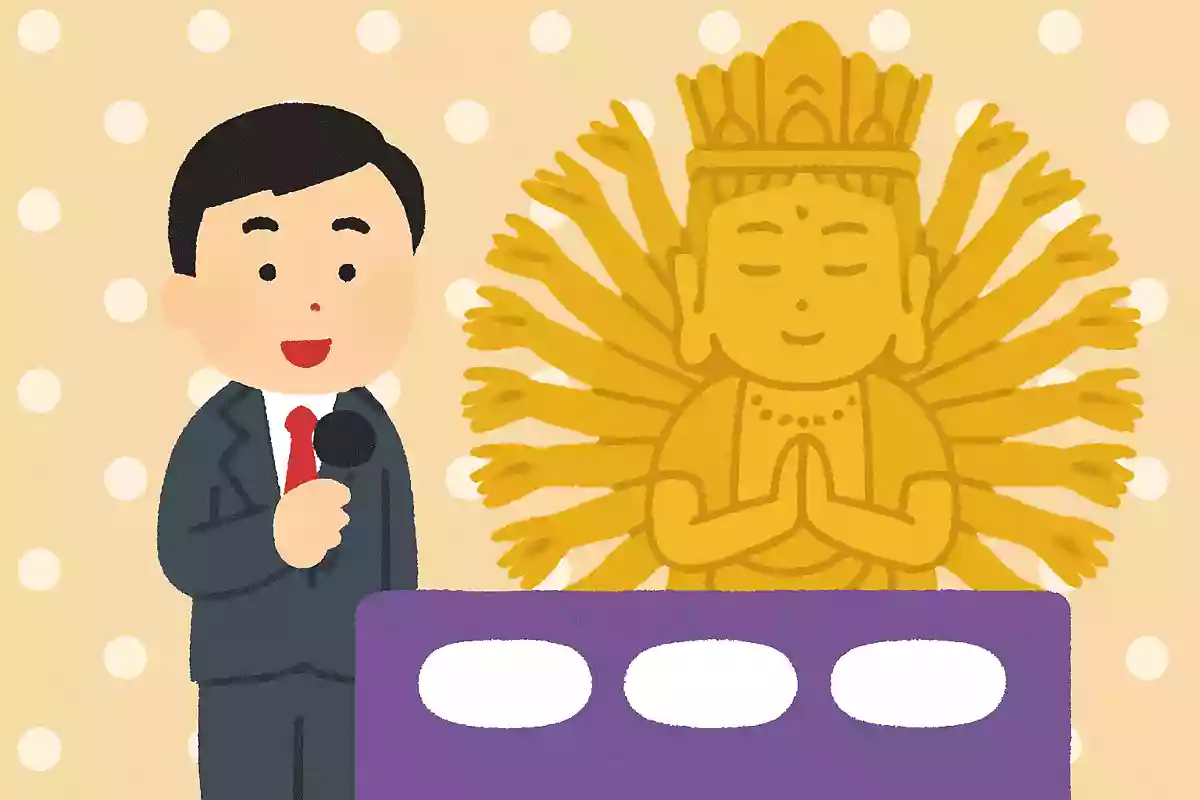
- 100 pieces
- 42 pieces
- 32 pieces
See the answer
42 pieces
The statue of the Thousand-Armed Kannon has a total of 42 arms. However, there is a reason it is called the Thousand-Armed Kannon. Excluding the two hands joined in prayer, it has 40 arms. In Buddhism, there is a concept called the Twenty-Five Modes of Existence, which divides the cycle of rebirth into 25 realms. Each of the Kannon’s arms is said to save one of these 25 realms, so 40 × 25 = 1000.
Who ordered the construction of Sanjūsangen-dō?
- Taira no Kiyomori
- Emperor Toba
- Emperor Go-Shirakawa (the Retired Emperor/Former Emperor Go-Shirakawa)
See the answer
Emperor Go-Shirakawa (the Retired Emperor/Former Emperor Go-Shirakawa)
Sanjusangendo was founded in 1165 by order of the retired Emperor Go-Shirakawa. Incidentally, it is said that Taira no Kiyomori was instructed by the retired emperor to provide materials to support its construction.
Trivia Quiz on Sanjūsangen-dō: A collection of questions to deepen your knowledge (11–20)
By what technique was the principal image, the seated statue of the Thousand-Armed Kannon, made?
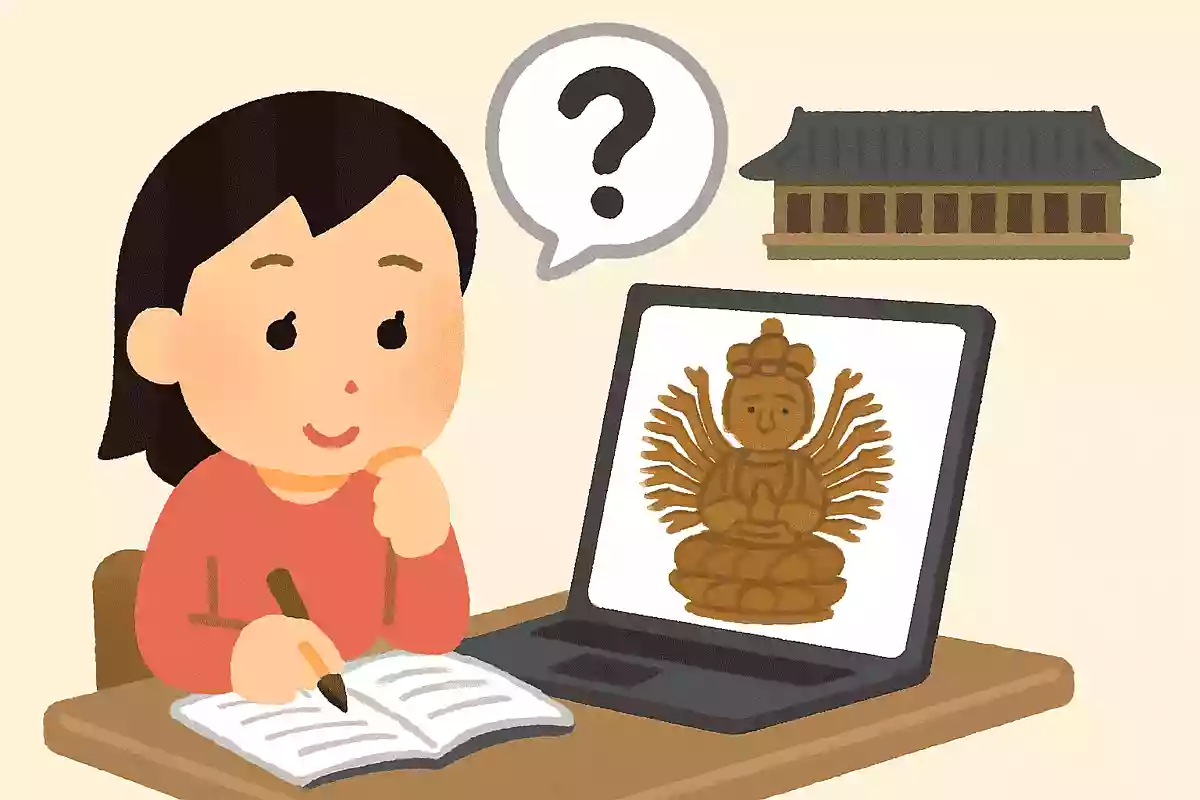
- Yosegi-zaiku (traditional Japanese marquetry)
- ichiboku-zukuri (single-block wood carving)
- stone (made of stone); stone-built; masonry
See the answer
Yosegi-zaiku (traditional Japanese marquetry)
The principal image of Sanjūsangendō, the seated Thousand-Armed Kannon, is made using a technique called yosegi-zukuri. Yosegi-zukuri, established by Jōchō, is a method of creating Buddhist statues by combining multiple pieces of wood. In addition to enabling the construction of large statues from small pieces of wood, it helps prevent warping and cracking, facilitates division of labor, and improves manufacturing efficiency.
What is the other type of goshuin at Sanjūsangen-dō besides the one that has the go-eika (Buddhist hymn) written on it?
- Niōmon (Deva Kings Gate)
- Hall of Great Compassion
- Statue of the Thousand-Armed Kannon
See the answer
Hall of Great Compassion
There are two types of goshuin (temple seals) available at Sanjūsangen-dō. One features a waka poem written in the 5-7-5-7-7 syllabic pattern, and the other bears the inscription “Daihiden.” “Daihi” refers to the great compassion of Kannon, the bodhisattva who mercifully saves all beings, and “Daihiden” denotes the hall where Kannon is enshrined. In addition to Sanjūsangen-dō, some other temples and shrines dedicated to Kannon also write “Daihiden” on their goshuin.
In addition to the Thousand-Armed Kannon statues, statues of the Twenty-Eight Attendants and a certain deity are enshrined in Sanjūsangen-dō—what deity is that?

- Sun God and Moon God
- The Earth God and the Water God
- Wind God and Thunder God
See the answer
Wind God and Thunder God
At Sanjūsangen-dō in Kyoto, in addition to the statues of the Twenty-Eight Attendants lined up on either side of the principal image of the Thousand-Armed Kannon, statues of the deities who govern wind and thunder—Fūjin and Raijin—are also enshrined.
By whose order was the Sanjūsangen-dō, which was destroyed in the great fire of Kenchō, rebuilt?
- Emperor Emeritus Go-Saga
- Ashikaga Takauji
- Toyotomi Hideyoshi
See the answer
Emperor Emeritus Go-Saga
After the Great Fire of the Kenchō era, Sanjūsangen-dō was rebuilt by order of the Retired Emperor Go-Saga. Reconstruction is said to have begun after the 1249 fire and was completed in 1266. The structure rebuilt at that time has been preserved to the present day through ongoing repairs.