

Math quiz for elementary school students

Elementary school math gets harder with each grade, and in the end you start seeing problems that even adults find a bit tricky, right?
But it’s a shame to think, “I hate math” because of that.
So in this article, we’ve picked out items that are recommended even for kids who aren’t very confident in math.
They’re all quiz-style problems that are a bit different from the formulas you learn at school—puzzles you solve by thinking them through—so kids should be able to enjoy the challenge.
It might even help them overcome their dislike of math.
It’s also great as brain training—why not try tackling them together as a parent-child activity?
- How many can you solve? Brain-flexing math riddle quiz
- [For Elementary School Students] Cipher Quiz: Fun Puzzle Riddles
- Fun quizzes for elementary school kids: a collection of questions everyone can enjoy together
- [Interesting] Collection of Math Quiz Problems
- [Easy] Quizzes That Elementary School Students Can Solve! A Collection to Nurture Wisdom
- [Satisfying When Solved] Challenging Quizzes Recommended for Elementary School Students!
- A math quiz for adults. Can you solve it?
- [For Elementary School Students] Recommended Riddle Collection
- A game where you can learn the multiplication table while playing
- Quiz for elementary school students: Easy! Fun! Question collection
- Easy Riddles for Elementary School Students
- [Get Friendly with Games] Math Games, Apps, and Activities
- [Interesting] Collection of Matchstick Quiz Problems
Math Quizzes for Elementary School Students (31–40)
3 solid geometry area quizzes

This is an area quiz for elementary school students.
Kids can solve it, but there’s a trick, so I think it’ll be challenging even for adults.
Prepare a notebook by yourself, pause on the question page, and once you’ve solved it, read the answers and explanations—doing so should help improve your math skills.
Only 3% of adults get it right! A 4th grade elementary school math problem
@mayeexuw6q1 A fourth-grade math problem with a 3% correct answer rate among adults
♬ original sound – mayeexuw6q1 – mayeexuw6q1
When you’re suddenly given just this information—“A pencil and a notebook together cost 100 yen, and the pencil is 40 yen cheaper than the notebook”—it’s not uncommon to panic and answer that the pencil costs 60 yen.
But that’s incorrect.
Saying “40 yen cheaper” doesn’t mean the notebook costs 40 yen.
You need to find prices where the difference between the pencil and the notebook is 40 yen.
With problems that have a bit of a trick like this, it’s important not to blurt out an answer right away, but to pause for a moment.
Try shifting your way of thinking, and you’ll start to see the numbers differently.

Volume Unit Quiz

When expressing the volume of water, we use units such as mL, dL, and L.
If your child has had a math lesson on measuring liquid volume, have them actually pour water into a measuring cup and answer, in a quiz-like format, how much is inside.
If you have several cups with markings, ask them to add the amounts—how much do you get when you combine this cup and that cup? Also, these units change as the quantity increases.
Along with the amount of water, study how the units convert—for example, 10 dL becomes 1 L, and 100 mL becomes 1 dL.
18 division problems for 3rd grade elementary school math

There are 18 problems in which a two-digit number is divided by a one-digit number.
Even adults who don’t do division regularly may find it hard to come up with answers quickly, so why not try it as brain training together with your child? All the problems are at textbook level with no trick questions.
One math problem for fourth-grade elementary school students
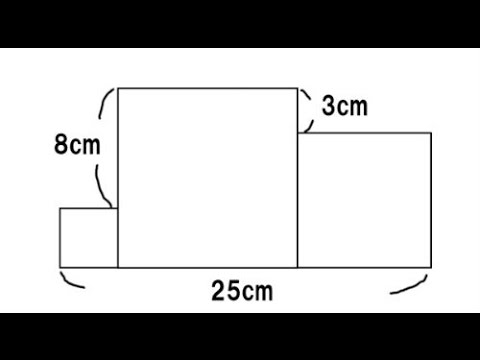
It’s a fourth-grade math problem that became a hot topic on Twitter because, despite looking simple, it’s surprisingly difficult.
The equation itself is easy, but you need quite a bit of creativity to solve it.
Since there’s a detailed explanation provided, why not try it on your own first and then check your answer?
Math Quizzes for Elementary School Students (41–50)
Three entrance exam problems from a highly selective elementary school

This is a quiz that compiles entrance exam questions from ultra-competitive elementary schools.
They are word problems, so even the math questions all require strong reading comprehension.
After checking your answers, there are careful explanations, but they’re quite complex and can be confusing.
Train both your ability to calculate mathematical formulas and your Japanese language skills to understand the problems.
How many cars are in the parking lot?

This is a math quiz where, from the proportion of yellow cars in a parking lot, you determine the total number of cars in the entire lot.
Just reading the description might make it seem pretty easy, but it’s actually a bit tricky and can be puzzling.
If you replace the total number of cars with another symbol, you’ll get closer to the correct answer!
