

![[Get Friendly with Games] Math Games, Apps, and Activities](https://i.ytimg.com/vi_webp/qA89sFqFvhE/maxresdefault.webp)
[Get Friendly with Games] Math Games, Apps, and Activities

There are probably many people who still struggle with math even as adults.
If only we had gotten more comfortable with it back when we were little—maybe starting from basic arithmetic—we might not feel so intimidated by math now, right?
In this article, we introduce math games for children that help them get familiar with arithmetic from the early years of elementary school—fun activities that teach math through play.
We’ve lined up a wide range of options, from games kids can play solo to ones for groups, including apps and card games.
Of course, adults can enjoy them too, so be sure to try playing together with your child!
[Get Friendly Through Games] Math Games, Apps, and Activities (1–10)
Four Fours game

It’s a game where you create equations using four number 4s and symbols like +, −, ×, and ÷.
For example, you might set a goal such as “Combine four 4s with any symbols to make an expression that equals 1.” Naturally, you can’t reach 1 by just trying randomly.
By thinking about which symbols to use and how to place them, it helps improve arithmetic skills.
You can also adjust the difficulty depending on grade level and learning stage—for instance, by limiting answers to numbers that can be made with only + and −, or by allowing the use of parentheses.

Calculation Blackjack

Blackjack is a card game where you add up the numbers in your hand aiming for a total of 21.
Think of “Calculation Blackjack” as a simplified version of that.
You prepare two sets of cards numbered 1 through 5, and two players draw alternately, trying to get their hand as close to 10 as possible.
For example, if your hand totals 9, you’d lose if you go over 10, so you can choose to stop drawing at that point.
In that case, if your opponent ends up at 8 or below, or 11 or above, you win; if they hit exactly 10, they win.
Because you can keep track of which numbers remain, there’s strategic decision-making about whether to draw more.
It’s a highly engaging math game.
Princess MathNEW!
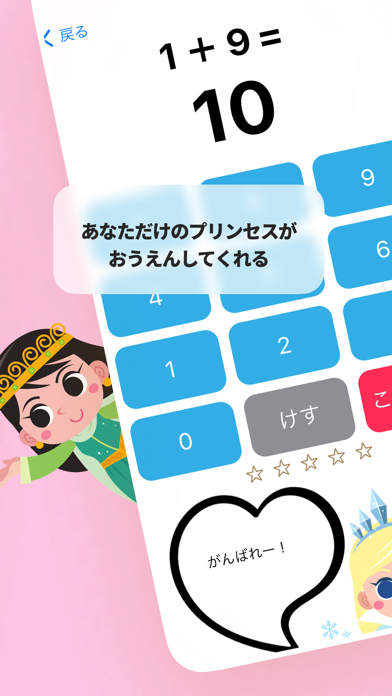
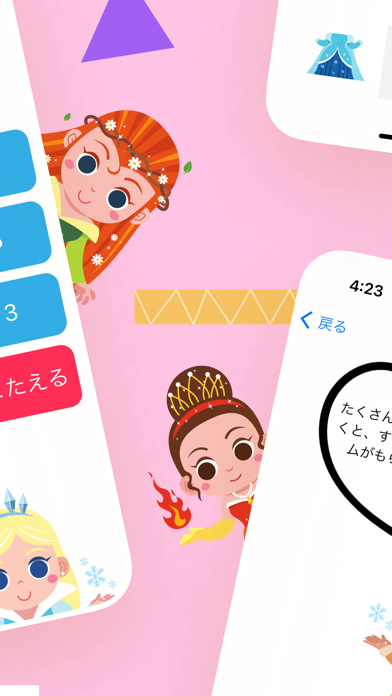
Princess Math is perfect for anyone who wants to enjoy learning arithmetic in a cute world.
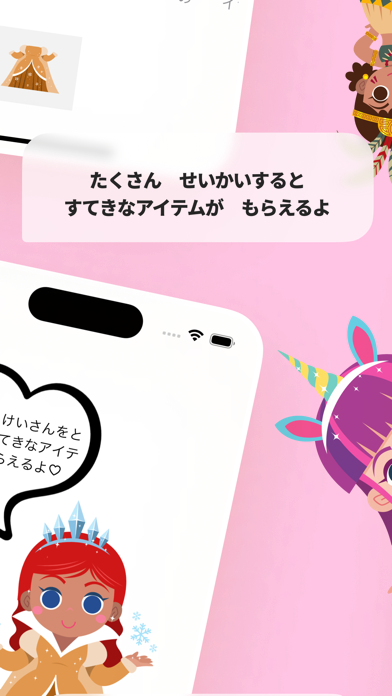
Each time you solve a problem, you earn tiaras, dresses, and sparkly items, letting you coordinate your very own princess—that’s the charm! As you progress in a playful way, your calculation skills naturally improve.
It supports a wide range of problems from single-digit to four-digit numbers, so you can take on challenges at your own level without strain—another nice point.
With its gentle atmosphere and irresistible cuteness, even adults might find themselves enjoying it, turning everyday study time into something a little special.
 Princess Math - Kids Educational Calculation and Dress-Up App
Category: Education Free iOS Universal Rating: 4.42856
iPhone / iPad
Screenshot



Introduction to the AbacusNEW!
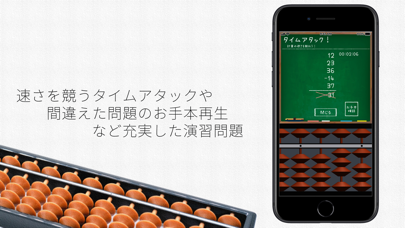
The abacus, which is enjoying a resurgence as an extracurricular activity, not only improves calculation skills but also fosters the ability to instantly grasp and understand things.
Elementary school students typically learn it around third to fourth grade.
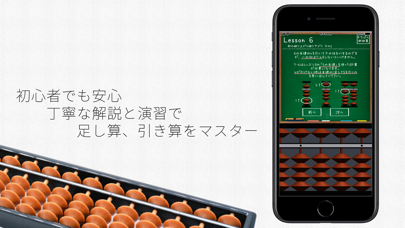
In this app, even children new to the abacus can have fun: it first explains what the beads represent.
From there, they can check their understanding with practice problems, and if they pass the promotion test, they can move on to the next step.
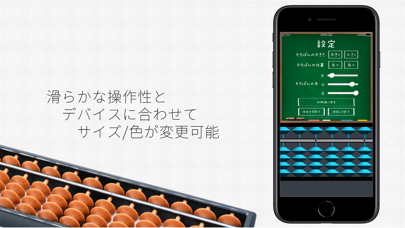
You can slide the beads on the screen to move them, making it feel like you’re really using an abacus—super fun!
 Abacus Introduction - Addition and Subtraction -
Category: Education Free iOS Universal Rating: 4.77337
iPhone / iPadAndroid
Screenshot

Let’s learn with the Gakken Dragon Drill Math and Japanese Language learning app!

This app is perfect for elementary school students who want to learn with a sense of adventure.
It uses a full-fledged battle game system where you tackle problems to revive a sealed dragon, helping kids build math and language skills while they play.
Each time you clear a stage, you’ll feel a sense of achievement, which keeps the motivation to “do more!” going.
The content covers the basics thoroughly, making it great for overcoming weaknesses.
Its colorful, fun world turns daily study into an exciting time.
It’s easy to start and lets you level up enjoyably, so give it a try!
Download on Google PlayTodon (sea lion) math

Todo Math is a highly global math app that has even been used in classes at schools overseas.
Designed for young children who are just starting to encounter numbers up to about second grade, it covers a wide range of math topics, including shapes and interpreting data.
Its proven quality is guaranteed—it has reached No.
1 in the Education category of app stores in multiple countries.
If you’re overwhelmed by the options, this is the one I’d recommend you start with.
Arithmetic Magic

An arithmetic magic trick where, if you take a number you’ve thought of between 1 and 9 and then follow the steps to add, multiply, and divide in order, you always end up with “3”! The person who devised it really refined the calculation method—impressive.
Even many adults, unless they’re good at math, will probably wonder, “Why is that?” For elementary school students, presenting calculations they’ve just learned in class in this kind of magic-trick format could make studying arithmetic fun.
If you’re curious about the trick, you can find the explanation by searching online!