

[For Elementary School Students] Inspiring Four-Character Idioms for Shaping the Future at a Glance! Words that Spark Courage

We’ve gathered four-character idioms perfect for elementary school students who have a strong desire to “carve out their own future.” Sometimes it’s hard to put your feelings into words.
That’s why we’re introducing idioms that will resonate with your heart at such times.
The wisdom of those who came before us, packed into just four characters, will surely give you a powerful push forward.
You’ll find plenty of idioms that support the dreams and goals of elementary school students.
They’re all phrases you can use in many situations—schoolwork, club activities, lessons, and more.
Please use them as a reference!
- Easy-to-remember, positive four-character idioms for elementary school kids! Words that brighten the heart
- [For Elementary School Students] Four-character idioms you can use in sports! Words that are helpful for cheering and goal setting
- Learn the meanings too! Cool four-character idioms that elementary school students will want to remember
- For Elementary School Students: Four-Character Idioms You Can Use for New Year’s Resolutions — How to Set Cool Goals!
- Strive toward your goals! Four-character idiom ideas that resonate with elementary school students
- Recommended for elementary school class goals! A collection of impactful ideas using four-character idioms
- Easy for elementary school students to remember! A four-character idiom that expresses the feeling of trying your best
- Four-character idioms that help elementary schoolers not give up: words that spark the power to keep trying
- Perfect for elementary school slogans! A collection of four-character idiom ideas you'll want to use
- [Elementary School Students] Perfect for Kakizome! A Collection of Four-Character Idiom Ideas
- Four-character idioms that pioneer the future: powerful words that express challenge and effort, perfect as personal mottos.
- [For Elementary Students] A Collection of Beautiful Four-Character Idioms to Know
- Four-character idioms that wish for happiness! Words that will warm the hearts of elementary school children
[For Elementary School Students] Four-Character Idioms That Open Up the Future at a Glance! Words That Inspire Courage (21–30)
A fresh start

“Shinki itten” is a four-character idiom that means resetting your mindset or circumstances and taking positive action.
Keeping it in mind at the start of a new year helps you clear your head and build the resolve to take on challenges.
For example, even if your studies or sports haven’t gone well, remembering this phrase can help you switch gears and try again.
It can also prompt you to reconsider your relationships with friends and family, enriching your daily life.
Adopted as a New Year’s resolution, it’s a phrase that encourages steady growth while maintaining a positive outlook.

flexible; adaptable; responding appropriately to the situation

If you only ever do things in the one way you think is right, it becomes hard to choose a different path when something happens.
At times like this, it’s important to flexibly reconsider your course.
“Rinki-ōhen” (being flexible) means taking actions suited to the situation.
Acting with flexibility can be difficult, too.
By developing your ability to apply what you know, you’ll become better at adapting, so it’s a good idea to put that resolve into your first calligraphy of the year.
The first half, “臨機,” has many intricate components, so take care not to let the characters lose their form when you write them.

work in the fields on sunny days, read books on rainy days

This phrase means: on sunny days, thoroughly till the rice fields and vegetable patches to prepare the soil, and on rainy days, spend time indoors reading at a relaxed pace.
While such an unhurried lifestyle may differ a bit from that of an elementary school child, try changing the way you think about it.
For example, consider sunny days as important days for challenges and put in your best effort on those days.
See rainy days as days for storing up—sometimes taking a break and taking time to absorb knowledge is important, too.
Try shifting your perspective to your everyday life and incorporating this mindset into the new year through your first calligraphy of the year.
Good fortune comes to a cheerful home.

A smile is a magical expression that brings happiness not only to yourself but also to those around you.
If your child wants the new year to be filled with laughter, have them try writing this four-character idiom for their first calligraphy of the year.
This phrase is like turning the proverb “Good fortune comes to a smiling household” into a four-character idiom, and, just as the words suggest, it conveys that happiness comes to those who are always smiling.
It can be difficult for elementary school children to smile every day—whether they’ve had a fight with a friend or their studies aren’t going well.
But it’s precisely at such times that they should try to keep smiling and use this phrase with the mindset of drawing in good luck!
with all one’s might

If your child has something they want to work hard at in the new year, how about writing this four-character idiom? Isshōkenmei expresses the idea of tackling things earnestly and with full effort.
It’s a phrase that can encourage children who want to devote themselves to something—whether it’s studying, sports, lessons, or anything they want to try harder at or achieve better results in.
The character “ken” (懸) is a bit tricky, so when writing it for the first calligraphy of the year, be careful not to let the finer details get smudged!
One good deed a day
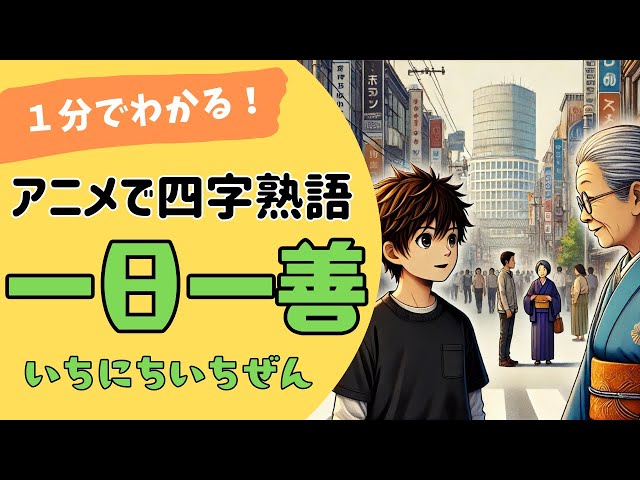
This four-character idiom means “do one good deed every day,” and it’s an easy goal for elementary school students to use as a guide for their actions.
There’s no need to accomplish anything big—helping a friend, picking up litter, or greeting others cheerfully all count as admirable good deeds.
By building small actions day by day, students can feel their own growth, and the overall atmosphere of the class will brighten as well.
Good deeds leave a warm impression because they are done without expecting anything in return.
The accumulation of such actions nurtures trust and helps create a classroom filled with kindness.
It’s a practical phrase that encourages a positive approach to each day.

coexistence and mutual prosperity

It is a four-character idiom that expresses growing together while helping each other.
By setting it as a class goal for elementary school students, they can learn the importance of everyone joining forces instead of just one person working hard.
Those who are good at studying can teach their friends, and those who are good at sports can support practice together, creating a bright and positive atmosphere for the whole class.
Helping those in need and sharing joy become opportunities to deepen trust and friendship.
By having a spirit of cooperation, an environment is created where everyone in the class can feel comfortable, and school life becomes more enjoyable.
It is a warm phrase that conveys a strong determination to build the future together with classmates.