

![[For Elementary School Students] Ishikawa Prefecture Local Quiz! A Question Collection That Both Kids and Adults Can Enjoy](https://media.ragnet.co.jp/img/1200__png__https://www.studiorag.com/files/2025/12/f6de1edbb34f7f2ecfc3a4ba5cc07ee0.webp)

How much do you know about Ishikawa Prefecture? From Kanazawa City’s brand-name crabs and Noto beef to “Hachiban Ramen” and “Hyakumasan,” this region is full of specialties to be proud of.
You’ll also encounter local dialect words like “yuki-sukashi” and “koke,” as well as place names with tricky readings, such as “Tsuchishimizu.” In this article, we’ll showcase the charms of Ishikawa through a set of local quizzes designed for elementary school students.
Give them a try with family and friends, and enjoy learning together—kids and adults alike!
- How many can you get right? Toyama Prefecture Local Quiz! A Fun Question Book for Elementary School Students
- Fukui Prefecture local quiz! Become a Fukui expert with fun questions for elementary school students.
- How much do you know? A local quiz collection about Iwate Prefecture for elementary school students
- [For Elementary School Students] Collection of Local Quizzes from Gifu Prefecture
- [For Elementary School Students] Niigata Prefecture Local Quiz Collection
- [For Elementary School Students] Hokkaido Local Quiz: Includes Classic Hokkaido 'Aruaru'!
- [For Elementary School Students] A Roundup of Local Quizzes About Tokyo
- [For Elementary School Students] Miyagi Prefecture Local Quiz! A Fun Workbook That Adults Can Enjoy Learning With Too
- Akita Prefecture Local Quiz! A fun workbook for elementary school students that adults can enjoy too
- [For Elementary School Students] Nagano Prefecture Local Quiz! Three-Choice Questions to Enjoy Learning About History and Nature
- Learn while playing! Fun local quizzes about Gunma Prefecture for elementary school students
- [For Elementary School Students] Collection of Local Quizzes from Fukuoka Prefecture
- Yamanashi Prefecture Local Quiz for Elementary Schoolers! A Workbook to Learn While Playing
[For Elementary School Students] Ishikawa Prefecture Local Quiz! A Question Collection That Kids and Adults Can Enjoy (1–10)
Ishikawa Prefecture ranks first in Japan for the catch volume of a delicious fish that contains a certain poison. Which of the following fish is it?

- sea snake
- ocean sunfish
- pufferfish
See the answer
pufferfish
In the Noto region of Ishikawa Prefecture, various kinds of pufferfish are caught, including the famous tiger puffer (torafugu). As a result, Ishikawa catches the most pufferfish in all of Japan. Because pufferfish are poisonous, you need a license to prepare or slice them for sashimi. The toxin in pufferfish is extremely potent—said to be about 850 times stronger than potassium cyanide. It’s a fish that requires knowledge and skill to eat safely.

Which of the following is the meaning of the word “yuki-sukashi,” which is commonly used in Ishikawa Prefecture?
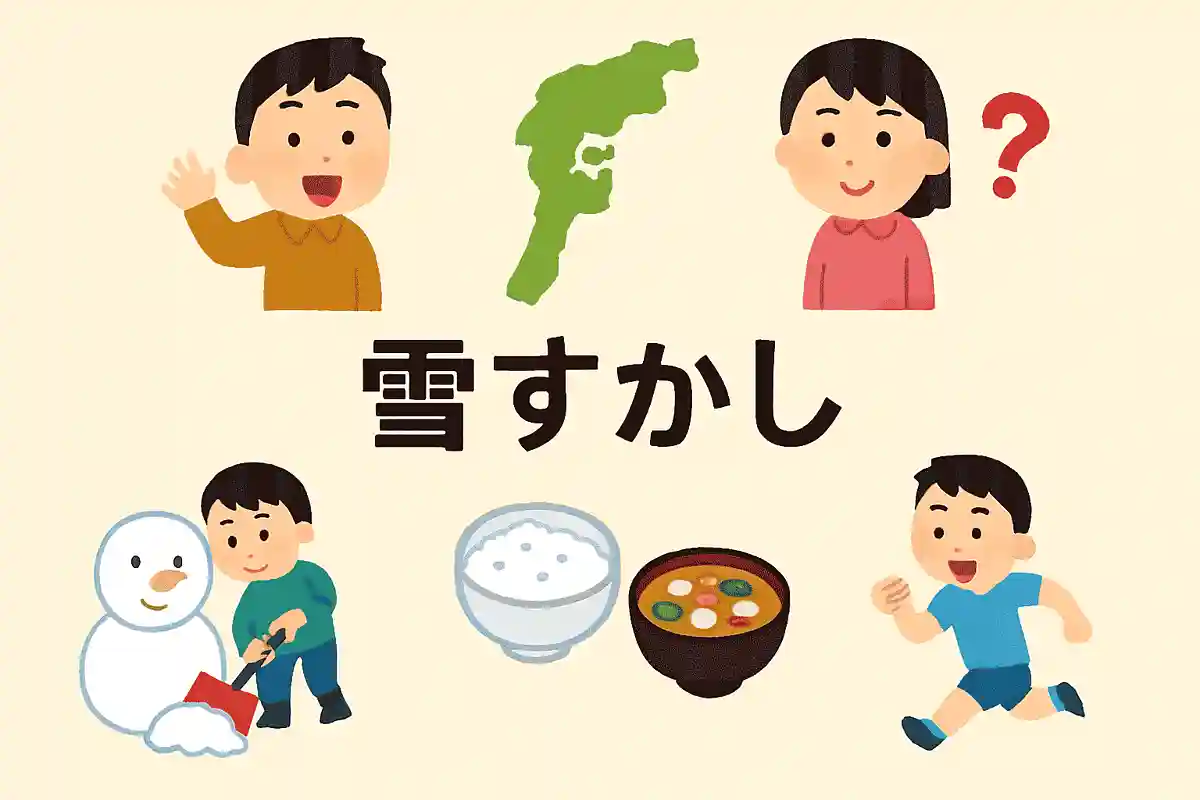
- playing in the snow
- snow shoveling
- snow cover
See the answer
snow shoveling
In Ishikawa Prefecture, the word “yuki-sukashi” is commonly used. It means “snow shoveling,” that is, removing snow. Since this is a region that gets a lot of snow in winter, clearing snow from homes and roads is important. The expression “yuki-sukashi” is unique to Ishikawa and is a special term you won’t hear much in other prefectures. It reflects the wisdom of living with snow, expressed through language.
What is the name of the brand beef from Ishikawa Prefecture?
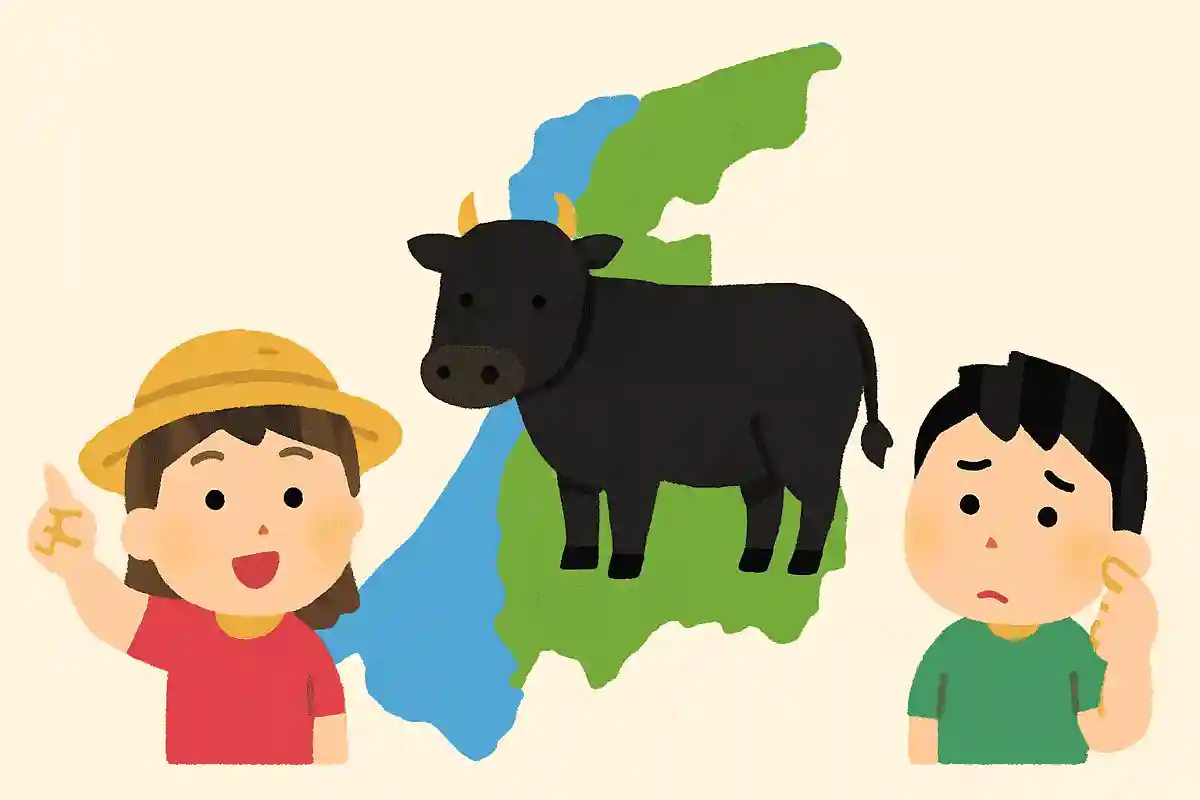
- Noto beef
- Ishikawa beef
- Matsusaka beef
See the answer
Noto beef
Among the Japanese Black cattle raised in Ishikawa Prefecture, those that meet particularly strict standards are recognized as “Noto Beef.” Noto Beef is characterized by its high-quality marbling and exceptional tenderness. Its delicious flavor is recognized nationwide, earning a Special Award at the 9th National Competitive Exhibition of Wagyu. As a premium meat that represents Ishikawa Prefecture, it delights those who enjoy it.
Which of the following is the meaning of “koke” in the Ishikawa dialect?
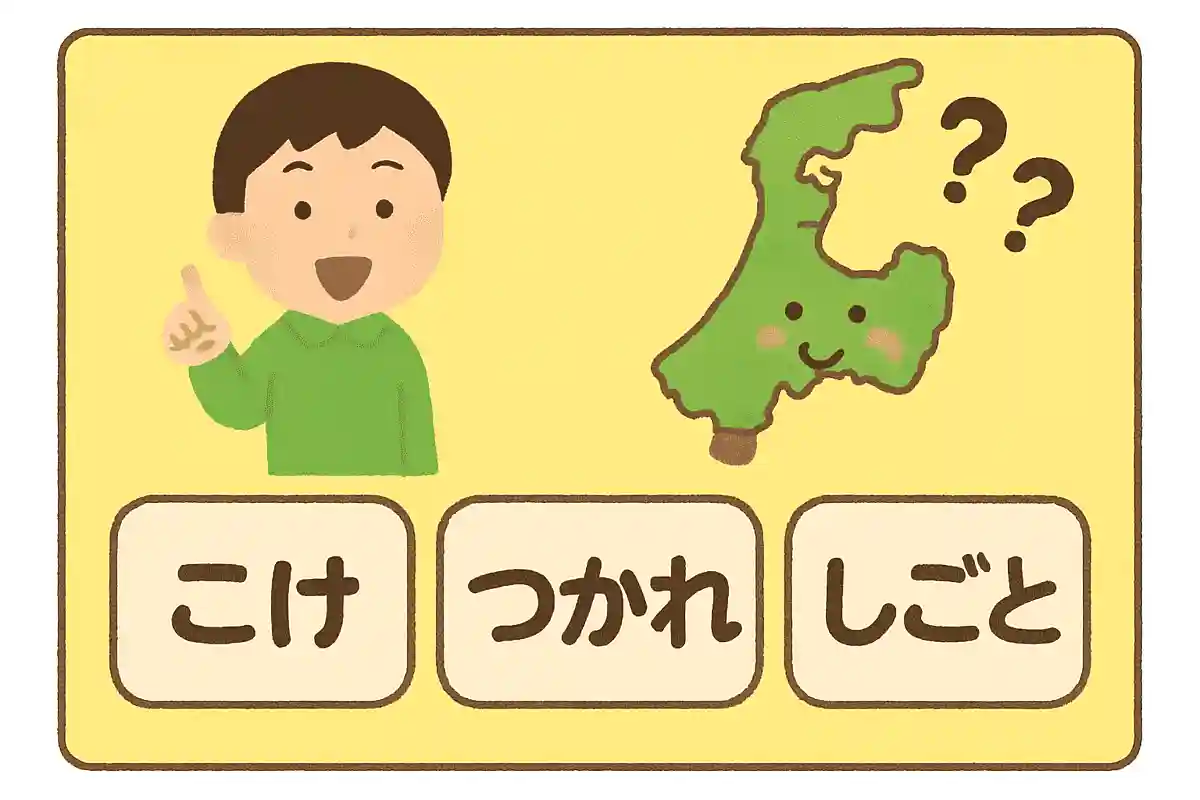
- mushroom
- wakame
- cucumber
See the answer
mushroom
In Ishikawa Prefecture’s dialect, there is a word “koke.” “Koke” means “mushroom.” For example, if someone says, “If you’re going to the mountains, pick some koke,” it means “If you’re going to the mountains, pick some mushrooms.” It’s a dialect word used to refer to mushrooms, which have long been cherished as mountain food. It’s one of the interesting words connected to the lives and natural surroundings of people in Ishikawa.
Which of the following is Ishikawa Prefecture’s official PR character in the style of a “daruma doll”?

- Hyakuma-san
- Hyokuma-san
- H Yukuma-san
See the answer
Hyakuma-san
Ishikawa Prefecture’s official mascot character is Hyakuma-san. It’s shaped like a daruma doll, with short arms and legs and a little bit of a mustache. It was created in 2013. Hyakuma-san’s signature pose is the “fall down seven times, get up eight” pose, characterized by its energetic way of popping right back up after a tumble. It’s a character that works hard for Ishikawa, appearing around town and at events.
A certain type of bean is used in the local dish “Mitama.” What kind of bean is it?
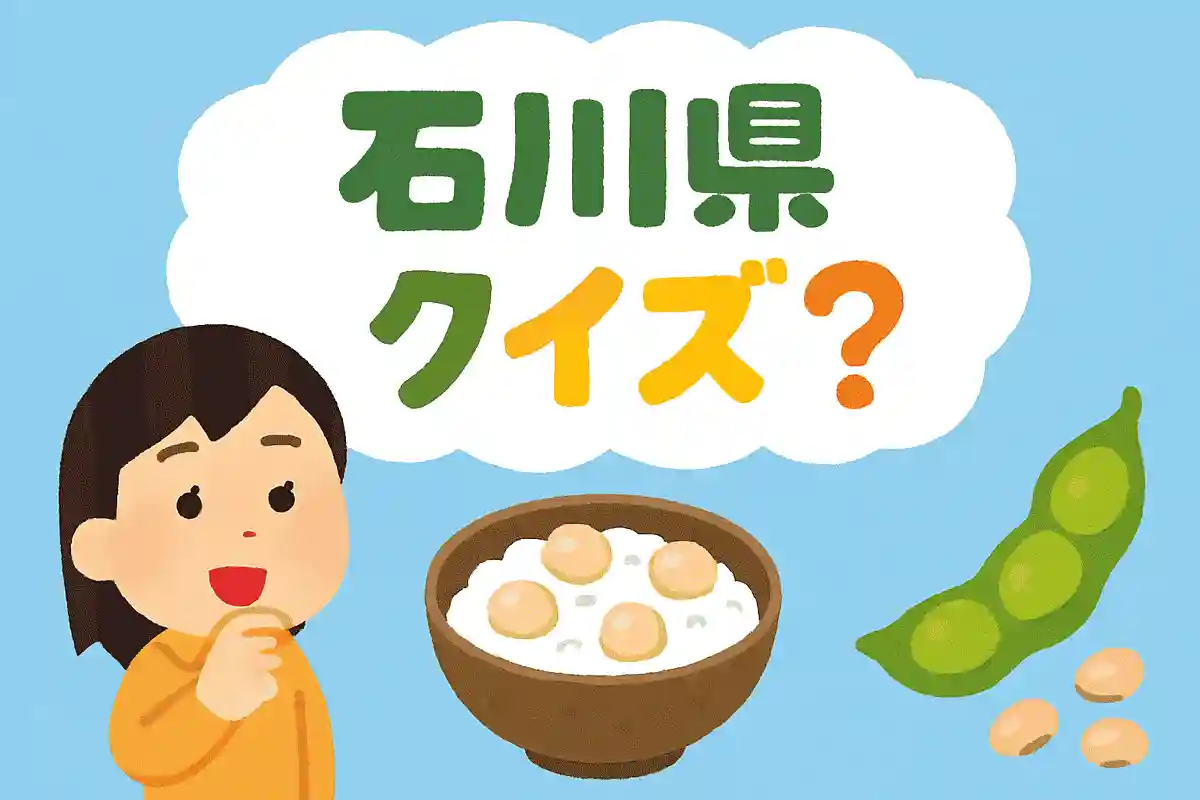
- broad bean
- edamame
- black soybeans
See the answer
black soybeans
Mitama, a local dish from Ishikawa Prefecture, is an okowa (sticky rice dish) cooked with glutinous rice and black soybeans. It has long been commonly served at Buddhist memorial services. Because black soybeans also symbolize health, the dish is used for celebratory occasions and meals after recovery. This traditional Ishikawa specialty lets you enjoy the chewy rice and the sweetness of the black soybeans.
What is the reading (pronunciation) of the locality “土清水” in Kanazawa City?
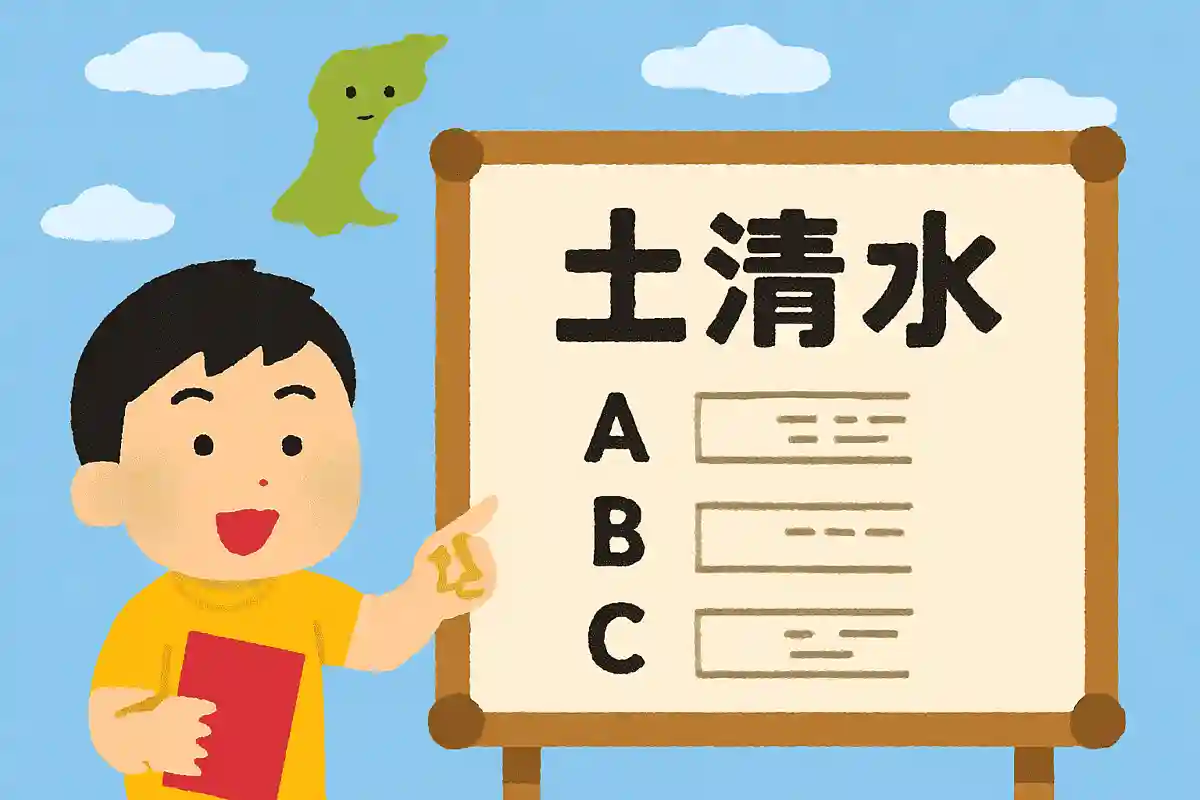
- Tsuchi-shimizu
- Tsuchi Kiyomi
- Tsuchōzu
See the answer
Tsuchōzu
The area called “Tsuchōzu” in Kanazawa City is read as ‘Tsuchōzu.’ It’s said that the name comes from the abundance of clear spring water that used to be found around there. It’s also sometimes pronounced ‘Tsuchishōzu.’ As a town with spring water, it’s a community that has cherished nature’s blessings. You can see that place names reflect the history and characteristics of their locales.