

[For Elementary School Students] Recommended Riddle Collection


Puzzle-solving questions, which are perfect for training children’s thinking and creativity, are presented in a variety of situations.
Some of you may be looking for problems that beginners or elementary school students can tackle casually.
In this article, we’ve selected puzzle-solving questions for elementary school students.
You can enjoy a variety of puzzles, such as ones where you infer answers from illustrations or text, and ones themed around escape games.
Give these puzzles a try—they’re fun and also connect to learning.
- [For Elementary School Students] Cipher Quiz: Fun Puzzle Riddles
- [Easy] Quizzes That Elementary School Students Can Solve! A Collection to Nurture Wisdom
- Fun quizzes for elementary school kids: a collection of questions everyone can enjoy together
- [Satisfying When Solved] Challenging Quizzes Recommended for Elementary School Students!
- Easy Riddles for Elementary School Students
- [Advanced Level] Difficult Riddles for Elementary School Students
- [Playable from lower grades] Japanese language games and activities
- Recommended riddles for elementary school students. A collection of kid-friendly riddles.
- [Elementary School] Treasure Discovered! A Collection of DIY Puzzle Treasure Hunt Ideas
- Take on the challenge like a puzzle! A collection of logic quizzes that also work as brain teasers.
- Math quiz for elementary school students
- [Interesting] Collection of Matchstick Quiz Problems
- Simple! A quiz for kids. Let’s develop their thinking skills!
[For Elementary School Students] Recommended Riddle Problems Collection (1–10)
Real Escape Game
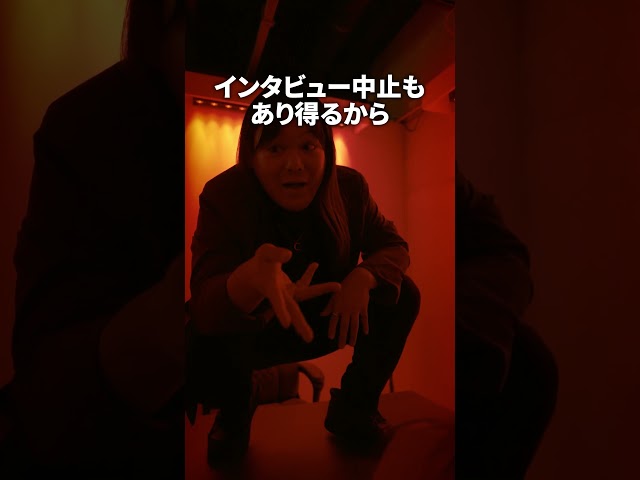
Brain-training exercises are easy to start, but they can feel boring for elementary school children.
And when it comes to group activities, getting everyone to understand the rules can be quite a challenge.
That’s why we recommend this real-life escape game.
Unlike typical escape games that rely only on thinking, this one lets you use your body too, making it engaging for kids who can dive into the puzzles with enthusiasm.
If you have a child who struggles with seated study, consider giving it a try.

Real Hide-and-Seek

This is a video that lets you dive into a mystery drama or novel and experience a realistic investigation as if you were the detective yourself.
A series of unique puzzles appears one after another, from wordplay and alphabet-based challenges to mazes and color-based problems.
Viewers analyze the given information and clues to deduce answers and solve the cases.
There are plenty of tricky problems, and even elementary school students can stay excited and engaged, tackling them all the way to the end without getting bored.

Illustration multiple choice (4 options)

This is a set of multiple-choice illustration puzzles that you can try casually.
For example, there’s a problem where circles are drawn above illustrations, and they seem to form letters or words.
One of the illustrations is marked with a “?”, and you have to figure out what it is.
The correct answer becomes clear once you realize that the circles correspond to “Do Re Mi Fa So La Ti,” but noticing that pattern really takes a flash of inspiration.
It’s the kind of thing that makes you marvel at how flexible children’s thinking can be.
There’s also a one-minute time limit, so it seems like everyone would stay focused while working on it.
[For Elementary School Students] Recommended Riddle Collection (11–20)
Story-style puzzle solving
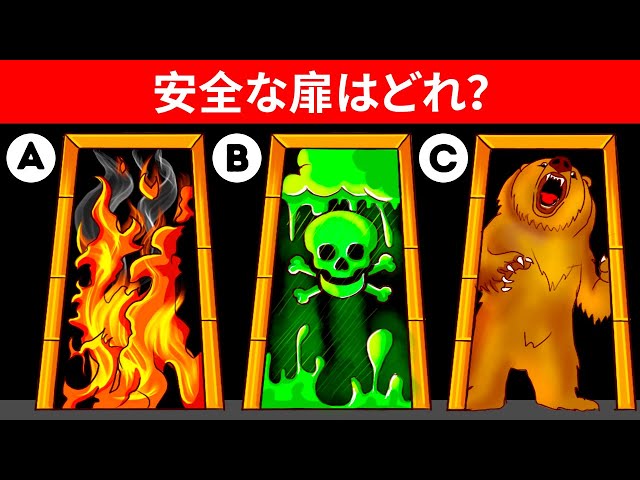
This is a 13-question riddle quiz that challenges your IQ.
You’ll encounter problems one after another that feel like they could appear in mysteries, escape games, dramas, or novels.
For example, there’s a car crash inside a tunnel.
The suspect says, “It was raining so hard I couldn’t see anything, so it’s not my fault,” but the police arrest him saying, “Don’t lie.” Why? Because the crash happened inside a tunnel, so the rain isn’t relevant.
Many questions can be solved by carefully observing the screen, so everyone should be able to focus and give it their best.
Let’s think about this calmly.

I get the feeling that today’s trendy escape-room puzzles and the aptitude tests used in job entry exams can be traced back to good old brainteasers and logic quizzes.
I’ve even heard that problems testing logical thinking are now sometimes used in elementary school math classes.
On days when you can’t play outside, it might be fun for everyone to enjoy a “let’s think calmly” game together.
It could also be nice to make original questions for each other.
Maybe it’d be a good idea to propose it as an event for a school recreation class, too?
Fill-in-the-blank questions

Fill-in-the-blank puzzles that require you to guess the missing words captivate everyone from kids to adults, don’t they? For example, the first question is about a map of Japan.
It simply uses the initials of the locations on the map, so it’s perfect for grades that are learning the prefectures in social studies.
The second question is an alphabet-based puzzle: “B and O → band, S or A → ?”.
The answer becomes a word when you convert “to” (と) to “AND” and “ka” (か) to “OR.” Loosen up your thinking and give it a try in the grade where you’ve learned the alphabet.
Puzzle solving in Minecraft
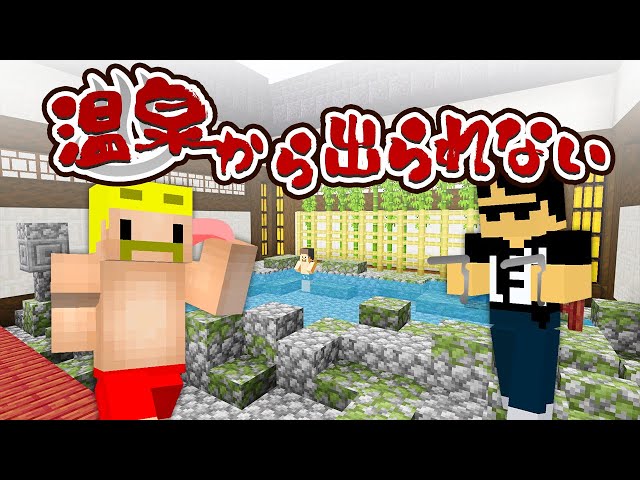
Minecraft is a globally popular game.
It’s an open-world game where you’re free to do anything—explaining it in full would take forever, so I’ll skip the details—but really, you can do just about anything.
Among the many creations out there are puzzle-solving maps made by dedicated Minecraft fans.
Think of them like a Minecraft version of real-life escape games.
If you have the setup to play, definitely give them a try! And if you’re familiar with mods and such, it could be fun to create your own puzzle mechanics, too.
