

Elementary School Fun Day a Big Hit! Indoor Game Idea Collection


Here are some active indoor games that will get elementary school students excited at their fun party! Even on rainy days or in cold seasons, if you have games you can really enjoy in the classroom, everyone can have a great time together.
From relay-style games that build teamwork, to brain-teasers that get minds working, to physical activities that get everyone moving, we’ve gathered games the whole class can dive into while cooperating.
Preparation is simple, and they all use familiar materials, so there are plenty you can start right away—give them a try and have fun!
- Recommended for upper elementary grades! Exciting indoor recreation and games
- Fun Indoor Games for Elementary School Kids Without Any Equipment
- [Elementary School] Quick and Easy! Indoor Recreational Activities Perfect for Lower Grades
- [Elementary School Rec] Recommended Games and Performances for a Fun Party
- [Children’s Club] Easy and fun indoor games. Exciting party games
- [Elementary School] Indoor Games and Recreational Activities Recommended for Upper Primary Grades
- [For Kids] Indoor Fun! Large-Group Recreational Activities and Games
- A collection of simple indoor recreational games
- Get the Fun Going! Easy Classroom Games You Can Play at School: Recreational Activities for the Whole Class
- A big hit at after-school childcare! A special feature on group games and activities you can play without any equipment
- Recreation Activities That Excite Kids’ Clubs! Plans and Ideas Children Will Love
- [For Kids] Have Fun at After-School Day Service! A Special Feature on Indoor Game Ideas
- No worries even in the rain! Fun recreational activities you can do in the gym
Indoor games that get you moving (31–40)
Rock-Paper-Scissors Game Jump!
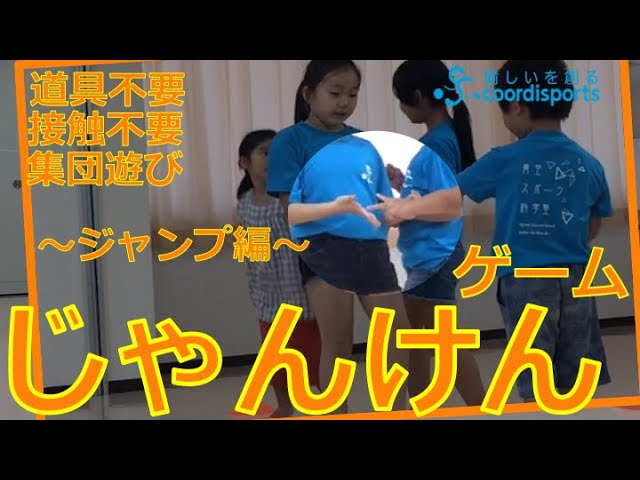
Participants split into two teams and face each other from opposite ends of the room.
When the signal to start is given, play rock-paper-scissors with a teammate; those who win move toward the opposite side by jumping.
Once you reach the other side, play rock-paper-scissors again, and repeat.
It’s a very simple game, so incorporate different types of jumps for the movement: a “rock” jump where you hop with both feet together, then a “scissors” jump that’s like practicing skipping, and next a “paper” jump with your legs spread wide.
It feels like you’re evolving as you go, and it’s a lot of fun.

How to Make a Block Puzzle to Strengthen Shape Skills
@.vs9086 This time it’s a “Lego puzzle that boosts shape sense.” Making it and solving it both really work your brain. Even adults feel a real sense of accomplishment when they solve it! It’s a great brain-training activity. How to make it: (1) Stack plates to make the base. (2) Flip it over and add a frame. (3) Leave one small opening in the frame to make it easier to take pieces out. (4) Combine two-stud-wide plates to make the pieces. (5) It’s tricky to make the pieces fit perfectly. My 4th-grade older son can both build and solve the puzzle. My 1st-grade younger son had fun solving it! It’s compact, so you can pop it in a bag and take it with you. Great for passing time outdoors too—highly recommended. ------- We share fun, brain-boosting activities that elementary schoolers get more hooked on than the Switch—and that grow their talents! Check out our other posts! -------Elementary school kids' playBrain-boosting playSTEAM educationTranslation#legoLEGO puzzle
♬ A cute pop and bouncy song(1526882) – sanusagi
With these easy-to-copy, one-minute activities, you can make mornings fun and smooth.
We introduce simple and entertaining games like “Janken Champion,” where you face off in rock-paper-scissors and advance by winning; “Name Toss,” where you pass a ball while calling a friend’s name; and the “Yamanote Line Game,” where players link words to a beat based on a given theme.
We also feature classics like Finger Suma, Acchi Muite Hoi, and Green Peas.
None of the ideas require any preparation, so the moment you feel like it, you can start playing right away.
3 fingerplay activities that engage first graders

The first is the classic “after-the-fact Rock-Paper-Scissors.” The leader says “Rock, paper, scissors, shoot!” and throws rock, scissors, or paper.
Participants watch and then play after the leader, aiming to win.
The second is a game called “Pachi-Pachi.” You clap only when the leader’s hands overlap.
Adding feints makes it more exciting.
The third is a game called “How Many Fingers?” The leader quickly shows a number with their fingers, then hides their hands behind their back.
Participants answer the number the leader showed.
Ball games you can play with two people!

Balls are very familiar playthings for children, and the ways to enjoy them are limitless! This time, we’re introducing eight ball games for lower-grade students.
In addition to balls, items like hula hoops are used to help kids improve their physical abilities while having fun.
Basically, children pair up in twos and play by throwing or rolling the ball, or dodging a bouncing ball.
There are also games with sport-like elements—such as Copycat Dribble, Hoop Pass Tennis, and Marker Hockey—so we hope even kids who feel uneasy about ball sports will take this opportunity to get interested.
Werewolf game

A casual twist using boxes! Here’s an idea for a Werewolf game.
The classic Werewolf game has various roles and somewhat complex rules, right? But this box-based version is simple and easy to enjoy, making it perfect for events like kids’ gatherings! All you need are four cardboard boxes with hand-sized holes and three items to place inside the boxes.
Only one person gets an empty box, and the key is to read the room and act in a way that doesn’t reveal you’re the werewolf.
Give it a try!
Indoor games that get everyone moving (41–50)
Enjoy instantly! “Shingenchi Game”

Choose one person from the players to be the guesser.
The remaining members decide who will be the “epicenter,” then either stand in front of the guesser or form a circle with the guesser at the center.
At the start signal, the epicenter naturally strikes a pose—anything is fine, such as folding their arms, switching their pivot foot, or scratching their head.
The other members, with a slight delay, imitate the epicenter’s pose.
The guesser must observe who started the pose and identify the epicenter.
Gorilla Game

Let me introduce a game that will have your class roaring with laughter: the Gorilla Game.
Choose one child in the classroom, and have them answer every question from the questioner with the word “Gorilla.” For example, if the question is, “What did you eat for breakfast today?” the child answers, “Gorilla.” Of course, the questioner should react with a funny comeback to the “Gorilla” answer.
This back-and-forth will make the kids burst into laughter.
Make sure the final question sets up a punchline.
Also, the questioner’s reactions are key—add some facial expressions to make it even more exciting.
