

A Tochigi Prefecture local quiz for elementary school kids! A fun problem set that lets you learn while you play.

How many questions about Tochigi Prefecture can you get right? From the identity of a unique stone statue at Utsunomiya Station to the prefectural capital and the meanings of Tochigi dialect words, there are plenty of questions that seem familiar but are surprisingly tricky! Designed as a local quiz for elementary schoolers, it covers a wide range of topics from geography and history to local specialties.
Some questions will even make adults pause and think, such as the ingredients used in the local dish “Shimotsukare” and the name of the highest mountain in the prefecture.
Take on the challenge with your family or compete with friends to see who can get the most correct answers, and have fun discovering the charms of Tochigi Prefecture!
- Local trivia of Ibaraki Prefecture for elementary school students! A fun, educational quiz book
- [For Elementary School Students] Fukushima Prefecture Local Quiz! A Fun Workbook for Parents and Kids
- [For Elementary School Students] Miyagi Prefecture Local Quiz! A Fun Workbook That Adults Can Enjoy Learning With Too
- [For Elementary School Students] Get Hooked! A Collection of Fun, Yamagata Prefecture Local Quiz Ideas for Learning
- Learn while playing! Fun local quizzes about Gunma Prefecture for elementary school students
- [For Elementary School Students] Nagano Prefecture Local Quiz! Three-Choice Questions to Enjoy Learning About History and Nature
- Yamanashi Prefecture Local Quiz for Elementary Schoolers! A Workbook to Learn While Playing
- How much do you know? A local quiz collection about Iwate Prefecture for elementary school students
- [For Elementary Students] Chiba Prefecture Local Quiz! A Fun Set of Topics to Learn About Food and Specialties
- [For Elementary School Students] Fun and Effective Prefecture Quiz
- How many can you get right? Toyama Prefecture Local Quiz! A Fun Question Book for Elementary School Students
- Saitama Prefecture Local Quiz for Elementary Schoolers! Try tackling questions that are tough even for local kids.
- Akita Prefecture Local Quiz! A fun workbook for elementary school students that adults can enjoy too
Tochigi Prefecture Local Quiz for Elementary School Kids! A Fun Problem Set You Can Learn From While Playing (1–10)
There is something that Tochigi Prefecture does not have. What is it?
- mountain
- river
- sea
See the answer
sea
Japan has 47 prefectures, and eight of them are landlocked with no coastline. Tochigi Prefecture is one of them, so it has no sea. The nearest sea to Tochigi is the Pacific Ocean along neighboring Ibaraki Prefecture. Although the sea is far, Tochigi has many mountains and rivers and is rich in nature.

Which of the following is the prefectural capital of Tochigi Prefecture?
- Nikkō City
- Utsunomiya City
- Tochigi City
See the answer
Utsunomiya City
Utsunomiya City is located in the center of Tochigi Prefecture and is the prefecture’s main urban hub. It is designated as a core city and plays an important role as the political and economic center of the prefecture. It is the largest city in the Northern Kanto region, has a large population, and ranks tenth in population among cities in the Greater Tokyo Area. It is a vibrant and important city within Tochigi Prefecture.
What fish is used in Shimotsukare, a local dish from Tochigi Prefecture?

- tuna
- salmon
- mackerel
See the answer
salmon
Shimotsukare, a traditional local dish of Tochigi Prefecture, has long been prepared as a wish for good health and freedom from illness. It is a stewed dish made with ingredients such as daikon radish, carrots, aburaage (fried tofu), sake lees, soybeans, and salmon heads. Made in the old-fashioned way, its flavor varies slightly from household to household. It is a traditional Tochigi dish prepared to warm the body during the cold season and also for celebratory occasions.
Tochigi Prefecture Local Quiz for Elementary School Students! A Fun Question Collection (11–20) You Can Learn While Playing
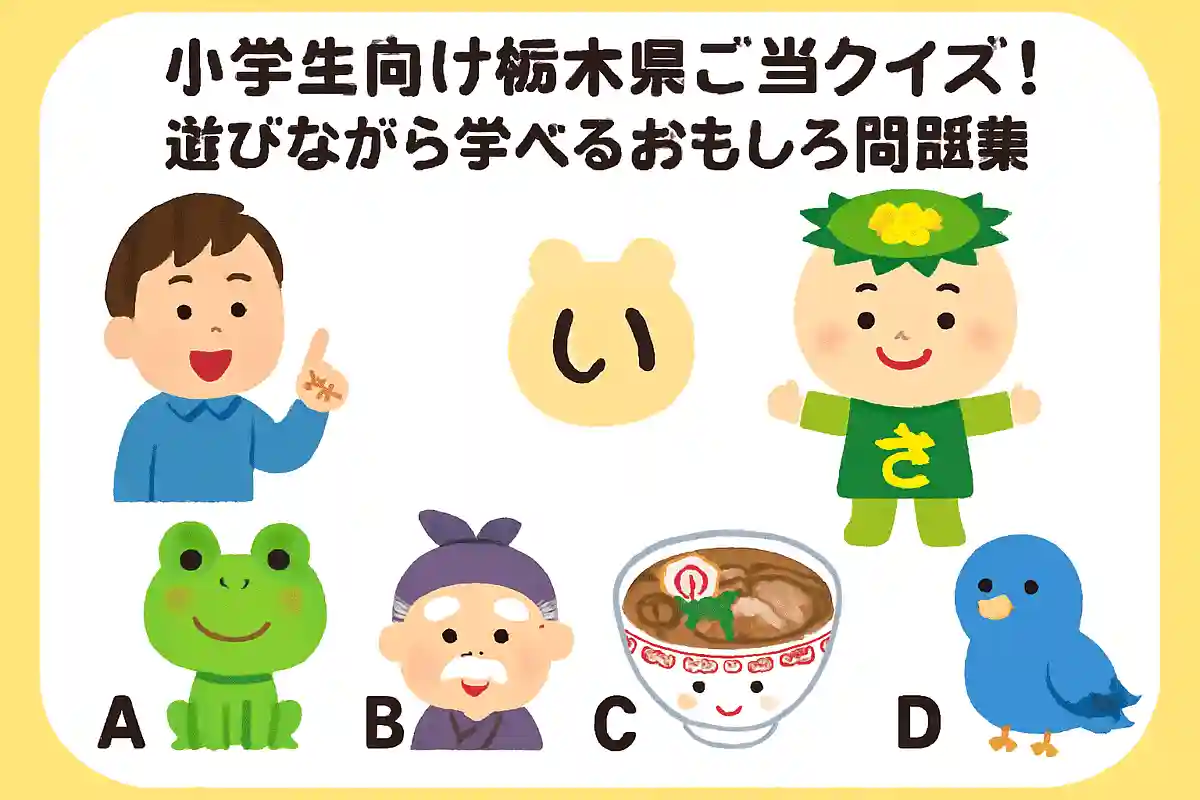
Which of the following is the popular official mascot character of Sano City, Tochigi Prefecture?
- Sanomaru
- Tochimaru-kun
- Sarusuke
See the answer
Sanomaru
Sanomaru’s design incorporates many of Sano’s local specialties: its bangs are Sano ramen’s curly noodles, it wears a ramen bowl on its head, and it tucks Sano’s famous potato fries at its waist. It’s a dog character that lives in the castle town and won first place in the 2013 Yuru-chara Grand Prix.
Which of the following is the correct reading of the town “駒生町” located in Utsunomiya City?
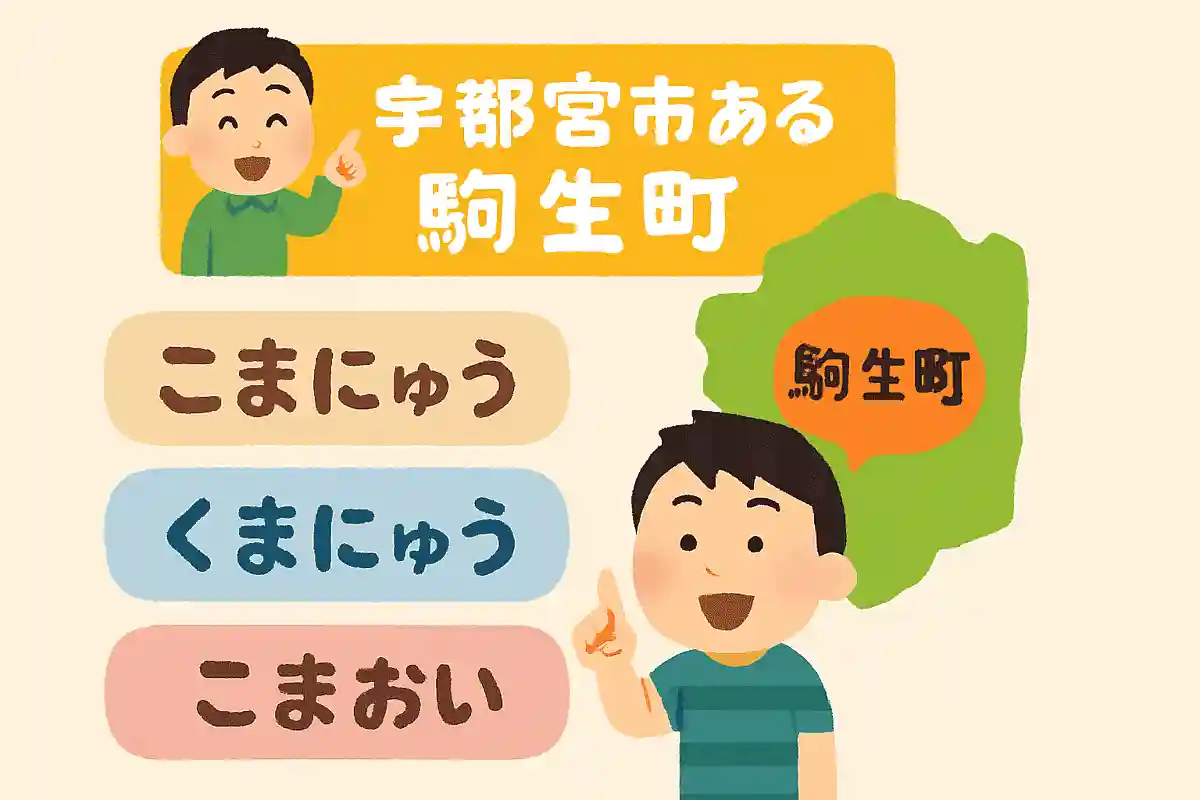
- Komaōmachi
- Koman'yūmachi
- Komaki-machi
See the answer
Koman'yūmachi
Komasucho is a town on the west side of Utsunomiya City in Tochigi Prefecture. Archaeological sites from the Jomon and Kofun periods have been discovered there, showing that people have lived in the area since ancient times. It is a town with a rich history and many places where you can learn about past lifestyles and culture. Within Utsunomiya City, it is known as an area with a particularly strong historical character.
Which station is the one shaped like a steam locomotive?
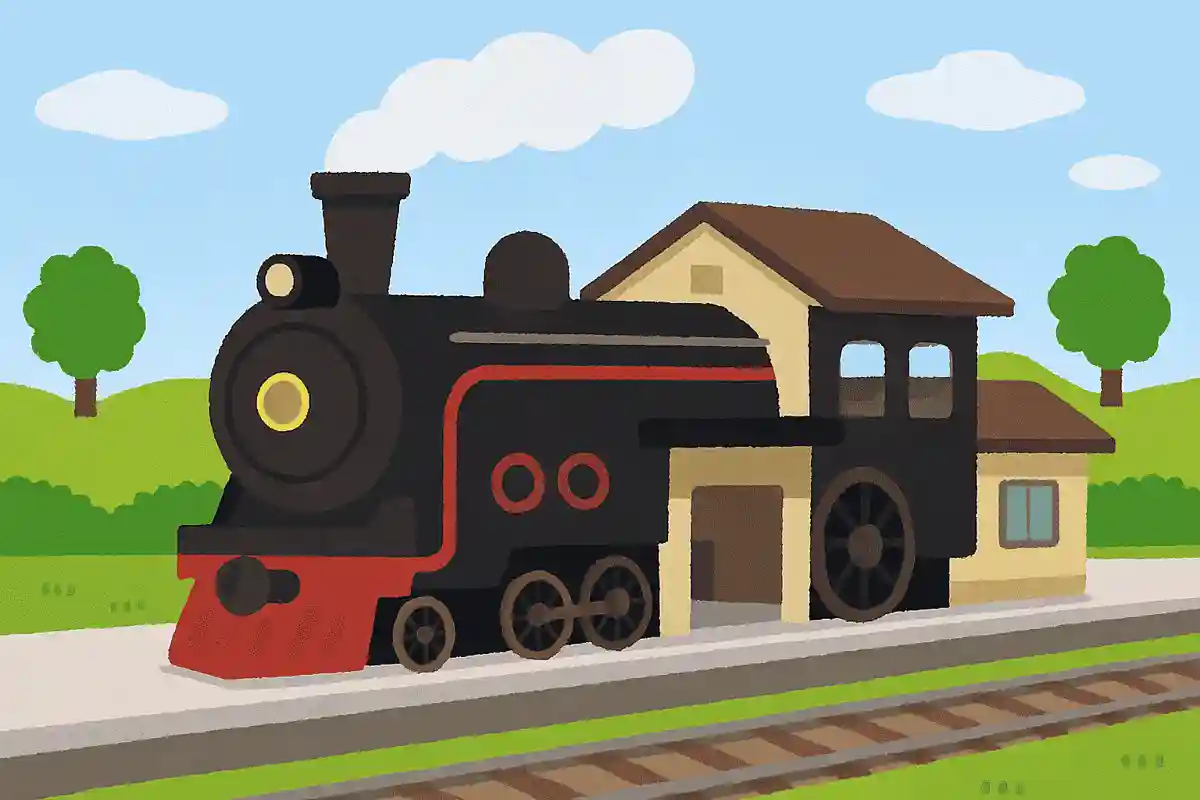
- Utsunomiya Station
- Nikkō Station
- Mooka Station
See the answer
Mooka Station
The Mooka Railway, which runs from Shimodate in Ibaraki Prefecture to Motegi in Tochigi Prefecture, is 41.9 kilometers long. On this line, a traditional steam locomotive (SL) operates, letting passengers enjoy the whistle and the smoke. It’s popular with tourists and train enthusiasts, and it’s a railway that excites both children and adults.
What is the name of a train station that actually exists in Tochigi Prefecture?
- Okashi no Kuni Station
- Omocha no Machi Station
- Animal Crossing Station
See the answer
Omocha no Machi Station
Omocha-no-machi Station is a real station located in Mibu Town, Tochigi Prefecture. Near the station, there is a toy museum where you can learn about the history of toys and play. The Tochigi Wanpaku Park, which has a large playground, is also nearby, offering plenty of places where children can have fun. It’s a perfect family outing spot where kids can learn while they play.