

[Recreation] Challenge! A roundup of tongue twisters recommended for elementary school students

Let’s all have fun and exercise our mouths!
We’ve put together some tongue twisters we definitely want elementary schoolers to try.
When you read them, you might think, “These aren’t hard at all,” but when you actually say them, you end up stumbling… Tongue twisters are such a curious kind of game!
You can compete with friends to see who can say them properly, or challenge yourself with harder ones to test your limits—there are lots of ways to play!
Even if you can’t say them smoothly at first, if you keep at it, your articulation might get better and better!
- Tongue twisters that will make you laugh out loud! Super funny
- [Diction Training] A Collection of Tongue Twisters to Improve Articulation
- Challenging tongue twisters: Introducing high-difficulty phrases and sentences!
- Nagoya dialect tongue twisters are exquisite! A fun collection where your tongue gets tied in knots with regional dialects
- [Easy] Quizzes That Elementary School Students Can Solve! A Collection to Nurture Wisdom
- Fun quizzes for elementary school kids: a collection of questions everyone can enjoy together
- Bursting into laughter! A roundup of Hakata dialect tongue twisters
- A collection of long tongue twisters. Also recommended for practicing announcements and narration.
- [Rec] Interesting! A roundup of wordplay games
- Perfect for pronunciation practice! A collection of English tongue twisters.
- [For Elementary School Students] Cipher Quiz: Fun Puzzle Riddles
- Recommended for upper elementary grades! Exciting indoor recreation and games
- [For Kids] Let’s Play in English! A Collection of Fun Recreational Activities and Games
[Rec] Challenge! A collection of tongue twisters recommended for elementary school students (41–50)
Tongue Twister Challenge

Prepare a tongue-twister script and challenge yourselves to see how many seconds it takes to read it! Announcers and voice actors use this as enunciation training, right? If you search for “tongue twisters,” you’ll find plenty, and you can also create your own.
Add furigana to the kanji so that even first-time readers can read it.
The person who reads it the fastest without stumbling wins! Tripping up, getting stuck, and struggling to say it will get everyone excited, and if you can say it smoothly, you’re sure to draw attention!

Red capybara, blue capybara, yellow capybara

This is a classic tongue-twister pattern: take a word that’s already hard to say and make it even trickier by adding color words.
Here, the focus is on “capybara,” and the addition of words like “red,” “blue,” and “yellow” highlights how awkward it becomes to pronounce.
The tricky point is the connection between the “pi” and “ba” sounds in “capybara.” Because those popping consonants mix with softer vowel sounds like “a” and “o,” be mindful of switching between them.
Since a colorful capybara doesn’t exist in reality, it might be fun to imagine the scenario on purpose while you practice the pronunciation.

Author intraoperative
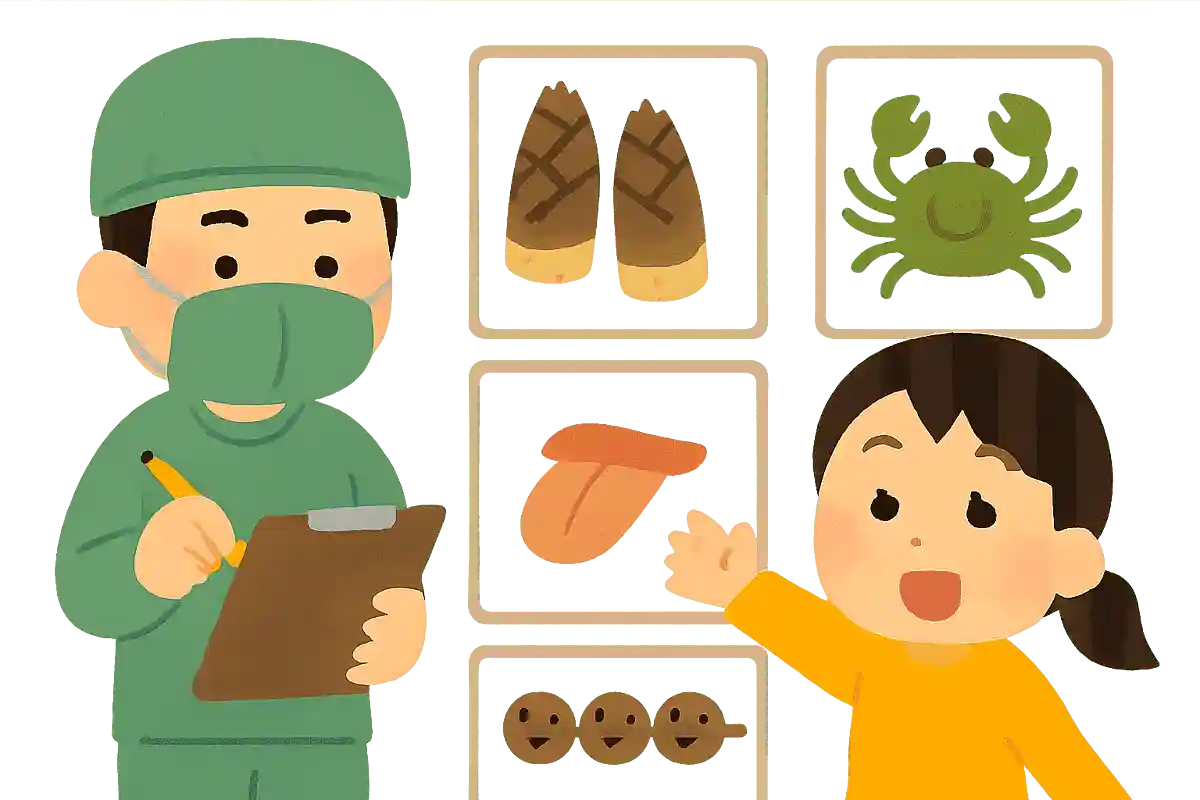
The tongue twister “chosakusha shujutsu-chu” (author undergoing surgery) gives off a somewhat serious vibe.
It makes you wonder what happened to the author, doesn’t it? This tongue twister is simply composed of hard-to-say words lined up in a row.
However, it’s trickier than it looks, so be careful.
In particular, the “shujutsu” part is where many people stumble.
Also, because it’s short, you keep running into the tricky spots as you repeat it, which is one reason it’s so difficult.

Say: “Apologize to Aya and Aya, apologize to Aya and your parents.”
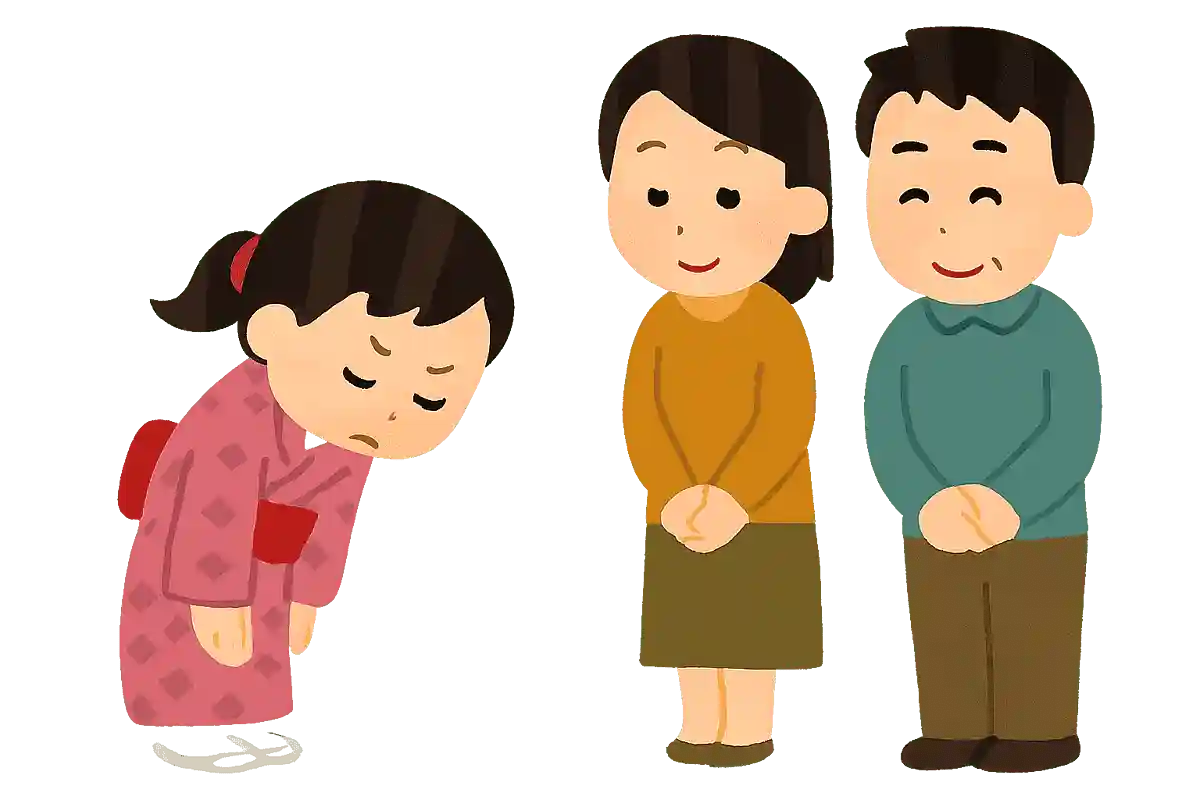
A tongue twister in dialogue style: “Apologize to Aya, and tell her to apologize to her parents.” There are several versions of this tongue twister, such as “Apologize to Aya, and tell her to apologize to the greengrocer,” or “Tell the greengrocer that Aya is going to the bathhouse with her parents.” All versions rhyme on ‘Aya’ (o-aya) and make the sentences complex in a similar way.
Even without small kana or voiced sounds, it’s still difficult—a rare type of tongue twister.
Give it a try!
Pencils and sharpened points

There’s a tongue twister that uses expressions unique to the Nagoya dialect.
It goes: “Kondon toki wa tokin-tokin no enpitsu motte kan to kan.
Teka chanto kezutto kan to kan tte itto kan to kan.” The first thing that catches your attention is “tokin-tokin,” right? This word describes a pencil tip that’s sharpened to a fine point.
In the tongue twister, it’s basically saying, “Next time, I have to bring a pencil.
Or rather, I really need to make sure it’s properly sharpened, and I should say so too.” Because it includes unfamiliar dialect words, you could say the difficulty level is on the higher side.
Kappapapakappa

This tongue twister focuses on two different words that sound the same: kappa the yokai and kappa meaning raincoat.
It depicts a certain scene where a dad kappa is wearing a raincoat kappa, and the connecting word “papa” causes a run of repeated ‘pa’ sounds.
Structurally, it’s made up of three blocks—‘kappa,’ ‘papa,’ and ‘kappa’—so it may be easier to say if you’re mindful of the breaks.
The plosive ‘pa’ requires clear mouth movement, so putting some force into it is also an important point.
The mystery of the banana is still a mystery.

There’s a unique tongue twister that goes, “Banana no nazo wa mada nazo na no da zo.” Grammatically, it may feel a bit unnatural.
The hallmark of this tongue twister is how often the sound nazo appears—it shows up five times.
To make matters trickier, there are similar-sounding phrases like nazo and na no da zo.
Plus, na no da zo also closely resembles nazo nazo (riddle), which raises the difficulty.
To avoid getting confused, make sure you’ve got it firmly in your head before you give it a try.