

Songs I want men in their 70s to sing: a roundup of tracks I'd like to hear at karaoke

When you go to karaoke, do you ever feel hesitant to sing only the songs you personally want, but also find yourself unsure what else to choose? In times like that, why not try songs that the people around you would love to hear? In this article, we’re introducing a selection of songs we’d love men in their 70s to sing—all in one go.
We focused mainly on well-known tracks that many people are likely familiar with.
There are plenty of songs that are especially cool when sung by men in their 70s, so please use this as a reference!
- Karaoke songs you’ll want to sing for men in their 70s: Enka and nostalgic Showa-era pop
- [Recommended for people in their 70s] Songs that get everyone excited. Songs you’ll want to sing at karaoke.
- [For men in their 70s] A collection of easy-to-sing songs even for people who are tone-deaf
- [Karaoke] Songs That Get Men in Their 70s Fired Up! A Collection of Nostalgic Japanese Hits [2026]
- Recommended heartbreak songs for men in their 70s: A collection of poignant, nostalgic classics
- Also great for dementia care! Recommended dance songs for people in their 70s: Let’s dance to those classic hits
- Recommended love songs for men in their 70s: A collection of nostalgic love songs
- Energizing songs recommended for men in their 70s: A roundup of nostalgic power tracks
- A roundup of recommended Japanese songs for karaoke that will excite men in their 80s
- Easy-to-sing songs recommended for men in their 70s: A collection of classic hits you’ll want to sing at karaoke
- [For People in Their 60s] Karaoke Songs That Get the Crowd Going: Ranking [2026]
- Tear-jerking songs for women in their 70s: from Showa-era classics to Heisei hits
- [Recommended for people in their 70s] Classic nostalgic hits: A collection of youth songs
Songs I’d like men in their 70s to sing: A roundup of karaoke tracks to hear (61–70)
Oh, sake!Yoshi Ikuzo

As a timeless enka classic that resonates with the heart, this song embodies Yoshikazu Yoshi’s outlook on life and deep emotions.
Released in September 1988, it conveys a man’s loneliness and the subtleties of life through a warm, expressive voice.
The scenes of remembering someone through drinking leave a strong impression, depicting thoughts of loved ones and the past alongside a moving melody.
It garnered numerous accolades, including the Grand Prix at the All Japan Cable Broadcasting Awards, and was performed on NHK’s Kōhaku Uta Gassen—a true gem of a song.
It’s perfect not only for singing together at karaoke but also for savoring while carefully listening to the lyrics.
Please enjoy it as a cherished piece that evokes empathy for life’s joys and sorrows.
Let’s get married.yoshida takurou
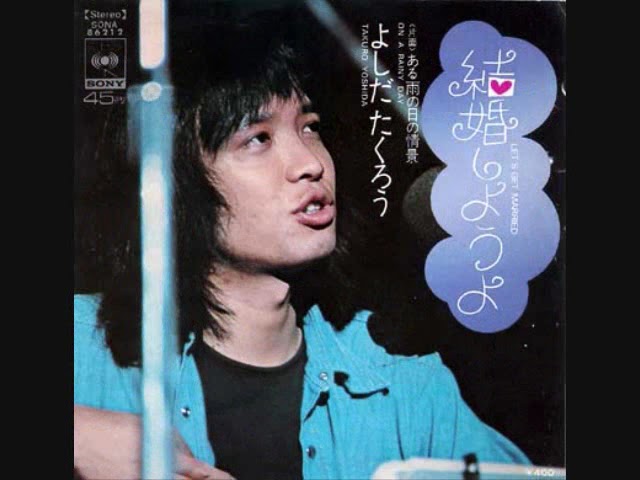
This work is memorable for its translucent, beautiful melody and sweet, poignant vocals.
Released in 1972, the song marked a major turning point in the history of folk music.
Centered on acoustic guitar, its warm sound creates an atmosphere that gently envelops feelings of love.
While poetically depicting springtime scenes, Takuro Yoshida expresses sincerity and pure affection.
Simple yet profound in its message, this classic reached a peak of No.
3 on the Oricon weekly chart.
Its heartwarming, gentle tone and tender vocal timbre enrich everyday moments.
It’s a song to savor slowly on a blossoming spring day, reminiscing with those of the same generation as memories come into full bloom.
If you’re happy and you know it, clap your handsSakamoto Kyu

Its charm lies in the way you can enjoy it by expressing a heartwarming classic through full-body movement.
It’s a song that lets you share the joy of connecting with others along with a simple, familiar melody.
Released by Kyu Sakamoto in 1964, it became one of his signature songs alongside “Ue o Muite Arukou” (“Sukiyaki”).
Based on an American folk song, Toshito Kimura wrote the Japanese lyrics with wishes for peace and friendship.
A heartwarming experience in the Philippines inspired the creation of this song, and it is said to have spread through activities at the YMCA.
It has been widely used in films and commercials and has long been cherished in educational settings.
Why not enjoy clapping and body movements together with seniors and let the conversation blossom with fond memories?
The Camellia Sasanqua InnŌkawa Eisaku

Allow me to introduce a masterpiece of enka that portrays a bittersweet love kept secret in the heart.
EISAKU OKAWA’s single, released in August 1982, is a moving work that overlays his feelings onto the camellia blooming in winter.
The lyrics by Osamu Yoshioka and the melody by Shosuke Ichikawa blend beautifully, delicately expressing the emotions of a man swayed by an unattainable love.
Four months after its release, the song entered the Oricon Top 10 for the first time and became one of Okawa’s signature pieces.
It sold a total of 1.8 million copies and won the Long Seller Award at the 25th Japan Record Awards in 1983, also marking his first appearance on NHK’s Kōhaku Uta Gassen.
Its evocative imagery that overlaps with Japan’s beautiful winter scenery, and a voice that holds both ache and warmth, make it a perfect choice for karaoke duets or for humming along while sharing fond memories.
Akira’s Zundoko SongKobayashi Akira

A bright and cheerful love song that portrays youthful romance with a zundoko rhythm.
The lyrics vividly capture scenes of young love, perfectly matched with a lively cha-cha beat.
Released in June 1960, this piece was produced as an insert song for the film “The Harbor Wind Crossing the Sea,” starring Akira Kobayashi, and it impressively sold 300,000 copies.
While based on the prewar “Navy Ditty,” its arrangement is wonderfully infused with the buoyant spirit of the postwar era.
It’s sure to liven up any gathering, from banquets to drinking parties.
The melody, beloved across generations, and the irresistibly singable, playful lyrics will make tonight’s celebration all the more festive.
Goodbye once moreOzaki Kiyohiko

A ballad distinguished by its rich vocal power and expressive nuance, this is a song by Kiyohiko Ozaki released in July 1971.
It’s not just a typical heartbreak tune; it tells of choosing to part ways out of love, set to a beautiful melody that sings of hope for the future.
Its deeply affecting vocals resonate with listeners, and the emotive melody portrays mature love within a calm atmosphere.
Released following the massive hit of the previous single “Mata Au Hi Made,” it reached No.
2 on the Oricon charts and sold a total of 444,000 copies.
In 1999, it was sung on screen by Naoto Takenaka in the film “Nodojiman,” and it has continued to be loved across generations.
It’s a song you’ll want to sing with cherished companions, drawing on the depth of your life experiences.
The Longed-For Hawaii RouteHaruo Oka

As a classic that lit a bright light in postwar Japan, one of Haruo Oka’s signature works is beloved by many.
With its lively melody and yearning for an unseen paradise, the song was released by King Records in 1948.
Its lyrics beautifully express a longing for unknown lands and the exhilaration of setting sail, resonating deeply with people of the time.
Owing to its popularity, it was adapted into a film by Shintoho in 1950, starring Haruo Oka himself, with Hibari Misora as co-star.
It’s a tune that lets you hum along with friends and bask in wonderful memories.
Perfect for music recreation at day-service centers, it’s a classic that everyone can enjoy together.