

[Spring Songs Born in the Showa Era] A Curated Selection of Kayōkyoku That Colored the Times and Timeless Classics Still Sung Today


When the first reports of cherry blossoms start to arrive, is there a melody you find yourself humming without thinking?Spring is a season of meetings and partings, and also the time when many masterpieces were born.In the Shōwa era, songs that colored spring were delivered without cease—from the lyrical prewar pieces, to the energetic kayōkyoku of the high-growth years, and on to dazzling pops.Nostalgic spring songs from Shōwa continue to resonate in many hearts across generations even today.In this article, we introduce a wide range of springtime songs born in the Shōwa period, from kayōkyoku that capture the spirit of their times to timeless gems still sung today.Please enjoy them as you picture the scenes from back then!
- Spring songs from the early Showa era: a collection of kayōkyoku and shōka that evoke spring
- [Spring Songs] Classic and Latest Hit Collections Perfect for a Bright, Gentle Spring
- [For Seniors] Classic spring songs to sing in April: A heartwarming moment with nostalgic children’s songs and kayōkyoku (Japanese popular songs)
- Spring songs for people in their 60s: A collection of classic tracks about cherry blossoms and farewells
- [Spring Songs Recommended for People in Their 40s] Relive Your Youth! A Selection of Nostalgic Tracks
- [Spring Songs] Masterpieces for Mid-Spring to Listen to in March. Spring Tunes
- [For Seniors] Spring Songs You'll Want to Hum: Feel the Season with Nostalgic Classics
- Youth songs you want to listen to in spring. Classic and popular spring songs.
- [2026] Time-Travel to Your Memories Just by Listening! Recommended Spring Songs for People in Their 50s
- [Spring Songs] Masterpieces to Listen to in April: Classic Tracks that Color the Month
- Spring song medley. The best classic tunes to listen to in spring.
- Uplifting songs to listen to in spring. Classic spring tunes that warm the heart.
- Moving songs to listen to in spring. Classic and popular spring tracks.
[Spring Songs Born in the Showa Era] Carefully Selected Kayokyoku That Colored the Times & Timeless Classics Still Sung Today (71–80)
Graduation PhotoArai Yumi

When you’re feeling sad, you open an album and gaze at the photos, or you spot someone in town but can’t bring yourself to call out… It’s a classic by Yumi Arai filled with the bittersweetness of youth that everyone has felt at least once.
Released in February 1975 as a song provided to Hi-Fi Set, it was later included in Yumi Arai’s own album “COBALT HOUR” in June of the same year.
Since then, it has been used as the theme song for the film “Watch with Me” and in the drama “Sotsu Uta,” resonating across generations.
It’s a heartwarming song that gently stays by your side when you want to bask in nostalgia or when you’ve gone through a farewell with someone dear.
Elegy of SpringShōji Shirō

This is a classic whose song by Shiro Shoji, conveying the atmosphere of early Showa, touches the heart.
Released in 1934, the piece entrusts its message to flowers that symbolize lost love and the transience of spring, while yielding to the tides of the times, and it went on to lay a foundation for the music scene that followed.
The lyrics portray the pain of parting, and Shoji’s voice accompanies them closely, resulting in a performance that resonates deeply.
Issued by Columbia Records, the work also led to his encounter with Yuji Koseki.
It carries a certain nostalgia for everyone, evoking feelings that press on the heart.
It’s a song you’ll want to hear with the coming of spring—one that has been loved across generations.
The Apple SongNamiki Michiko

This masterpiece, woven by Michiko Namiki’s clear singing voice, is a celebrated song that lit a beacon of hope in postwar Japan.
Brimming with gentleness, the piece sings of love with a pure heart while gazing up at the blue sky, resonating deeply with people of the time.
The memories of sound etched in monaural audio vividly convey the atmosphere of early Showa.
Released to the world as the theme song for the film “Soyokaze,” which premiered in October 1945, it was issued as a record the following January.
The warm melody crafted by lyricist Hachirō Satō and composer Tadashi Manjōme became a source of comfort for people living through the postwar reconstruction period.
It is a song to be enjoyed while sensing the arrival of spring, together with fond memories.
A Hazy Moonlit Nightshouka
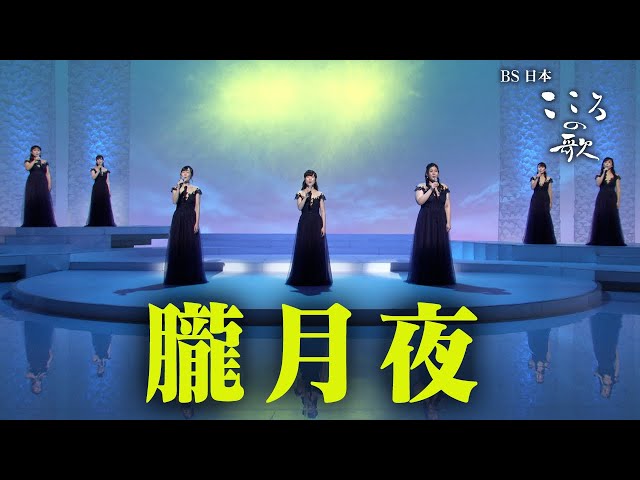
A song that beautifully portrays a spring evening depicts, with delicate nuance, a scene where the setting sun and haze spread over a field of rapeseed blossoms, and a pale moonlight floats in the sky.
Alongside the tranquil countryside, it gently embraces quintessential images of spring in Japan—the hues of the forest, people walking along rice-field paths, the croaking of frogs, and the tolling of bells.
Released in 1914 as a Ministry of Education school song, the work seamlessly marries lyrics by Tatsuyuki Takano with music by Teiichi Okano, and it has long been cherished in educational settings.
It has continued to be loved across generations, with Aiko Moriyama covering it in 2009 and Ai Nishida performing it on a program in June 2023.
As a song to hear on a calm spring evening, it offers a warmth that deeply touches the heart.
Lingering Snowiruka

This was Iruka’s third single, released in November 1975.
Originally, it was a song by Kaguya-hime, one of the folk groups that defined the Showa era, but Iruka’s cover became a huge hit and turned it into a classic passed down across generations.
I’m listening to it again for the first time in a while as I write this, and Iruka’s distinctive, warm voice is a perfect match for the song’s tone, making it easy to see why it has remained a long-selling favorite through the years.
The lyrics’ depiction of spring snowmelt scenery is also wonderfully evocative! Truly a masterpiece of the Showa era!

the first strong spring windkyandīzu

This is the ninth single by Candies, the iconic female idol trio of the Showa era, released in March 1976.
It’s an up-tempo track with tremendous drive, brimming with the breath of spring—as if all living things and nature itself are beginning to stir toward the season.
The obbligato lines played on analog synthesizers, which were just starting to be incorporated into various arrangements at the time, are especially striking.
Now that the timbres of synthesizers and many other instruments have evolved so much, listening to it again feels surprisingly fresh.
The three members’ vocals are youthful and vibrant as well, and that quality seems to amplify the song’s sense of spring.
Cape ErimoMori Shinichi

This song was composed by Takuro Yoshida, who is famous as a folk singer.
There was apparently some opposition to having Shinichi Mori, an enka singer, perform it, but the fusion of a folk song with an enka vocalist produced wonderful results, creating a piece that has been loved by people for a long time.
Capturing the atmosphere of a simple Hokkaido fishing town and the spirit of the Japanese people, this song will continue to be cherished in Japan.
It is also interesting that this became a catalyst for the creation of many songs that transcended musical genre boundaries.
