

[Simple Riddles] A curated selection of fun questions that will excite everyone from kids to adults!

A must-see for anyone looking for wordplay riddles that adults can enjoy! In this article, we present intellectually witty riddles that will make you chuckle, in a fun quiz format.
From works that delight with clever wordplay to ones that make you pause and think.
Simple yet profound—enjoy the world of riddles.
These amusing riddles are perfect for sparking conversation during office breaks or at parties.
For a mental workout or as conversation starters, find your favorite riddles!
- Interesting riddles: a collection of simple and fun questions
- [Battle of Wits] Stimulate your intellectual curiosity! Quiz questions that get adults excited
- Easy Riddles for Elementary School Students
- [Trick Quiz] Quiz Questions That Excite Everyone from Kids to Adults
- [Brain Training] Difficult Riddles That Even Adults Struggle With
- Fun for kids and adults alike! Train your brain with easy riddles.
- Mental Workout: Casual Challenge! Riddles for Adults
- [Satisfying When Solved] Challenging Quizzes Recommended for Elementary School Students!
- Do you get tripped up too? A fun roundup of 10-time quiz questions
- A quiz that seems easy but is actually hard: trick questions that make you think flexibly
- Fun quizzes for elementary school kids: a collection of questions everyone can enjoy together
- Let's get excited with a two-choice quiz that everyone—from kids to adults—can enjoy!
- [Interesting] A collection of brain teaser quiz questions. Let's train your brain!
Food and Cooking Riddle Collection (11–20)
Riddle: “What do the ‘sea’ and ‘gyūdon (beef bowl)’ have in common? What’s the punchline?”

See the answer
It has ups and downs.
The sea has “nami” (waves), and gyudon has “nami” (the regular size), right?

“What do you get when you compare takoyaki with a wife going out? What’s the punchline?”
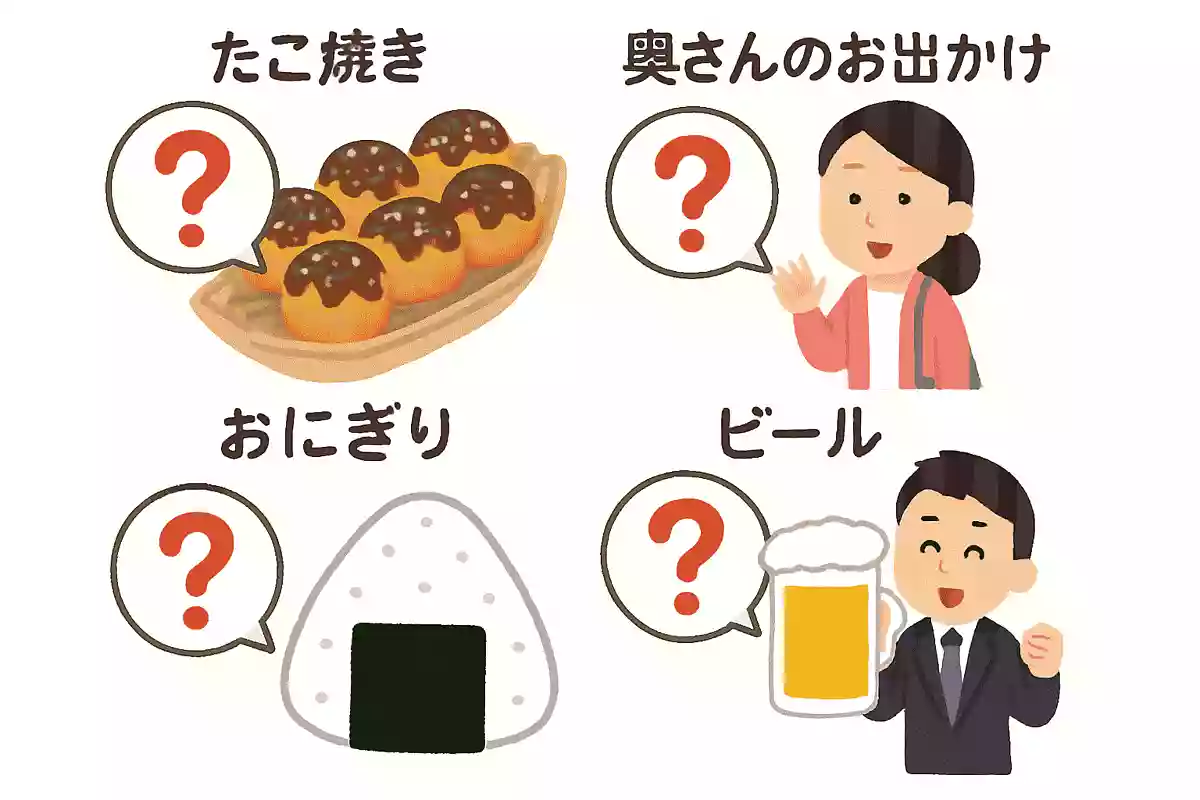
See the answer
There is a toothpick (tsuma-youji).
While focusing on how takoyaki is eaten, let’s rephrase “the wife’s outing” in various ways to find a common word. Takoyaki is typically eaten with a toothpick (tsumayōji), and “wife” can be said as tsuma, while “outing/errand” can be said as yōji. Putting them together gives “tsuma yōji,” which sounds like “tsumayōji” (toothpick). That’s the intended answer here.

What do you get when you compare “twins” to “chikuzen-ni” (a Japanese simmered dish)? What’s the punchline?
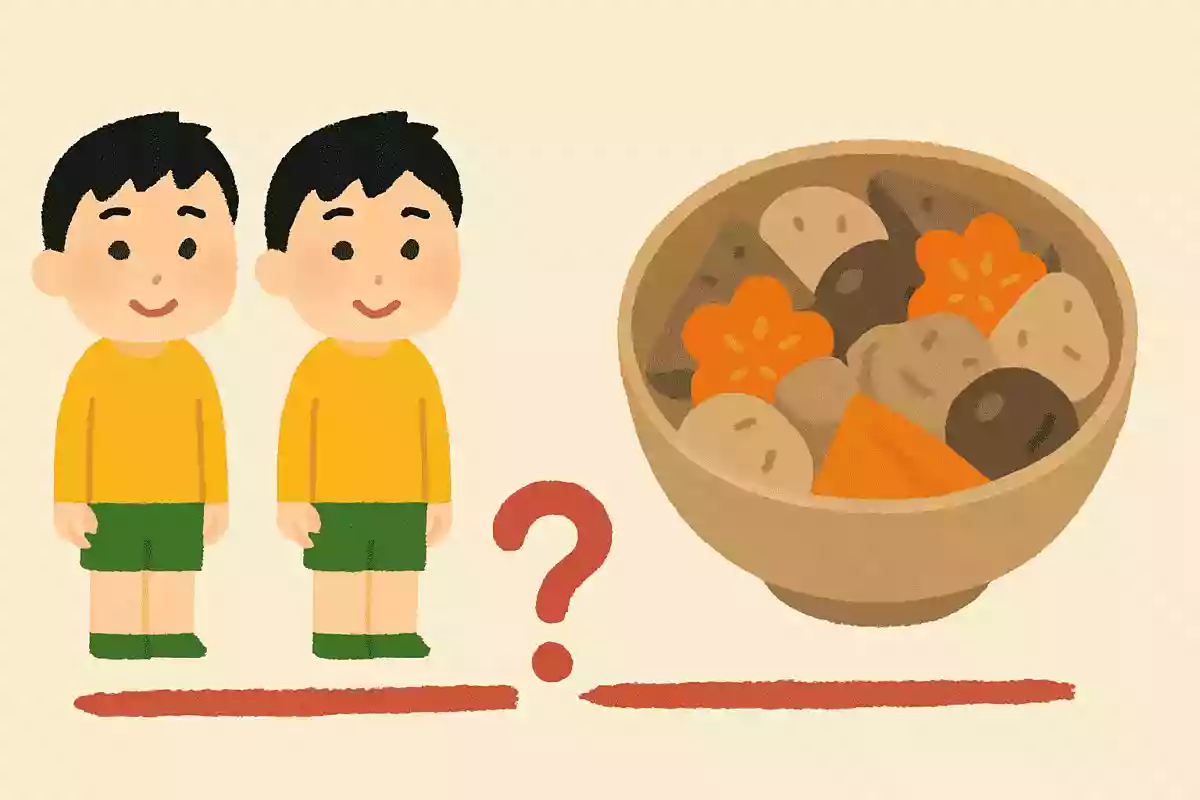
See the answer
They’re very similar (a pun: ‘similar’ and ‘boiled’ sound the same).
“Twins” often look alike and are “very similar,” and chikuzen-ni is a dish made by “simmering well” the ingredients. Since “nite” (similar) and “nite” (simmer) are pronounced the same, the answer is “yoku nite imasu” (it’s very similar). Because chikuzen-ni can vary with the ingredients used and evokes a wide range of related words, it might be easier to arrive at the answer by starting from the idea of twins.
What do you get when you compare a marathon runner to dried fish? What’s the punchline?
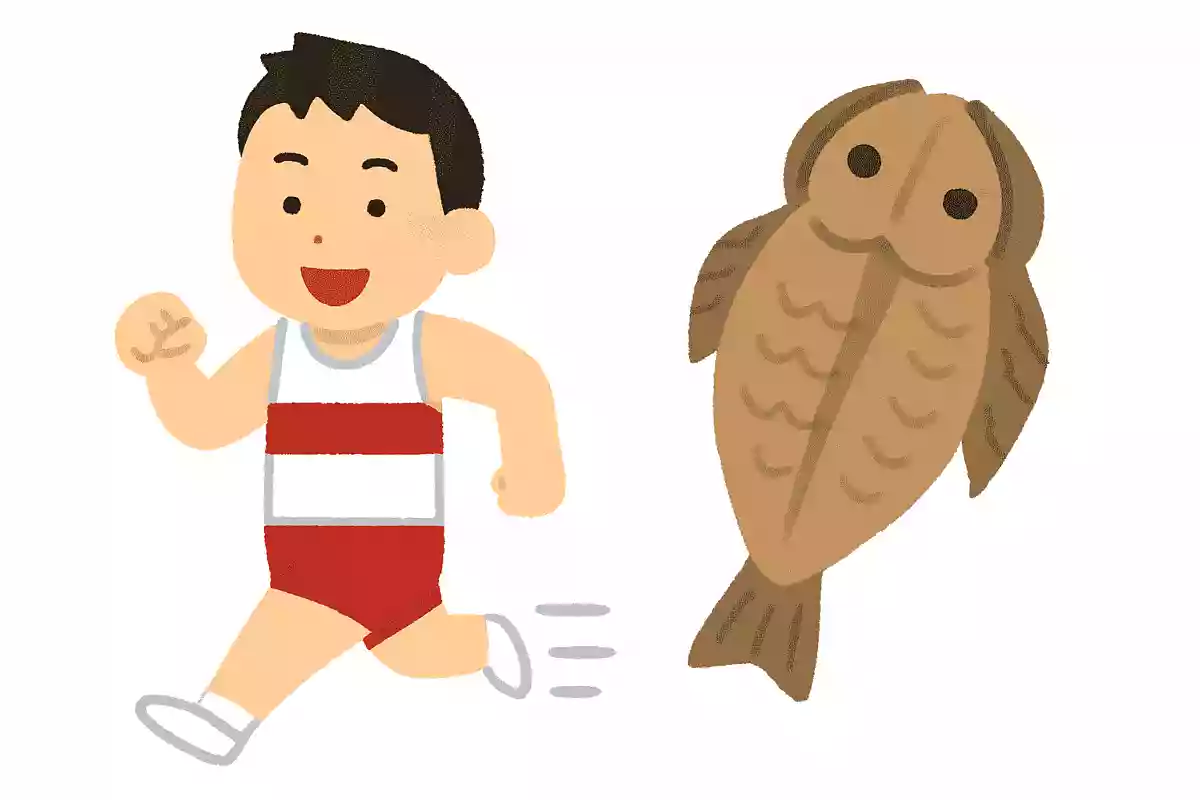
See the answer
It will either be a complete run or it will dry out.
The answer is that both share the word “kansō”: for a marathon runner, the goal is to finish safely (kansō, meaning “to complete a race”), and dried foods are items like fish or fruit that have been dried (kansō, meaning “drying”). Let’s clearly picture each situation and feeling, and imagine the words accordingly.
What do you get when you compare “sushi” to “sugoroku” (a board game)? What’s the punchline?
See the answer
The last one is the final/last move, right?
At sushi restaurants, tea is called “agari,” and in sugoroku (a Japanese board game), the goal is also called “agari.” Since both terms are often used to mark the conclusion, the answer here is “In the end, it’s agari, right?” Both are specialized terms, so whether you know them is an important point.