

Interesting Japanese songs recommended for men in their 60s

This time, I’d like to introduce a collection of amusing Japanese songs recommended for men in their 60s.
Back in the Showa era, there were lots of silly songs, but they kind of grow on you, get stuck in your head, and you find yourself humming them without thinking—there are quite a few songs like that, right?
- Hilarious: Funny songs. Tracks that kill at karaoke and put a smile on your face.
- [2026 Edition] Songs Loved by People in Their 60s: Classic Hits from Their Youth
- [For People in Their 60s] Karaoke Songs That Get the Crowd Going: Ranking [2026]
- Recommended Japanese karaoke songs for men in their 60s
- Karaoke songs that are sure to get a 60-something man fired up
- [2026] Japanese karaoke songs that get men in their 50s pumped up
- Cheering songs recommended for people in their 60s: classic and popular Japanese hits
- [Karaoke] Recommended Songs for Men in Their 80s: A Collection of Showa-Era Classics You’ll Want to Belt Out
- Get the Laughs! Funny Karaoke Songs That Hype Up the Crowd
- [Recommended for people in their 70s] Classic nostalgic hits: A collection of youth songs
- A love song that makes a man in his sixties relive his youth. Timeless classics that rekindle the romances of those days.
- Tear-jerking songs recommended for men in their 60s: classic and popular Japanese hits
- Japanese karaoke songs that are easy for men in their 60s to sing
Interesting Japanese songs recommended for men in their 60s (21–30)
Whip, s’il vous plaît.pinkī makaron

This is the theme song for Wonder Change Pinky Macaron, which was aired as a segment within the E-Tele children’s program Bit World.
It’s a mystery how the intro and chorus sound quite similar to the theme song of the anime HeartCatch PreCure, which aired around the same time.
Spiraling Days and DreamsDegawa Tetsurō

This is a song Tetsurou Degawa sang on E-Tele’s children’s program, Tensai Terebi-kun.
To be honest, you can’t exactly call Degawa’s singing good, but the song itself is excellent, and that imbalance is oddly irresistible.
Interesting Japanese songs recommended for men in their 60s (31–40)
Love Bonchi SheetZa Bonchi

Back during the manzai comedy boom, the comedians at the center of it often sang as well.
Among those songs, this one was a real hit, ranking quite high on shows like The Best Ten at the time.
It’s a fun track that weaves in material from The Bonchi, featuring Mr.
Yamamoto and Mr.
Kawasaki.
The second song, Radio, didn’t catch on because it was too dark.
After all, it’s comedy—so it needs to be upbeat.
Scallop Rock ‘n’ RollYasuoka Rikiya

This is a song that was created as the theme for Hotate-man, a character that happened to be born spontaneously from our group, The Drifters/Hyōkin-zoku.
Not only that, but the song itself had a great, catchy groove, so it ended up becoming a much bigger hit than expected.
Higashimurayama OndoShimura Ken

Looking back now, it’s hard to believe that when Ken Shimura first joined The Drifters as a replacement for Chū Arai, he didn’t get any laughs at all.
The piece that broke through that slump was the “Higashimurayama Ondo.” The anecdote about him being commended by Higashimurayama City is well known.
Chanchanko ~KANREKI 60~Pikotarō
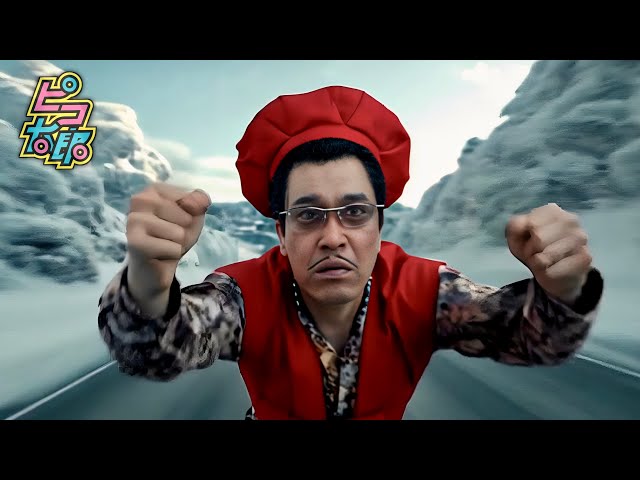
It’s a humor-filled song celebrating one’s 60th birthday.
Centered on the major life milestone of turning sixty, it combines straightforward congratulations with a powerful cheer for the life ahead.
The catchy phrases and rhythm that make you want to hum along are exactly what you’d expect from Pikotaro.
Released in June 2025 as a song for NHK’s “Minna no Uta,” it also drew major attention for its music video created with generative AI.
Play it at a loved one’s 60th-birthday celebration, and the whole place is sure to brighten up.
Let’s all sing and dance and turn it into the best party ever!
Akira’s Zundoko SongKobayashi Akira

A bright and cheerful love song that portrays youthful romance with a zundoko rhythm.
The lyrics vividly capture scenes of young love, perfectly matched with a lively cha-cha beat.
Released in June 1960, this piece was produced as an insert song for the film “The Harbor Wind Crossing the Sea,” starring Akira Kobayashi, and it impressively sold 300,000 copies.
While based on the prewar “Navy Ditty,” its arrangement is wonderfully infused with the buoyant spirit of the postwar era.
It’s sure to liven up any gathering, from banquets to drinking parties.
The melody, beloved across generations, and the irresistibly singable, playful lyrics will make tonight’s celebration all the more festive.