

Karaoke songs that are sure to get a 60-something man fired up


If you’re a man in your 60s, you probably have plenty of chances to go to karaoke with coworkers or friends.
One of the biggest challenges at karaoke is choosing the right songs, isn’t it?
Many people may feel, “I know tons of songs, but I can’t recall them on the spot,” or “Among the songs from our generation, which ones are broadly easy to listen to?”
In this article, we’ve gathered lots of songs that men in their 60s love and that are great picks to sing at karaoke!
Younger readers can also use this as a reference when enjoying karaoke with older people, such as your boss or family members.
It’s packed with timeless classics that defined their eras!
- [For People in Their 60s] Karaoke Songs That Get the Crowd Going: Ranking [2026]
- Recommended Japanese karaoke songs for men in their 60s
- [Men in their 60s] Even if you're not good at singing, it's okay! Easy-to-sing songs for karaoke
- Popular Japanese songs among men in their 60s: recommended masterpieces and classic tracks
- [2026] Japanese karaoke songs that get men in their 50s pumped up
- [60s] Karaoke Popularity Rankings by Generation [2026]
- Japanese karaoke songs that are easy for men in their 60s to sing
- Karaoke songs you’ll want to sing for men in their 70s: Enka and nostalgic Showa-era pop
- Best Karaoke Songs and Popular Band Rankings for Lively Fun in Your 60s [2026]
- Songs Women Want Men to Sing: Popular Karaoke Picks Chosen by Girls
- A love song that makes a man in his sixties relive his youth. Timeless classics that rekindle the romances of those days.
- Interesting Japanese songs recommended for men in their 60s
- Iconic songs men will want to sing! Karaoke tracks recommended for Gen Z
Karaoke songs that are sure to liven up the party for men in their 60s (41–50)
Yokohama TwilightItsuki Hiroshi

This is the song that Hiroshi Itsuki released in 1971 as his re-debut single after changing his stage name four times.
It’s a rare type of song in which, aside from the final phrase, all the lyrics are composed of single words, making it particularly memorable in that regard.
Along with “Blue Light Yokohama” and “Minato no Yoko, Yokohama, Yokosuka,” it is cherished as a Yokohama-themed local song.
As a song widely known among the public, it likely enjoys enduring popularity in karaoke as well.

Yoko of the Port, Yokohama, YokosukaDaun Taun Bugiugi Bando

This song, which proceeds mostly through spoken narration except for a single chorus line—much like a play or musical—is one of the most innovative and striking numbers in the Down Town Boogie-Woogie Band’s catalog.
It effectively marked the lyric-writing debut of Yoko Aki, who was the wife of the band’s leader, Ryudo Uzaki.
When the song became a hit, it inspired numerous answer songs.
Because you don’t have to worry much about pitch, it’s recommended even for those who aren’t confident in their singing but are comfortable delivering spoken lines.
I tell lies with these eyes.CHAGE and ASKA

The music duo CHAGE and ASKA have left behind many great songs.
Among their works, “Boku wa Kono Hitomi de Uso wo Tsuku” is renowned as a masterpiece.
Although its uptempo nature might make it seem challenging, the range spans mid1 F to hi A# and isn’t particularly wide.
Moreover, the average pitch centers around mid2 F, which is a comfortable range for male singers, making it far easier to sing than it sounds.
Be sure to add it to your repertoire.

The Bride SambaGō Hiromi

Hiromi Go, who debuted in 1972 and won a passionate following with his sweet looks and voice.
His song “Oyome Samba” has a samba-like rhythm that makes you want to start dancing, making it perfect for karaoke.
There’s a call-and-response part, so it’s easy to enjoy together with other participants around you, which is great, right? When a string of enka and other sad songs has brought the mood down and you want to brighten the atmosphere a bit, this song is your go-to.
Move your body within your comfort level and sing it cheerfully!

I look up as I walkSakamoto Kyu
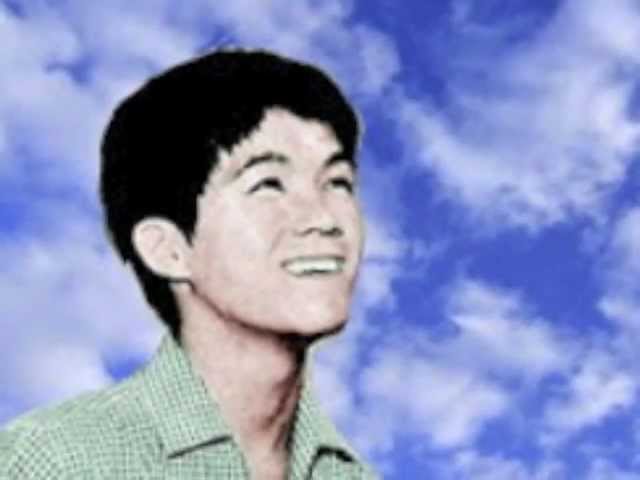
A song that exploded in popularity worldwide in the 1960s.
It’s the first—and only—song by a Japanese artist to reach No.
1 on the Billboard chart, a true classic.
Perhaps its universal lyrics and easy-to-remember rhythm are what make it so appealing.
Even now in 2018, it’s still being sung by countless artists and remains a karaoke staple—an everlasting anthem.
When you’re feeling down or sad, singing this song will likely lift your spirits.
Let’s all sing it together and get excited!
Don’t cry.Tachi Hiroshi

Hiroshi Tachi, who once oversaw the biker team Cools alongside Koichi Iwaki as the honor guard for the rock band Carol, has also been active as a vocalist in addition to his acting career.
With this song, released in 1984, he appeared in the 35th NHK Kōhaku Uta Gassen.
Considered one of Tachi’s signature tracks, pulling it off stylishly at karaoke could boost your image.
It’s a recommended pick for those with lower voices.
TRAIN-TRAINTHE BLUE HEARTS

A rock tune that stays close to each listener and keeps delivering a powerful message.
With its straightforward spirit and energetic performance, this is a signature work by THE BLUE HEARTS that truly breaks through.
Hidden within are hints for finding your own way of life—guidance for the road of life.
After its release in November 1988, it ranked for five consecutive weeks on a TBS music program, and starting in January 1989 it was also chosen as the theme song for the TBS drama “High School Graffiti.” This track has become a staple at sporting events as well, used as a cheer song in high school baseball and as walk-up music by many professional baseball players.
It’s recommended for times when you’re feeling down, ready to take a new step forward, or standing at a crossroads in life.
It’s a song that’s sure to give you courage and hope.