

Collection of trivia and fun facts about stars shining in the night sky

If you start wondering what the sparkling stars in the night sky mean, you might find it hard to stop thinking about it.
In this article, we’ll share trivia and fun facts related to stars.
Because stars differ in size, shape, and brightness, one of the delights is looking up at the night sky and trying to identify their names.
As you deepen your knowledge of constellations, fixed stars, and planets, it can also prompt you to ponder the many mysteries of the universe that remain unknown.
If you’re interested in the history of the universe or in stars, please read on to the end.
- A collection of trivia and fun facts about space, brimming with dreams and romance
- Fun to Know! A Collection of Space Trivia [Rec]
- A compilation of unsettling trivia and fun facts about Earth
- Space trivia quiz: Multiple-choice questions about the planets of the solar system and astronauts
- A quiz of fun trivia: bite-sized knowledge that leads to new insights.
- [Space] Did you know? Saturn Trivia Quiz
- [Tanabata Quiz] Three-choice questions to enjoy trivia and fun facts
- Make weather forecasts more fun! Trivia and fun facts about the weather
- So interesting you’ll want to tell someone! December Trivia & Fun Facts Special
- Fun facts you’ll want to share! January trivia and tidbits special
- [For Kids] November Trivia Quiz & Fun Facts: Let’s Learn While Having Fun!
- Trivia and fun facts about food (summary)
- Trivia quiz with useful tips to know: fun facts that come in handy at school or at home [for kids]
Trivia & Fun Facts About the Stars Shining in the Night Sky (1–10)
The color of a star is related to its surface temperature.

Stars shining in the night sky come in a variety of colors, from whitish to reddish.
Did you know that these colors are due to differences in surface temperature? Bluish-white stars are the hottest, exceeding 10,000 degrees, while the coolest red stars are around 4,000 degrees.
Highly hot bluish-white stars are young—in human terms, like children.
Cooler red stars correspond to the elderly in human terms, and at that stage they eventually explode and disperse into fragments.

The morning star and the evening star refer to Venus.

The star that stands out and shines in the eastern sky at dawn is called the Morning Star, and the one that stands out and shines in the western sky in the evening is called the Evening Star; both refer to Venus.
Why does Venus become the Morning Star or the Evening Star? Venus orbits closer to the Sun than Earth does, on an inner orbit.
Therefore, it never appears on the night side of Earth, which is opposite the Sun.
Also, “Lucifer” is the Latin word meaning “Morning Star,” and it carries the sense of “light-bringer.” Keep this in mind as a bit of trivia.
Stars can be broadly divided into three types: stars, planets, and satellites.
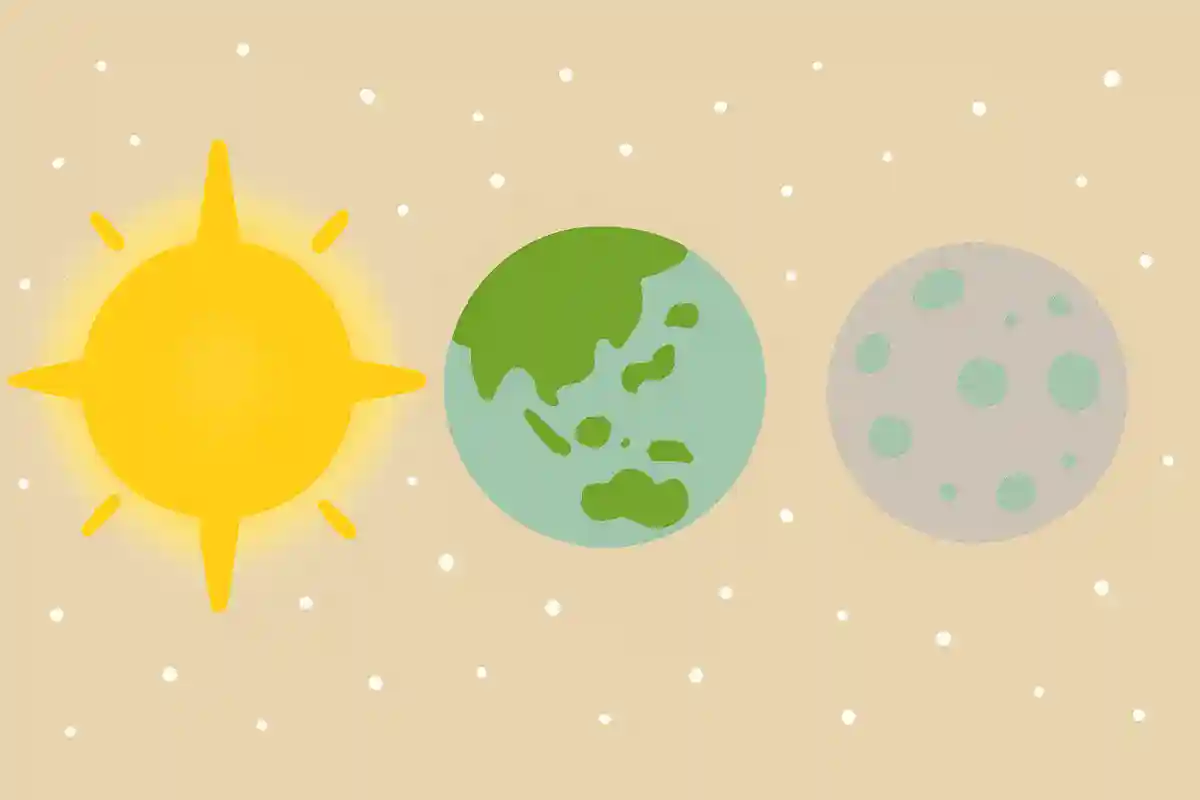
When you gaze at a starry night sky, the stars appear to sparkle, don’t they? It looks like every star is shining, but not all of them produce their own light.
Broadly speaking, stars can be classified into three types.
Those that shine by themselves are called stars (fixed stars or stellar objects), and they have no solid surface and burn hydrogen as their fuel.
A representative example is the Sun.
Objects that appear to shine by reflecting the light of stars are called planets and satellites.
Planets are the bodies that orbit the Sun—there are eight, from Mercury to Neptune.
Satellites are bodies that orbit planets; the Moon, which orbits Earth, is also a satellite.

Trivia & Fun Facts About the Stars Shining in the Night Sky (11–20)
Mars looks red because its soil and rocks are rusted.
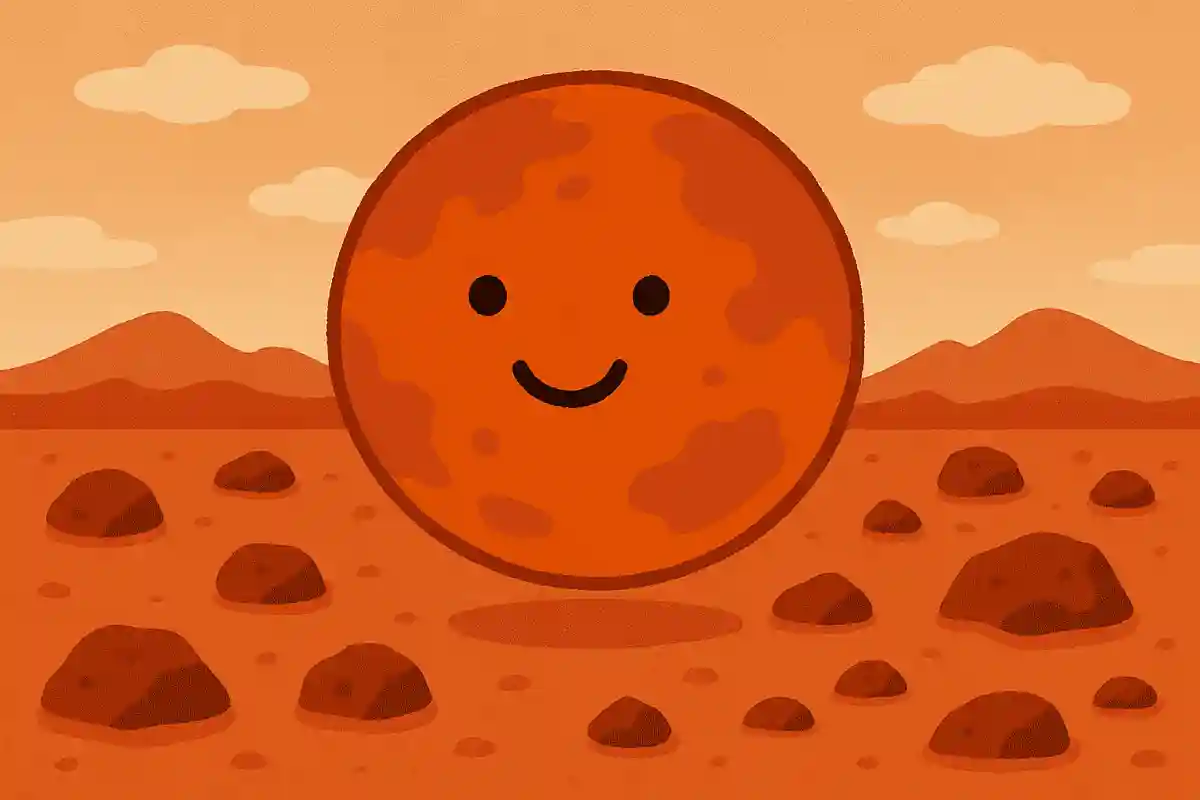
When you think of Mars, many people might picture the Red Planet, but did you know why it’s red? Thanks to the Viking landers that touched down on Mars in 1976, we learned that the planet is covered in oxidized iron.
Oxidation implies the presence of oxygen, and it’s believed that water once existed there as well.
For these reasons, it’s understandable that research is exploring whether humans could live on Mars.
However, Mars is considerably smaller than Earth, with a radius of about half as large.
A day on Mercury is longer than a year.
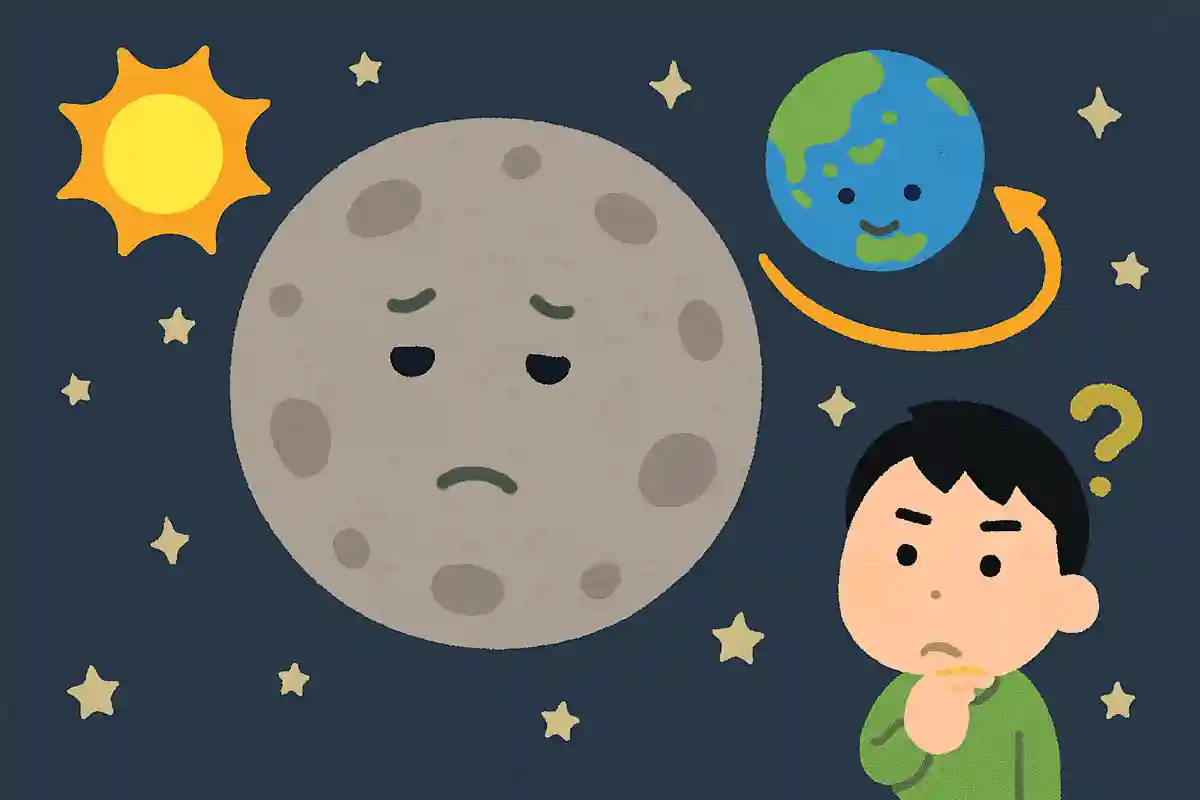
On Earth, it’s impossible for a year to be longer than a day—but did you know there’s a planet in our solar system that overturns that common sense? That planet is Mercury.
Mercury takes 88 days to orbit the Sun, but 176 days to complete one rotation.
From an Earthly perspective, it’s like a single day taking more than two years to finish.
Because both daytime and nighttime are extremely long, temperatures swing dramatically: daytime reaches about 320–430°C, while nighttime drops to around −160 to −170°C.
It’s fascinating how even planets within the same solar system each have such distinct characteristics, isn’t it?
Saturn has a hexagonal cloud pattern.

Few people may have closely observed Saturn’s patterns.
But if you look carefully, you can see a hexagon-shaped, cloud-like pattern at Saturn’s north pole.
What exactly is this? It was first discovered during observations by the Voyager 2 spacecraft.
One theory suggests that colliding atmospheric circulation vortices form the hexagon, but it remains a hypothesis.
In any case, it’s fascinating—and quite mysterious—that such a pattern exists.
Excluding the Sun, the star that appears brightest from Earth is Sirius.
Of course, the star closest to Earth is the Sun, so it’s natural that the Sun appears brightest.
But what do you think is the next brightest star? That would be Sirius in the constellation Canis Major.
Sirius is actually about twice the size of the Sun and is located at a relatively close distance of 8.6 light-years from Earth.
Interestingly, Sirius is in fact a binary system consisting of the primary star, called Sirius A, and a white dwarf called Sirius B.
It’s said that the primary star’s orbit wobbles because it is pulled by Sirius B, which reached the end of its life earlier.
That’s fascinating as well.