

[Childcare] Summer songs: Full of fun! Summer nursery rhymes & finger-play songs


When the rainy season ends, summer finally arrives! Here, we’ll introduce a variety of children’s songs to help you enjoy the season.
We’ve gathered songs that kids love, as well as hand-play songs often sung in nurseries and kindergartens.
Listening to these songs will make you look forward to the long-awaited summer even more.
Hand-play songs are also fun for little ones, so be sure to incorporate them into your childcare activities.
While the days will be getting hotter, some children’s songs can make you feel cooler just by listening.
Enjoy a fun-filled summer together with the children!
- Nursery rhymes I want to sing in July: fun summer songs
- Children’s Songs You Can Sing in August: Summer-Friendly Kids’ Songs and Fingerplay Rhymes
- [Sea Nursery Rhymes] Fun children's songs themed around the sea
- A collection of summer-like songs: tracks that go perfectly with summer, like the sea and the sky.
- [Tanabata Children's Songs] Fun hand-play songs and a nostalgic collection of traditional nursery rhymes and folk songs
- [Children’s Songs for June] Fun finger-play songs and traditional nursery rhymes perfect for the rainy season
- Summer song medley. Timeless and popular tracks that color the summer.
- Nursery rhymes and fingerplay songs to enjoy in May! Songs perfect for the fresh green season
- Children’s songs, folk songs, and nursery rhymes about insects
- Recommended summer songs for kids: Popular J-POP/Japanese hits [2026]
- Get pumped with kids’ favorite songs! A memorable collection of classics that will make you want to sing along
- [Sunflower Songs] A selection of classic and popular tracks that give you energy in the hot summer
- Nursery rhymes, folk songs, and children's songs about food
[Childcare] Summer songs. Full of fun! Summer nursery rhymes & fingerplay songs (101–110)
Roses, remnants of summer

Amazingly, this song is actually a poem written long ago by the Irish poet Thomas Moore, set to the melody of an Irish folk tune.
That’s way back in the 1800s.
The version sung in Japan was translated into Japanese in the Meiji era and became familiar as a children’s song.
Though it depicts scenes from faraway Ireland, the Japanese-style translation might keep you from realizing it’s a song from overseas.
Tea Picking

This song was composed in the Meiji era.
Tea picking takes place in early May, so it’s not a song for the height of summer, but it’s a refreshing tune that evokes early summer.
It’s also known as a hand-play song, and many people may remember playing it with friends when they were children.
Come, fireflysakushi sakkyoku: warabe uta

Fireflies that emit beautiful light can be seen around the beginning of summer.
The children’s song Hotaru Koi is themed around these fireflies.
Because fireflies can only be found where the water is clean, you might not see them very often in everyday life.
But when you do, why not sing this song and dream of meeting them again? The lyrics depict someone calling to the fireflies, saying there’s tasty water and not-so-tasty water here, so come this way.
These lyrics have been interpreted in various ways, and despite the cute melody, there are versions with slightly eerie continued verses.
If you’re curious, try looking into it!

seasakushi sakkyoku: fushō

This is a Japanese children’s song from 1913—very old indeed.
When we think of the sea, we tend to picture a lively daytime beach full of people, but the night sea, with the sound of waves echoing in a dreamy atmosphere, is wonderful too! That kind of night sea is what this song is about.
Each word in the lyrics is a bit tricky, so I think it’s best to start by considering what each word means.
Once you understand them, it’s not difficult at all!
snailSakushi sakkyoku: Monbushō shōka
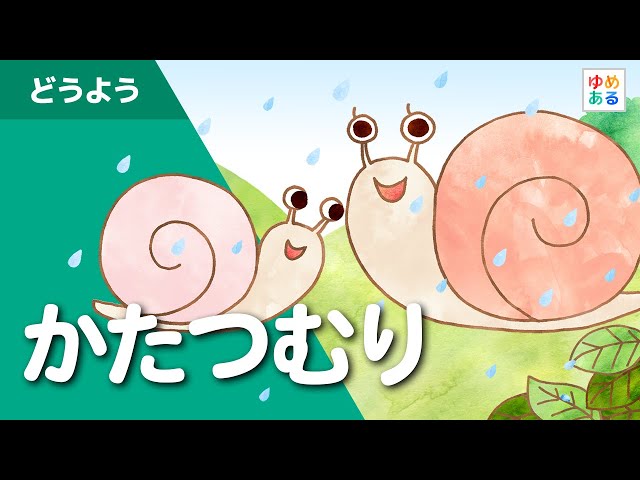
Even after the long rainy season ends, summer still brings plenty of rain with sudden showers and typhoons.
Snails, which we strongly associate with the rainy season, may show up again on those rainy summer days.
The children’s song “Kagome” is perfect for such times.
It depicts calling out to a snail—who quickly retreats into the shell on its back—to stick out its face and eyes from the shell.
It’s a familiar tune that even adults can’t help but hum when they see a snail.