



Tag, that simple game where the person who’s “it” touches someone to pass on the role, is something just about everyone has played.
It’s said that if you trace it back, its origins lie in Heian-period rituals for driving away demons.
Today, it has evolved into many different variations.
This time, we’ll introduce some of those diverse forms of tag.
- Fun Indoor Games for Elementary School Kids Without Any Equipment
- No worries even in the rain! Fun recreational activities you can do in the gym
- Recommended outdoor recreation for junior high school students: A roundup of fun outdoor activities
- [Elementary School] Quick and Easy! Indoor Recreational Activities Perfect for Lower Grades
- [Children’s Club] Easy and fun indoor games. Exciting party games
- [For Kids] Outdoor Recreation Games: Fun Outdoor Play
- Handmade ideas to create and play the traditional Japanese game “Daruma Otoshi”!
- Games that liven up festivals. Ideas that children can enjoy.
- Do you know these kinds of tag? The rules and how to play various versions of tag
- [For Kids] Have Fun at After-School Day Service! A Special Feature on Indoor Game Ideas
- Get this excited with no props! A collection of Japanese play ideas
- Old-time play: fun children's games
- New Year’s Games: Traditional Play and Fun Activities That Excite Everyone from Kids to Adults
Types of tag/“oni” games and how to play them (1–10)
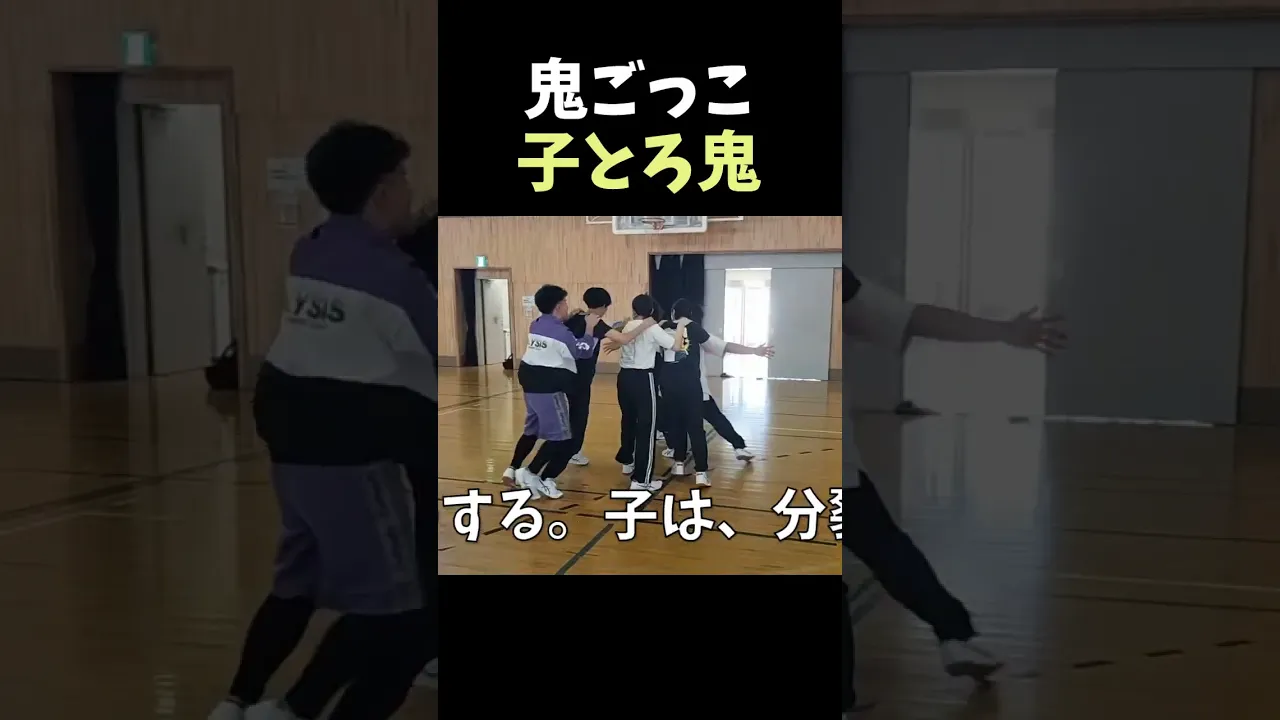
Tag, child-catching demon (a variant of tag called “Kotorooni”/“Kotoro-oni”).

It’s a game played with an “it” (oni) and a line of children.
In regular tag, you run away so you don’t get caught by the tagger, right? In Kotorogui, the oni targets the child at the end of a single-file line.
The oni moves to try to tag the last child with a ball.
The child at the front of the line spreads their arms to guard the last child from the oni.
It’s surprisingly strenuous, making it perfect for kids who want to be active.
As the line gets longer, it becomes easier for the oni to exploit gaps in the guard.

Silent Tag

When you think of tag, you usually picture people sprinting away or chasing after each other, but this version is a silent tag where you flee without making a sound and give chase without making a sound.
The act of erasing your presence is interesting in its own way, and you might even feel a thrill like in a horror movie.

Red Light, Green Light!

The ultimate high-tension game that brings out your inner child: “Daruma-san ga Koronda!” The rules are simple: while the tagger says “Daruma-san ga koronda” and turns around, the other players quietly move forward.
If you’re caught moving, you’re out! It’s a classic children’s game, but when adults play, things heat up fast.
A battle of stillness and motion—a psychological showdown.
It’s perfect for company recreation, too.
Sprinting in suits, and that unexpected colleague is surprisingly agile…? With nonstop laughter and surprises, this fresh take on a “stop-and-go” game will bring your team closer together.

Tickle demon

It’s a tag game called “Tickle Demon” or “Kochokocho Demon.” The demon chases the children, and when they catch one, they get to tickle them.
It’s a simple tag game that you can play with a small number of people or with young children who don’t yet understand the usual rules of tag.

athletic tag

It’s a game of tag using the playground equipment.
If your opponent touches the ground, they lose.
A tag doesn’t count when their hands or feet are touching the equipment, so the key is probably to lure them down to the ground.
It’s quite intense, so it might be better to play when there aren’t many people around.
Tag, You’re It (Kenken-oni)

As the name suggests, it’s a game of tag played while hopping on one leg.
Both the chaser and the runners have a hard time moving, so it’s quite challenging.
Repeated one-legged jumps also help train your core.
Since it evens out the fitness gap between adults and children, anyone can enjoy it easily.
Name demon

Choose one person to be “it.” The children ask, “Oni-san, Oni-san, who is it?” The person who’s “it” names one of the children.
Then everyone chases and tries to catch the named child, and the person who is the last to catch them becomes the next “it.” It’s like the name-version of the color-tag game.