

Recommended for men in their 30s: Karaoke songs that were a hit back in the day


For men in their 30s, you’re likely starting to take on more responsibility at work, and even if you don’t actually like singing that much, you may be finding more occasions where you have to go to karaoke for work-related socializing.
In this feature, we’ve put together a selection of easy-to-sing songs recommended for men in their 30s who aren’t usually that keen on singing.
It should also be helpful for those who think, “I actually like singing, but I’m not good at it…,” and end up hesitating to sing at karaoke and the like.
Some of the individual song articles include brief tips and advice on how to sing them well, so please make good use of this piece.
- [For men in their 30s] Must-play karaoke hits that always get the crowd going
- Karaoke songs recommended for men with low voices or who are good at singing in a low register
- Recommended Japanese pop songs for karaoke for men in their 30s
- Even karaoke beginners can relax! Easy-to-sing songs for men
- Here are foolproof picks! Flirt-worthy karaoke songs recommended for men in their 30s
- For men in their 30s: Nostalgic music. Recommended popular songs
- Karaoke songs where even men with low voices can aim for high scores
- Even if you’re tone-deaf, it’s okay! Easy karaoke songs for men in their 40s
- [Anime Songs] Anime tracks recommended for men in their 30s to sing at karaoke
- Must-see for men: Songs that look cool if you can sing them at karaoke—numbers that women can’t help but be captivated by.
- [For Men] What Karaoke Songs Make It Easy to Score 100? A Curated List of Easy-to-Sing Tracks
- [For Men] This song is perfect for hyping up the crowd at karaoke!
- Karaoke songs for men in their 40s: a curated selection of hit tracks women want to hear!
[Recommended for men in their 30s] Karaoke songs that hyped everyone up back in the day (111–120)
MayNothing’s Carved In Stone

Nothing’s Carved In Stone, formed around Shinichi Ubukata of ELLEGARDEN and Hidekazu Hinata of STRAIGHTENER, made their debut in 2009.
Boasting enough popularity to sell out a show at Nippon Budokan and a career spanning over 15 years, they’re currently drawing attention with their song “May,” released in May 2025.
The superb melody—driven by their signature emotional guitar sound and Takashi Muramatsu’s powerful yet wistful vocals—hints at the birth of a new anthem.
When singing it at karaoke, aim for clear enunciation and try to savor each and every word of the lyrics as you sing.

[Recommended for men in their 30s] Karaoke songs that hyped the crowd back then (121–130)
25th ChromosomeRADWIMPS

“The 25th Chromosome,” released in November 2005, is the single that marked RADWIMPS’ memorable major-label debut.
The songs performed by the members, who had just turned 20 at the time, are strikingly youthful and vulnerable, and you can already sense the budding presence of Western musical influences in the production.
The fast-paced melody packed with Noda’s distinctive wordplay also feels quintessentially “them,” but fans of the band are likely accustomed to this kind of phrasing and shouldn’t find it difficult to sing at karaoke.
While the pitch sits slightly on the higher side, it stays within a consistent range, so if you’re not comfortable with high notes, adjusting the key should make it perfectly manageable.
choB-DASH

This track is a major single by B-DASH.
It’s meant to be enjoyed by ear, and if you actually look at the lyrics, the English and Japanese are all jumbled.
But that’s B-DASH’s signature—its English-like vibe makes it really cool.
The vocal range is D#3 to A#4, with the highest note being a high A#; it’s on the higher side, but most of the song sits around D4.
Since it’s a short song, it might be fun to just go with the flow and sing it without worrying about the lyrics! Give it a try!

Ms. SeptemberRADWIMPS

“September-san” by RADWIMPS is a track included on an album released in 2006, and it’s a laid-back song you can sing while gently swaying your body.
RADWIMPS songs often tend to be on the higher side, but this one isn’t that high, with a lowest note of A2 and an average around D4.
The range rises a bit in the pre-chorus, so if you sing with a flowing momentum there, the song will feel more cohesive.
Noda’s vocals are distinctive, but aiming for an overall soft tone will bring your voice closer to his, so try singing it gently.
Be kind to othersTHE BLUE HEARTS

This song has no intro and starts singing right from the beginning.
The first note is E4, a mid-range pitch, so if you take a good breath and prepare before the song starts, you’ll likely produce a steady voice.
It begins without the backing band, so practice repeatedly to align the timing of the lyrics with the point where the band comes in.
Once you get past that, strong drums kick in, and if you listen closely to the backing track while you sing, you’ll be able to ride the groove.
The average pitch used in this song is C4, so overall it’s not high.
If you clearly separate each phrase and take a breath each time, it should make it easier to keep the rhythm.
The call-and-response parts in the song are energizing, so sing them with gusto! To avoid straining your throat, try projecting your voice as if you’re aiming into the distance.
You’ll likely find your voice comes out comfortably!
Easy★RiderOkuda Tamio
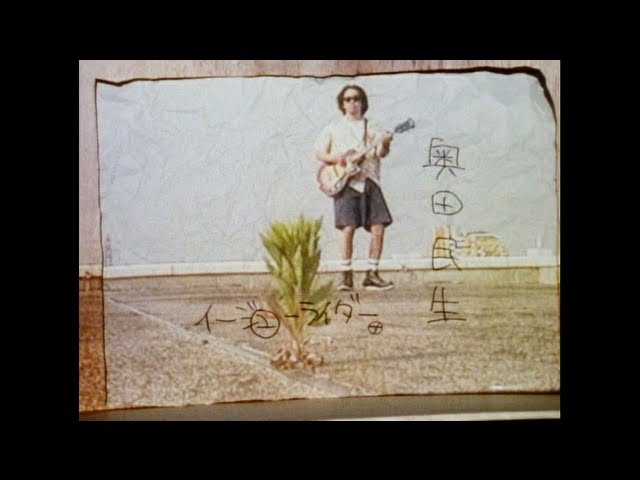
This is Tamio Okuda’s sixth single in total, released in June 1996.
It’s one of the great J-POP/J-ROCK tracks where Okuda’s distinctly “masculine” vocals and character are on full display.
The way the Hammond organ is used in the backing track is quite superb, too—it’s the kind of sound that just feels good to listen to, don’t you think? His slightly unadorned vocal delivery also captures his personality well, which is part of the song’s appeal.
Now, if you pick this song for karaoke and want to make it sound good, the vocal melody is very singable and easy to remember, so what becomes important is expressing a solid sense of rhythm and groove.
Try to sing with a strong awareness of the snare accents on beats 2 and 4, so the vocal rhythm doesn’t rush.

cloudy skyDOES

The renowned trio DOES, formed in Fukuoka, rose to nationwide fame thanks to their signature song “Donten,” released in 2008.
It was used as the opening theme for the TV anime Gintama and became a major hit, reaching the top three on the Oricon charts.
The song’s raw, stripped-down guitar sound—made possible by the trio’s minimalist lineup—is incredibly cool, and it’s hugely popular at karaoke.
The rugged, husky vocals and blunt yet moving melody aren’t particularly difficult and are easy to sing, but because the melody doesn’t change much, be mindful to avoid sounding too monotone when you perform it.