

Masterpieces of requiems and dirges

A requiem is a piece performed as part of a Catholic Mass for the dead, also known as a Mass for the repose of souls.
As a form of sacred music, it has long been cherished by people.
Among the most famous are the so-called Three Great Requiems by Mozart, Verdi, and Fauré.
In particular, Verdi’s Requiem is probably something you’ve heard in many places.
In addition to these, we’ve gathered requiems ranging from classical masterpieces to relatively recent works, so please enjoy their beautiful and majestic resonance.
- [Music Funeral] BGM to Remember the Deceased | Spotlight on Requiems and Dirges Praying for Peace
- [Memorial Song] A moving classic and love song dedicated to a beloved person embarking on a journey to heaven
- [Songs of Bereavement] Songs about losing a loved one. Tracks to listen to while thinking of someone dear
- [Bereavement Song] To you whom I can no longer meet... Tear-jerking songs about death
- Songs to Play at My Own Funeral: Timeless Gems to Make Farewells Uniquely My Own
- [Masterpiece Classics] A special showcase of gem-like masterpieces so beautiful they’ll move you to tears
- A beautiful Japanese song that purifies the heart. A highly recommended classic.
- Masterpieces of requiems and dirges
- A poignant classic masterpiece. Recommended classical music.
- Cool classical masterpieces. Recommended classical music.
- [Classical] Introducing Recommended Moving/Touching Pieces
- [Thank-You Song] A song to convey your feelings of “thank you” to someone special
- The lyrics are profoundly good. The more you listen, the more it sinks in. Masterpieces of Japanese music, recommended popular songs.
Masterpieces of Requiems and Funeral Songs (11–20)
RequiemAntonin Dovoruzaak

A Requiem composed by the Czech composer Dvořák, a leading figure of the late Romantic era, for the Birmingham Music Festival.
Though simple, it lacks the earthy rusticity typical of Dvořák and is suffused throughout with purely beautiful melodies.
The opening theme contains a quotation from Bach’s Mass in B Minor, which Dvořák is said to have deeply admired, and this motif—representing the idea of death—appears in transformed guises throughout the entire work.

RequiemKerubīni
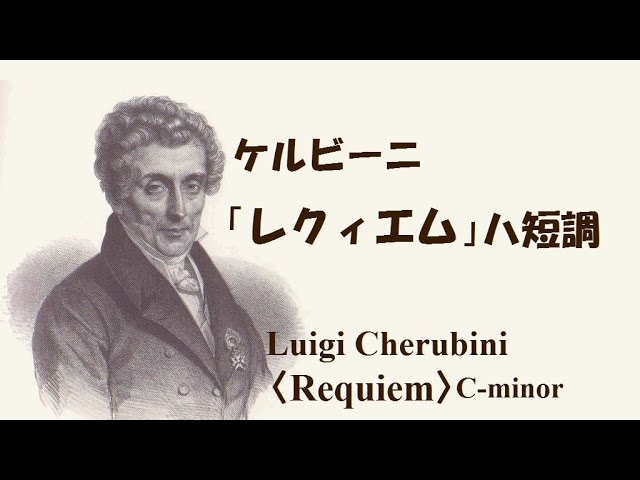
Cherubini’s First Requiem.
Commissioned by Louis XVIII, who ascended the throne after the Bourbon Restoration, to mourn Louis XVI, who perished on the guillotine.
It was highly praised by contemporary composers, and there is an anecdote that it was performed at the memorial Mass following Beethoven’s funeral.
While retaining an overall Mozartian influence, its dramatic yet profoundly human melodies make it a moving masterpiece.
RequiemRoberuto Shūman

Requiem, literally meaning “rest,” is a piece performed at memorial Masses in the Catholic Church.
The Requiem composed by Schumann—who was raised in a family of Protestant pastors—is not intended for formal liturgical use; Schumann himself said he was writing it “for myself.” In fact, it became his final large-scale work, and its characteristically Schumannesque, poetic, brooding phrases lead the listener into a world that is painful yet beautiful.
Requiem for StringsTakemitsu Tōru

Known as Toru Takemitsu’s breakthrough work, Requiem for String Orchestra takes a three-part form, unlike a conventional requiem.
As Takemitsu himself said, “Rather than constructing sound, I want to pare away the excess and arrive at one assured tone,” and the carefully layered overtones convey even a sense of severity.
It is a celebrated piece said to have astonished Igor Stravinsky, one of the foremost composers of the 20th century.
RequiemJ.C. bakkā

A Mass composed by Johann Christian Bach, the youngest son of the renowned J.
S.
Bach.
It is said to have been written in Italy when he was 22 years old.
Although Johann Christian has often been overshadowed by his great father and by later figures such as Haydn and Mozart, he was an active and highly celebrated composer during his lifetime in Germany, England, and Italy.
While it long remained little known in Japan, its elegant and majestic sonorities—retaining elements of classical Baroque music while incorporating the style of Italian church music—are not to be missed.
Brussels RequiemBeruto Apperumonto

Brussels Requiem, a popular piece in wind band competitions, was composed by Belgian composer Bert Appermont in memory of the victims of the series of bombings that occurred in Brussels, Belgium, in 2016.
Throughout the work, the theme of the French children’s song Au clair de la lune is used, expressing the fear, anger, and sorrow caused by the senseless violence of terrorism, as well as a wish for peace.
In conclusion
We introduced a range of Requiems, from classical to relatively recent works. When you hear the word “Requiem,” you might mostly think of dark and frightening music, but there are actually many pieces with beautiful sonorities. Some of them may even feel soothing when you listen to them. If you’re interested, be sure to check out the pieces we couldn’t include this time as well!