

[For 2 Players] Easy Pen-and-Paper Time-Killing Game


Are you looking for games you can play with just paper and a pen? On rainy days when you can’t go outside or when you have a bit of free time, many people want ideas for two-player games that really get you excited.
From classic territory-claiming games and grid-based games to ones where you play rock-paper-scissors to complete kanji, there are plenty of thrilling games you can enjoy with only paper and a pen! In this article, we’ll introduce competitive paper-and-pen games you can start right away and that are sure to heat up the fun.
Try them out with friends or family!
- Perfect for killing time! Games you can play with two people.
- Get Caught? Or Not!? Simple Ways to Kill Time During Class
- Recommended games for two people that you can enjoy without any equipment
- Brain-teasing game roundup
- Fun two-player games recommended that you can play using conversation only
- Games you can play with just conversation. Classic and popular activities you can enjoy without any props!
- [Elementary School] Quick and Easy! Indoor Recreational Activities Perfect for Lower Grades
- Recommended for upper elementary grades! Exciting indoor recreation and games
- [Solo Time] A roundup of ways to kill time without using your smartphone
- Perfect for killing time! A roundup of games for three people to enjoy
- [For Adults] Fun recreational games. Perfect for short breaks too!
- [Simple Games] Recommended Indoor Recreational Activities for Adults
- A collection of icebreakers you can enjoy with a small group
Competitive games (11–20)
Connect Four

A game I recommend when you want to kill time! Here’s an idea for a “Four-in-a-Row” game.
This game is perfect for passing the time or filling small gaps in your day.
All you need is paper and a pen, so it’s great because you can play it anywhere! Once you draw a baseline horizontal line on the paper, you’re ready to start.
Decide who goes first and second, then take turns drawing boxes.
The key is that each box must touch another box.
You can’t draw boxes floating in the air or separated from the others.
It’s a simple game where the person who lines up four boxes vertically, horizontally, or diagonally wins!
Paper Soccer
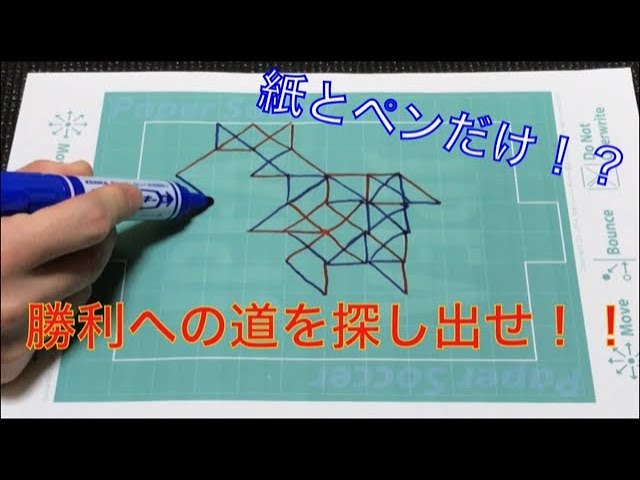
This is a head-to-head game, inspired by soccer, that you play with a pen and a sheet of paper featuring a drawn field.
The field is divided into a grid, and players take turns drawing lines on the grid to move the ball, aiming to get it into the opponent’s goal.
If it were only about taking turns drawing lines, going first would be an advantage, but the added “bounce” rule—conditions that let you take another action—adds enjoyable strategic depth.
The bounce conditions are: moving the ball to a spot it has already passed through, crossing an existing line, or hitting the sideline with the ball.
Winning isn’t just about heading straight for the goal; how well you leverage these bounces is also a crucial factor in victory.

Battleship

Are you familiar with Battleship, also known as the battleship game or warship game, a two-player game? Each player prepares a 5×5 grid card with numbers along the vertical axis and letters along the horizontal axis.
You place your ships—battleship, submarine, and destroyer—on the card.
During the game, ships can move.
You try to predict the positions of your opponent’s ships and attack to hit them.
A turn that misses is called a splash, and then it becomes the opponent’s turn.
If your guess is correct, the attack is successful.
As a rule, only one ship can move per turn, and only in the four cardinal directions (up, down, left, right).
Enjoy an intelligence battle at sea played out on the card.

win-or-lose game

This is a competitive game you can play in a short time.
First, decide who goes first and who goes second.
Then, taking turns, write either “win” or “lose” in any space you like on a 3×3 grid.
Once four words have been written on the field, stop and move on to the next step.
Now, take turns circling the written words.
Here’s the key point: if words are adjacent, you can circle up to two spots in a single turn.
The winner is decided by whether the last circled word is “win” or “lose.” Because it’s so simple, the strategy—how you place words with later circling in mind, and how you circle to bring about your own “win” or your opponent’s “lose”—is what makes the game fun.
mosquito

Let me introduce “Mosquito,” a game where you take on roles and battle while doing calculations.
How about splitting into Spiders and Mosquitoes and trying a game that uses simple arithmetic? Even if you’re not confident with math, it’s easy to jump in because it feels like a game.
All you need is paper and a pen.
The calculations use multiplication, so anyone with basic multiplication knowledge can play—that’s part of the appeal.
By playing while thinking about tactics and strategy, you can develop planning skills, flexibility, and problem-solving ability.
Paper Drop Game

Let’s make a “Paper Drop Game” by folding and cutting paper! This idea is exciting because the process of getting ready to play—folding paper to create the game board and cutting pieces that become the heart of the game—is part of the fun.
Once you write numbers on the folded paper with a pen, you’re ready to start.
Using the creases as guides, flick or drop the paper pieces to aim for high scores—simple rules anyone can enjoy.
It’s great that you can reuse scrap paper, too! Challenge each other to see who can score higher and have a blast competing.
Puyo Puyo-style Gomoku

It’s a game that blends elements of the popular game Puyo Puyo into the traditional board game Gomoku.
Like standard Gomoku, players decide who goes first, then take turns placing their marks, aiming to line up five in a row.
What differs significantly are the field and the “garbage” mechanics.
You draw ground and walls on paper, then place marks within those fields.
Because marks stack up from the ground, there are restrictions that prevent you from placing a mark just anywhere.
Also, whenever you line up three of your own marks, you can place a garbage piece in your opponent’s field to disrupt their attempts to align marks.
As the game progresses and more marks fill the board, the tactical back-and-forth should become even more engaging.
BRUM BRUM GO
https://www.tiktok.com/@playprintsgame/video/7482152790891040023Let’s play a unique game using graph paper! Here’s the idea for BRUM BRUM GO.
Graph paper is handy for creating blueprints, floor plans, patterns, and graphs.
This time, let’s make use of the grid squares to try BRUM BRUM GO.
Once you draw a course on the graph paper, you’re ready to go.
The game is simple: you can move forward any number of squares from 1 to 5, and whoever reaches the goal first wins! Using different pen colors like red and blue makes it easier to see and is highly recommended.
Square Territory Game
https://www.tiktok.com/@sarahandxaviergames/video/7520319662857522454As simple as drawing lines with a pen! Here’s an idea for a square territory-capturing game.
When you think of territory games, many of you might picture tic-tac-toe.
However, this square territory game is a simple one where players take turns drawing lines.
All you need are a sheet of paper with dots and two pens of different colors.
Try it while watching your opponent’s strategy and moves.
If you lose, the frustration will make you want to try again and again.
Bridge-building game
https://www.tiktok.com/@nateandcaseyb/video/7520324426005564702Let’s tackle this thoughtfully! Here’s an idea for a bridge-building game.
Follow a certain rule to draw bridges onto a pattern on paper.
You’ll need grid paper and two pens in different colors.
At first, you can draw bridges wherever and however you like, but toward the end of the game, you’ll have to think carefully or you’ll lose.
It gets exciting when you play while reading your opponent’s strategy and tactics.
Once you get used to the game, you can try increasing the number of squares.