

Where do you split it? Learn general language knowledge through a quiz.

Where do you break up words like “Don Quixote” or “Sei Shōnagon” when reading them? There are words and names that seem easy but actually make you wonder about the correct way to split them.
Even among words we use casually, it turns out the break point can be different than we thought.
In this article, we present common conventions for where to divide each word in a quiz format.
We’ve gathered various words—like personal names and country names—where the division point is tricky.
Why not learn the correct way to segment words while thinking it through with family and friends?
- Where Do You Split It? A Word-Splitting Quiz That Even Elementary Schoolers Love
- [General Knowledge] Summary of Kanji Quizzes Representing Country Names
- [For Elementary School Students] Country Names in Kanji Quiz. A quick, fun quiz
- Surprisingly tricky! Check your general knowledge with a four-character idiom quiz
- How many can you read? Test your trivia skills with a brain-twisting ateji quiz!
- Abbreviation quiz: things you might not actually know? From everyday terms to youth slang
- A set of tricky common-sense quizzes that catch you off guard. A collection of trick questions with answers that make you say, “Ah, that makes sense.”
- General knowledge quiz time! From trivia to questions about Japan and the world
- [Interesting] Summary of Kanji Reading Quiz Questions
- A quiz of interesting obscure kanji: characters that look easy but are hard to read
- The world’s fewest: A collection of one-stroke kanji. Learn them in a quiz format!
- [For Elementary School Students] Brain Training with Kanji Decomposition Quiz! Guess the Complete Kanji from Its Parts
- A quiz on how to read obscure kanji: words that become difficult when written in kanji.
Where do you break it? Learn general knowledge of words with a quiz (1–10)
Where do you split ‘gori-muchū’?
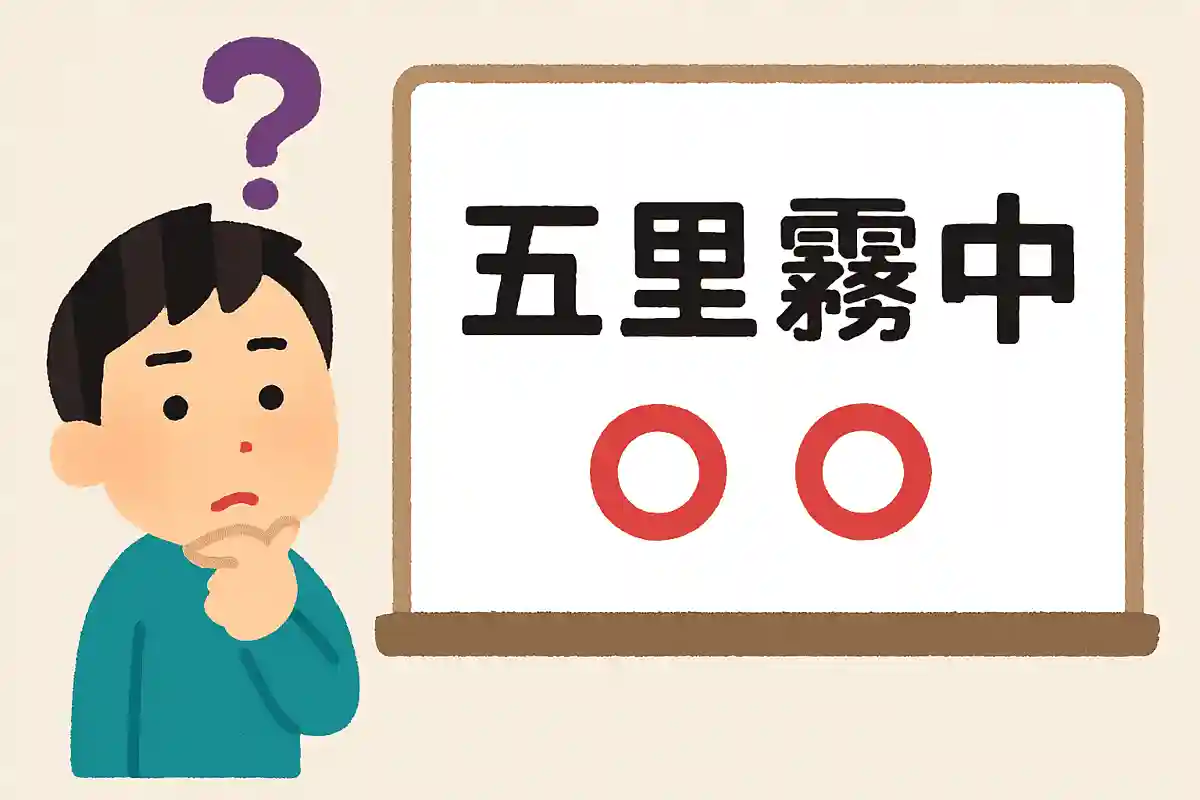
- lost in a thick fog; completely at a loss
- lost in a fog
- In the thick of a dense fog
See the answer
In the thick of a dense fog
The word gori-muchū is a four-character idiom that originated from a Chinese anecdote, and the correct way to segment it is into “gori-mu” and “chū.” “Gori-mu” refers to a thick fog covering an area five ri in all directions, and “chū” means “in the midst of it.” In other words, it describes being in a dense fog covering five ri in every direction—a state in which you have no clear outlook on matters and don’t know what to do.

Where do you break the word ‘cholesterol’?
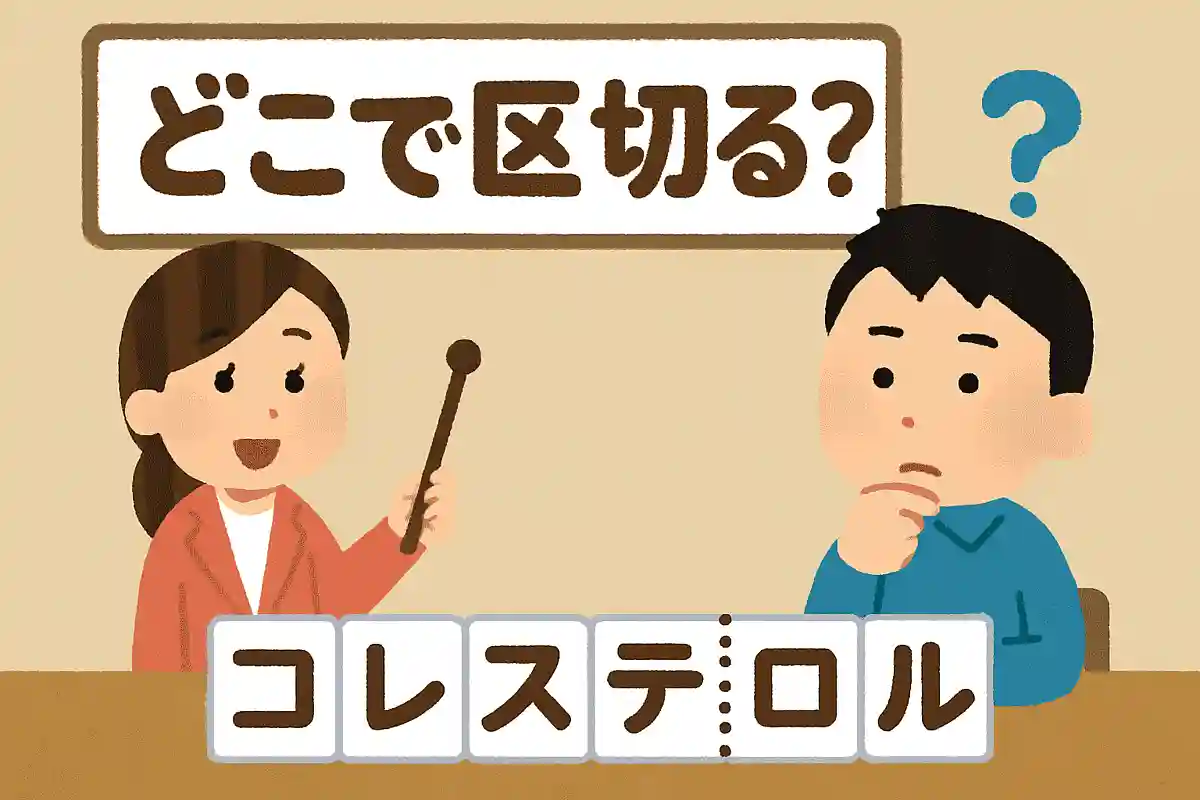
- Co-Restero-ru
- cholesterol
- cholesterol
See the answer
cholesterol
In English, cholesterol is “cholesterol.” “Sterol” refers to steroid-type compounds, and “chole-” indicates what is attached before this compound. Thinking of it as a term developed from “sterol” makes the word breaks easier to understand.
Where do you break up “Triceratops”?
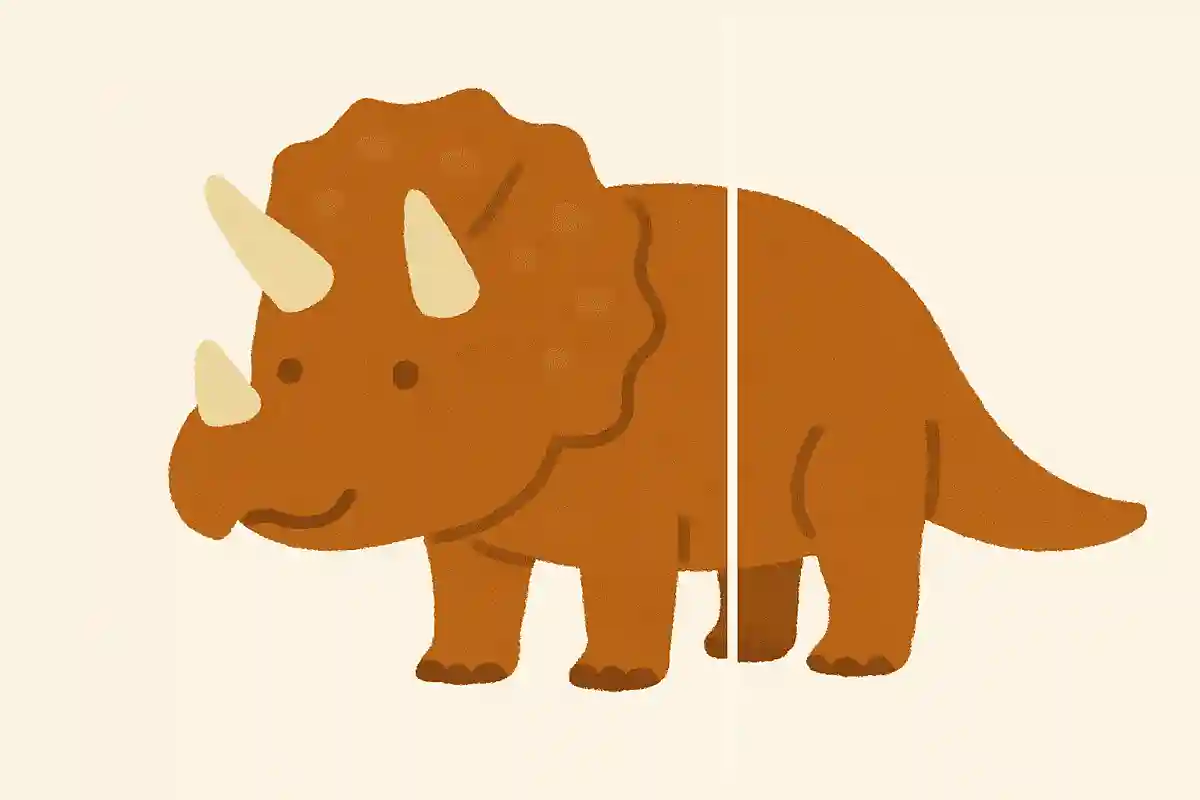
- Triceratops
- Triceratops
- Triceratops
See the answer
Triceratops
This herbivorous dinosaur has three horns, right? Its name, Triceratops, means a face with three horns. It might be similar to how someone who speaks three languages is called trilingual. Because of its distinctive appearance, it’s one of the more popular dinosaurs.

Where do you split it? Learn general language common knowledge through a quiz (11–20)
Where do you split “Puerto Rico”?
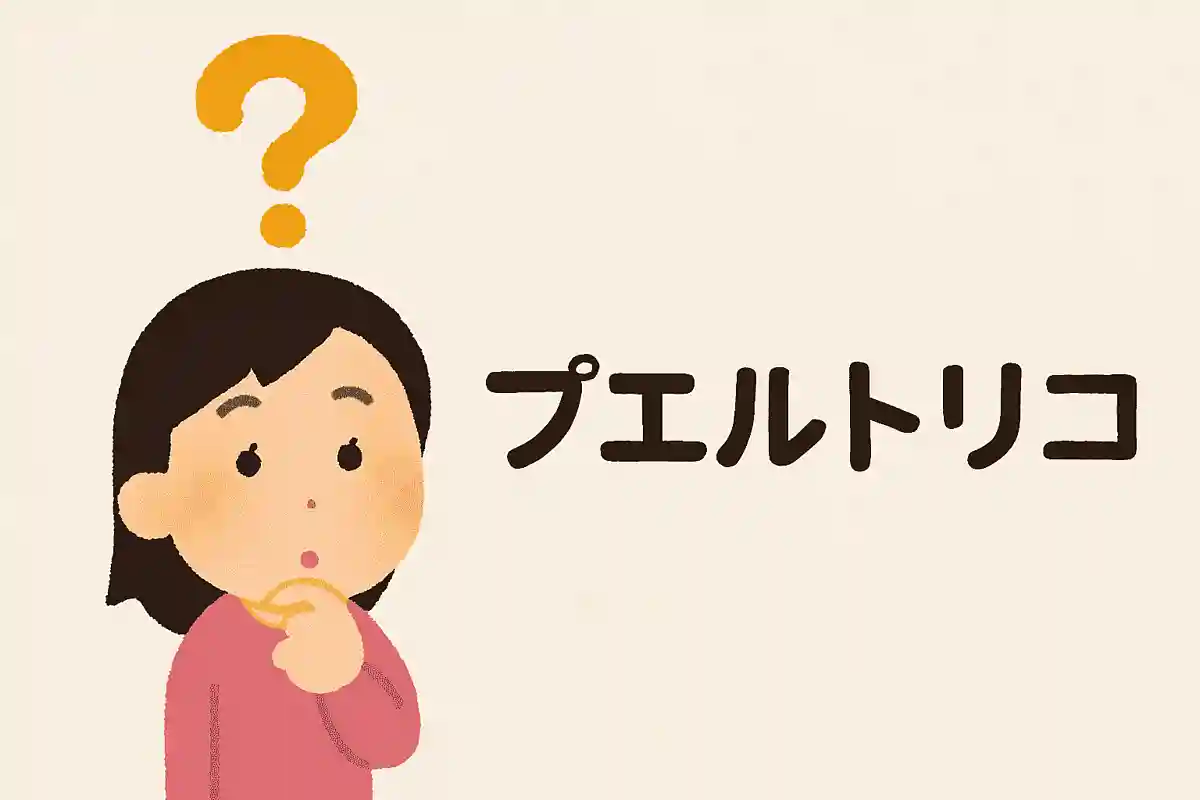
- Puerto Rico
- Puerto Rico
- Puerto Rico
See the answer
Puerto Rico
Puerto Ricans are U.S. citizens, but because Puerto Rico is a territory, they do not have the right to vote in the general presidential election. Spanish is primarily spoken there, and the heroine Maria from the musical West Side Story was also Puerto Rican.
Where do you break up “helicopter”?
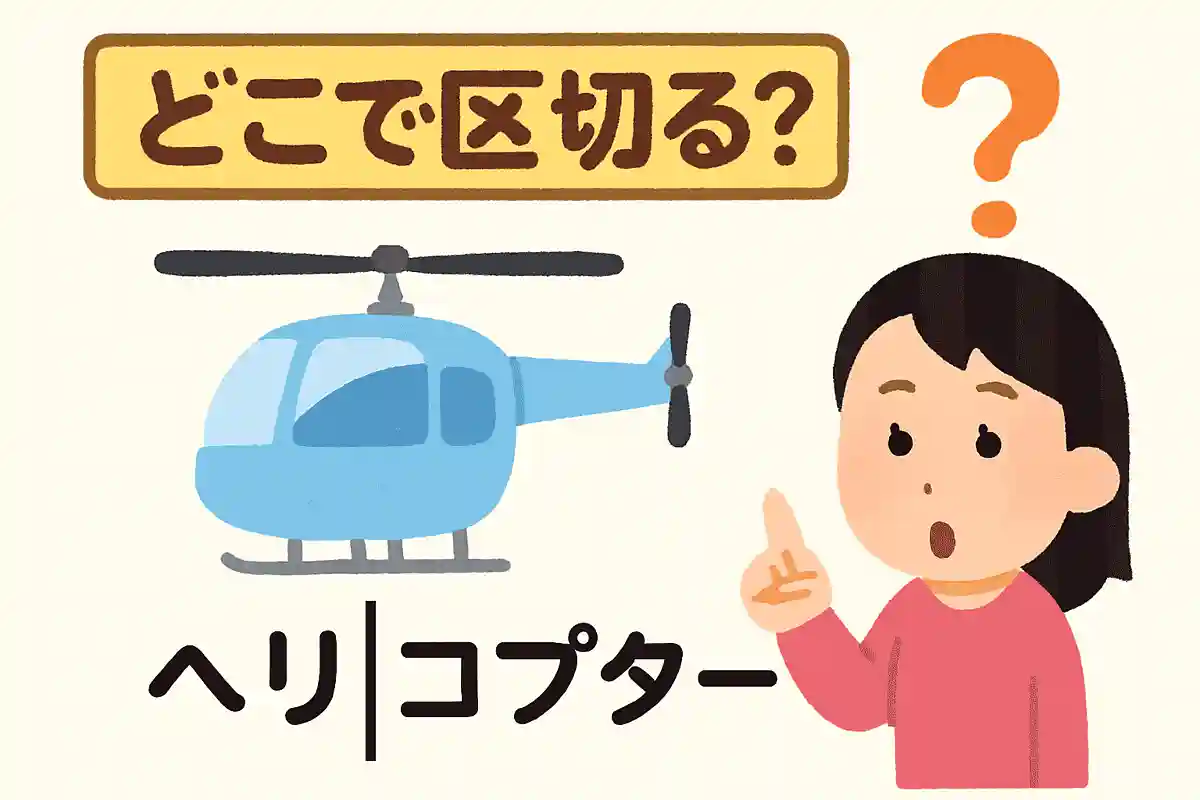
- He-ricopter
- helicopter
- helicopter
See the answer
helicopter
In Japan, the word “helicopter” is often abbreviated as “heri,” but its original etymology is said to come from the Greek words helix (meaning spiral) and pteron (meaning wing). Its high maneuverability, which does not require a runway, is also valued in rescue operations and other activities.
Where do you split “Sei Shōnagon”?

- Kiyohara no Sosei and Sei Shonagon
- Sei Shōnagon
- Sei Shōnagon's words
See the answer
Kiyohara no Sosei and Sei Shonagon
Sei Shōnagon is the name of a writer from the mid-Heian period. This appellation combines Sei, indicating her origin from the Kiyohara clan, and Shōnagon, an official court title. Therefore, the correct division is “Sei / Shōnagon.” As one of the court’s naming conventions, people were referred to by linking clan names and official titles, which is an important point to consider when determining the division.
Where do you break up the word “a cappella”?
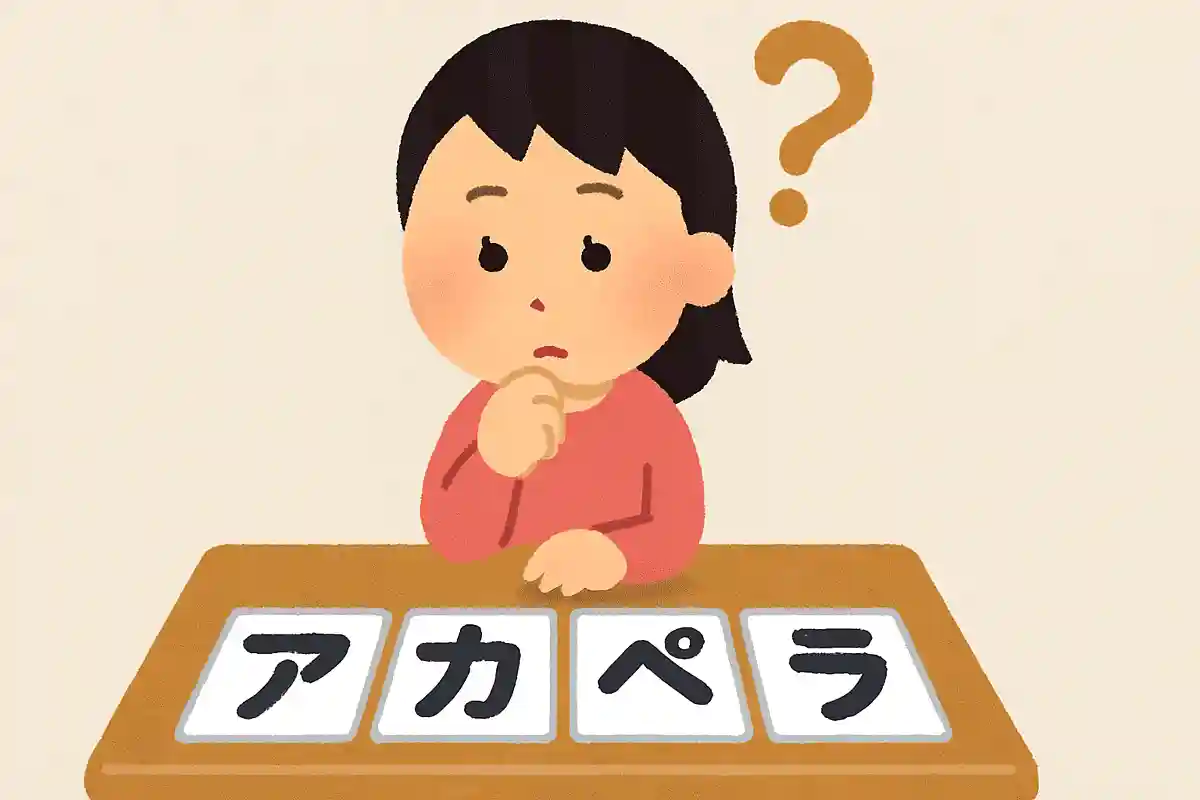
- a cappella
- a cappella
- A cappella
See the answer
a cappella
A cappella is a word derived from the Italian term “a cappella,” and in Japanese it’s divided the same way. “A” is the preposition meaning “in” or “at,” and “cappella” means “chapel,” so if you consider the meanings of each word, the division is easy to understand.