

[How many do you know?] A compilation of national anthems of the world


Have you ever felt your heart swell while listening to national anthems at World Cup or Olympic opening ceremonies? Before soccer matches, it’s hard not to be captivated by the sight of players linking arms and singing together.
There are over 200 countries and regions in the world, each with a national anthem that reflects its own history and culture.
From those known for their valiant, stirring melodies to those noted for their beautiful, memorable tunes, the variety is truly remarkable.
In this article, we’ll introduce a generous selection of the world’s most famous and popular national anthems.
See how many familiar pieces you can find!
- Famous German folk song | That Japanese tune was actually a German folk song?!
- [Hymns] Famous hymns and sacred songs. Recommended hymns and sacred songs.
- Russian songs used on TikTok
- Masterpieces of contemporary (art) music. Recommended popular pieces.
- [Soccer Western Music] Theme Songs and Anthems That Fired Up the World Cup
- Chanson masterpieces. Recommended popular songs.
- [2026] Modern graduation songs: Reiwa-era staples and new tracks you should know
- A cappella masterpieces: Recommended songs where beautiful harmonies shine (Western and Japanese music)
- Songs about soccer | Western music edition
- Western pop/rock cheer songs recommended for sports days and athletic festivals. Cheer songs from around the world.
- [World Music] A Guide to Folk Music: A Collection of Traditional Songs from Around the Globe
- Victory songs of Western music: world-famous classics and popular hits.
- Sports cheer songs in Western music: Recommended anthems and fight songs
South America (1–10)
Gloria al Bravo PuebloSakushi: Vicente Salias or Andrés Bello / Sakkyoku: Juan José Landaeta
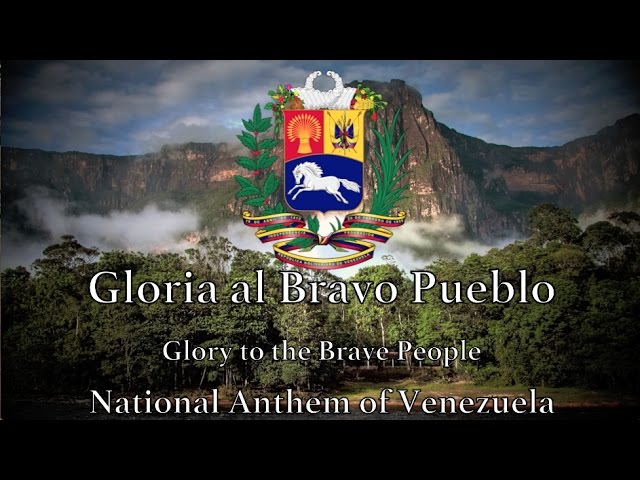
The Venezuelan national anthem “Gloria al Bravo Pueblo,” rendered in Japanese as “Glory to the Brave People,” began to be sung around 1810 amid the rising independence movement.
It was later officially adopted as the national anthem by presidential decree in May 1881.
Its bold, march-like rhythm and powerful melody have been noted for their similarity to the French national anthem, and it has long been affectionately known as “the Marseillaise of Venezuela.” The lyrics are attributed to Vicente Salias and the music to Juan José Landaeta, though there are theories that others may actually have been involved.
Infused with a fervent desire for independence, this piece invites reflection on Venezuela’s history whenever you hear it at international sporting events and other occasions.
Noble homeland, your beautiful flag (Noble patria tu hermosa bandera)Sakushi: José María Zeledón Brenes / Sakkyoku: Manuel María Gutiérrez

From 1821, when it gained independence from Spain, Costa Rica had no national anthem for more than 30 years.
However, in 1852, when the country hosted diplomatic missions from the United States and the United Kingdom, an anthem was urgently needed for the welcoming ceremony.
The piece that was composed by the conductor of the Costa Rican military band on that occasion is today’s national anthem of Costa Rica, “Noble patria, tu hermosa bandera.” At its premiere, it had no lyrics, but following a contest held in 1903 to select the words, it was given beautiful Spanish lyrics that symbolize Costa Rica as a nation of peace.

Himno Nacional MexicanoSakushi: Francisco González Bocanegra / Sakkyoku: Jaime Nunó

The Mexican national anthem was established in 1854 as the result of a lyrics and composition contest organized by President Antonio López de Santa Anna.
Due to the historical conflict between conservatives and liberals, it was abolished and reinstated multiple times before being formally codified as the national anthem.
Although there are ten verses, because some parts depict specific individuals, it has been decided that only the 1st, 5th, 6th, and 10th verses are to be performed.
The lyrics reflect Mexico’s history of fierce battles and convey a sense of patriotism and bravery.

Hino Nacional BrasileiroSakushi: Joaquim Osório Duque Estrada / Sakkyoku: Francisco Manuel da Silva

Among national anthems around the world, the Hino Nacional Brasileiro is known for its fast tempo and frequent key changes.
It’s a passionate piece that celebrates Brazil, which overcame war and domination to achieve independence.
Many may have heard it during the World Cup or the Olympics.
The piece is filled with the charm of a people who love vibrant events like samba and the Rio Carnival.
Along with the beautiful melodies of an orchestral sound, you can feel the will to live beautifully and powerfully.
If you’re looking for a bright, uplifting national anthem, be sure to give it a listen.

Himno Nacional ArgentinoSakushi: Vicente López y Planes / Sakkyoku: Blas Parera

Argentina’s national anthem was established in 1813, in the midst of the movement for independence from Spain.
May 11, the date it was adopted, is designated as National Anthem Day.
Another notable feature is that a full performance can exceed five minutes, so a shortened version is often played at international sporting events.
As it was instituted during the struggle for independence, the lyrics express a strong determination to fight for freedom.
The anthem powerfully portrays the pursuit of liberation from oppression and a proud spirit toward Argentina.