

[Folk Songs of Yamagata] The Heart of Our Hometown Passed Down in Song: Feelings Woven into Nostalgic Melodies

Among the traditional songs passed down across Japan, Yamagata’s folk music possesses a uniquely moving charm.
In pieces like the Sagae Jinku and the Mogamigawa Boat Song, the daily life and culture of the region are woven into melodies filled with the pride and feelings of those who came before.
In this article, we introduce musical works Yamagata is proud of—from nursery songs sung since ancient times to folk tunes that continue to thrive today.
As you contemplate the tranquil landscapes of Yamagata, why not lend an ear to the world of its folk songs, where nostalgia and freshness coexist?
- [Yamagata Songs] Beloved local tunes and classic tracks celebrating majestic nature and hometown pride
- [Folk Songs of Yamagata] The Heart of Our Hometown Passed Down in Song: Feelings Woven into Nostalgic Melodies
- Folksongs, children's songs, and nursery rhymes of Fukushima: the heart of our hometown passed down in song
- [Folk Songs and Children's Songs of Akita] A curated selection of local masterpieces that evoke love for one’s hometown
- Niigata’s folk songs, children’s songs, and nursery rhymes: the heart of our hometown passed down in song
- Folk songs, children's songs, and nursery rhymes of Iwate: the heart of the hometown passed down through song
- Beautiful Folk Songs Passed Down in Miyagi Prefecture: A Collection of Masterpieces that Play the Heart of the Hometown
- Folk songs, children's songs, and nursery rhymes of Toyama: the enduring heart of our hometown passed down through song
- Folk songs, children’s songs, and nursery rhymes of Kumamoto: the enduring spirit of our hometown passed down through song.
- A classic song that sings of Yamanashi. The enduring heart of our hometown.
- Folk Songs, Children's Songs, and Nursery Rhymes of Aomori: Japanese Songs from Tsugaru and Hachinohe that Resonate with the Heart
- A classic song that celebrates Niigata. The enduring spirit of our hometown passed down through song.
- [Folk and Children's Songs of Hokkaido] Songs of Hokkaido that continue to be loved across generations
[Yamagata Folk Songs] The Heart of Our Hometown Passed Down in Song: Feelings Woven into Nostalgic Melodies (21–30)
Yamagata Tanto-bushiOtsuka Fumio

This is “Yamagata Tanto-bushi” sung by Fumio Otsuka.
Tanto-bushi was originally called the “Straw-Beating Song” because it was sung by people beating straw in farmyards.
Not only in Yamagata, but also in various regions—such as Tsugaru Tanto-bushi, Akita Tanto-bushi, and Hokkai Tanto-bushi—slightly different versions of the song are sung.
Miuchi OndoHayashi Isao, Saitō Kyōko

This is “Miyauchi Ondo,” sung by Isao Hayashi and Kyoko Saito.
When Miyauchi Town in Higashiokitama District, Yamagata Prefecture, was created in 1955 through the merger of Miyauchi Town, Yoshino Village, Kaneyama Village, and Urushiyama Village, the song “Miyauchi Ondo” was also composed.
The lyrics were written by Issaki Honma, and the music was composed by Toshiro Yamaguchi.
Later, in 1967, Miyauchi Town, Akayu Town, and Wago Village merged to form the city of Nanyo, and as a result, “Miyauchi Ondo” stopped being sung.
[Yamagata Folk Songs] The heart of our homeland passed down through song. Feelings carried in nostalgic melodies (31–40)
secret talkNegishi Yoshiko, Tsutsuki Keiko

It’s “Naisho Banashi” (Secret Talk), with lyrics by Yoshio Yuki, a nursery rhyme poet from Nanyo City in Yamagata Prefecture.
Composed in 1939, when Yuki was 19, the music was written by Yasuharu Yamaguchi, who also composed the big hit “Kawaii Sakanaya-san” (The Cute Fishmonger).
It’s a classic that conveys a child’s heartfelt wish for their mother to listen to them.
A town where snow fallsTakayoshio

This is “Yuki no Furu Machi o” as sung by Takahide Otoko.
The lyrics are by Naoya Uchimura, and the music is by Yoshinao Nakada.
On a snowy night in 1952 (Showa 27), Yoshinao Nakada arrived at Tsuruoka Station in Tsuruoka City, Yamagata Prefecture.
He rode a horse-drawn sleigh that had come to meet him and headed to his destination.
It is said that the song was composed from the snowy scenery he saw then and the memories of that journey.
New Hanagasa Ondo

This is the “Shin Hanagasa Ondo” (New Hanagasa Song) passed down in Yamagata Prefecture.
It’s a song that differs somewhat from the Hanagasa Ondo danced in the Yamagata City area of Yamagata Prefecture, and the “Shin Hanagasa Ondo” is more commonly danced in the Yonezawa City area of Yamagata Prefecture.
There are many folk songs that look like they share the same title but become different pieces with the addition of “Shin” (new), so I think it’s interesting to listen and compare them.
Shonai Haeya-bushiSatō Kametarō

Shonai Hae-ya Bushi is a folk song passed down in the Shonai Plain, centered on Sakata, a port town located in the northwestern part of Yamagata Prefecture.
The lively drinking song Haya-bushi, sung at sake gatherings in Amakusa and Ushibuka in Kyushu, spread from port to port, evolved, and came to be sung throughout Japan.
The singer is Kame Taro Sato.
Okitama shōgainai
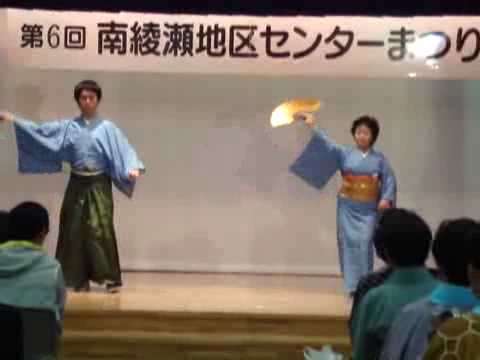
“Okitama Shōganai-na” spread from Fukushima Prefecture’s “Aizu Medeta” and took root throughout the Yonezawa area of Yamagata Prefecture.
This song is sung as a celebratory tune at weddings and drinking gatherings.
The version performed by folk singer Fumio Ōtsuka, who hails from Kahoku Town (former Miiizumi Village) in Nishimurayama District, Yamagata Prefecture, is well known.