

[Classic Showa Kayō Hits] The captivating Showa-era pop songs beloved even by younger generations


Nowadays, thanks to the internet, vinyl records, and other avenues, Showa-era pop songs have become popular with younger generations.
Here are some classic Showa hits that are especially loved by today’s youth!
We’re highlighting timeless songs that have been sung for decades, tracks that saw revival hits, and—city pop included—songs that are gaining fresh momentum by going viral on TikTok.
Many of these tracks are danceable, but part of the charm of Showa pop is how beautifully it lets you relax and sink into the music.
Let’s focus on that unique appeal of Showa-era pop.
- [Revisited] A roundup of popular and classic Showa-era songs that are trending now [2026]
- Showa-era nostalgic songs: Popular ranking
- [Songs from the Showa Era] Introducing classic tracks that are easy to sing at karaoke.
- Revival hits driven by social media! Classic Showa-era songs popular with Gen Z
- Heart-touching, tear-jerking masterpieces from the Showa era
- Thrilling to Cool Showa-Era Tunes! Classic Songs from Female Singers and Artists of the Showa Period
- Popular Showa-era pop. Timeless hit songs.
- When you can’t decide what to sing at karaoke: Easy-to-sing classic hits from the Showa era
- Cool songs from the Showa era. Masterpieces from Showa that shine with sensuality, passion, and rugged charm.
- Showa-era classic songs that brightened the 1990s
- Showa-era songs that went viral on TikTok / revival hit songs
- Hit songs in Japan in the late 1960s
- Showa-era kayōkyoku: hit songs by male singers, classic masterpieces of Japanese popular music.
Masterpieces of Showa-Era Kayōkyoku: Captivating Showa Pop Loved by Younger Generations (11–20)
Friday ChinatownYasuha

When you hear “city pop,” what kind of music do you imagine? Music like Suchmos or Fujii Kaze, or music like Tatsuro Yamashita or Yasuha? Since the late 2010s, songs like “Friday Chinatown” and other Japanese music from the same era have been reappraised, especially in California, and that wave has spread around the world.
In Japan, it sparked a renewed boom via a kind of reimportation, and the official video was uploaded to YouTube in 2022.
When you compare it with today’s city pop, you notice quite a few differences in the finer details.

Roppongi HeartbreakAn Ruisu

As a classic of Showa-era kayōkyoku, this song continues to be loved by many to this day.
Set against the nightlife of Roppongi, it portrays a passionate yet heartrending story of a man and woman falling in love.
The phrase “CAN’T LIVE WITHOUT YOU BABE” leaves a strong impression, beautifully expressing both the sweetness and the transience of romance.
Ann Lewis’s powerful vocals further elevate the song’s world.
Although released in October 1984, it did not become a major hit at first; however, its popularity on cable radio and in karaoke lit the spark, and it went on to become a long-running hit.
From May 1985, it was also used as the opening theme for the TV Asahi drama Triangle Blue.
It’s a recommended track when you want to savor the sweetness and bitterness of love or immerse yourself in the mood of the night city.
I like you, I like you—I love you.Togawa Jun
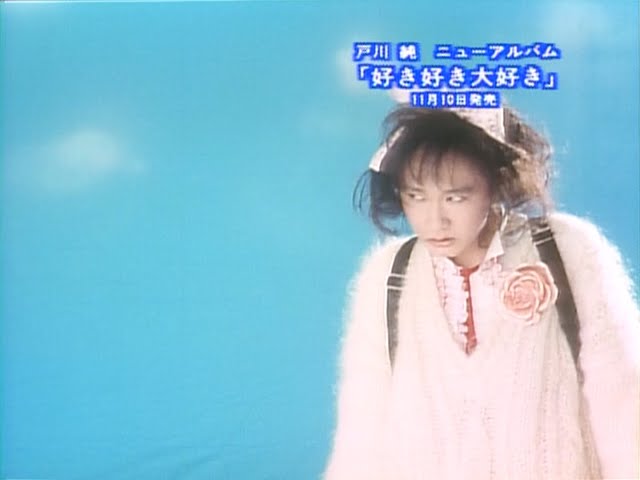
Jun Togawa’s music is known for its distinctive worldview and expressive power.
This work, which depicts extreme expressions of affection and explosive, intense emotions, may at first seem like a love confession, yet it portrays a form of love with violent and obsessive aspects.
Released in November 1985 as the title track of its album, it was produced and art-directed by Togawa herself.
Its title, inspired by the works of R.
D.
Laing, and its unique vocals are particularly notable.
In recent years, it has become a viral hit among overseas TikTok users, gaining a new fan base.
Highly recommended for those who resonate with fierce emotional expression or who want to explore fresh facets of Showa-era kayō music.
MUGO… so sexyKudō Shizuka

The song performed by Shizuka Kudo with lyrics by Miyuki Nakajima deftly portrays the feelings of a woman carrying emotions she can’t put into words.
Centered on the desire to connect through eye contact, it symbolically expresses a longing for nonverbal connection and understanding.
Released in August 1988, the track was used as Kanebo’s autumn promotion image song, and its title was taken from the advertising copy.
Although Nakajima struggled with the directive to incorporate the ad copy into the lyrics, she completed the piece through her own interpretation.
It’s a song you’ll want to listen to closely, feeling the passionate emotions held within.
bullseyeYamamoto Rinda

It’s a classic Showa-era hit that’s still loved in the Reiwa era—the kind of song you recognize instantly from the very first phrase.
Released in 1973 by Linda Yamamoto, known as a pioneer of “action kayō” (action-style pop), the track reached No.
14 on the Oricon charts.
Its opening line, “Urara urara uraura de,” is strikingly memorable and quickly propelled the song to popularity.
With her singing and dance performances, Linda Yamamoto cemented her status as an idol embraced by people of all ages.
The song has also found a home in the world of sports, used as a baseball cheer: it serves as a chance theme for Meiji University’s cheer squad and has been adopted by professional teams like the Chunichi Dragons and the Hanshin Tigers.
Dancing Hero (Eat You Up)Oginome Yōko

This song drew renewed attention with Osaka Prefectural Tomioka High School’s “Bubble Dance,” which won second place at the Japan High School Dance Championships.
Videos of the schoolgirls dressed in bodycon fashions from the bubble era delivering razor-sharp moves—and featuring a surprise appearance by Nora Hirano—became hits, and the track even climbed back up the Billboard Japan charts in 2017.
The upbeat dance sound combined with Yoko Oginome’s rich vocals makes for an exhilarating, top-tier pop tune.

You’re Kiwi, Papaya, and Mango, aren’t you?Nakahara Meiko

For those who spent their youth around the time this song became a hit, it’s surely a deeply nostalgic track that could be called a true monument of Showa-era pop.
When I first heard the title “Kimitachi Kiwi Papaya Mango dane,” I remember thinking, “What kind of song title is that??” Apparently, the name was specified by an advertising agency.
The lyrics were written by the singer herself, Meiko Nakahara, together with the songwriting master Yukinojo Mori.
The embedded video is a cover version included on Ai Furihata’s first cover mini-album, “Memories of Romance in Summer.” It sounds fun to compare it with the original, doesn’t it?
Wine Red Heartanzenchitai

A masterpiece that captures the bittersweetness and passion of adult romance led to the band’s breakthrough.
The complex emotions where reason and instinct intersect are brilliantly expressed through lyrics by Yosui Inoue and vocals by Koji Tamaki.
Released in 1983, the song was featured in a Suntory “Akadama Punch” commercial and used as the opening theme for Fuji TV’s National Thursday Theater series “Machigaidarake no Otto Erabi” (Choosing the Wrong Husband).
It’s a track we highly recommend to anyone struggling with adult relationships.
It’s also very popular at karaoke, and many people try to emulate Koji Tamaki’s distinctive singing style.
Sinbad on the Shorepinku redii

Set against a summer seaside backdrop, this song gives voice to a woman falling in love.
The protagonist’s feelings for a captivating man unfold alongside a catchy melody.
Released in June 1977, it became Pink Lady’s first million-selling single and was reissued in 1993 and 1996.
In 2005, it was selected as the theme song for the Nippon TV drama “Otona no Natsuyasumi,” continuing to be cherished across generations.
It’s the perfect track for seaside dates in summer or whenever you want your heart to flutter with romance.
Blending nostalgia with freshness, this Showa-era kayōkyoku classic still resonates with many listeners today.
Purple Town ~ You Oughta Know By NowYagami Junko

A refined, urban sound paired with Junko Yagami’s soaring vocals makes this a captivating Showa-era classic! Released in 1980, the song was created with inspiration drawn from life in New York, brilliantly expressing both the loneliness and the hope of city living.
It was also used as the image song for Japan Airlines’ “I♡NY Campaign” and became a major hit, reaching No.
2 on the Oricon charts.
It’s a track that resonates with those seeking new hope amid the hustle and bustle of the city—perfect for a night drive or while you’re waiting to reunite with someone special.