

[Classic Showa Kayō Hits] The captivating Showa-era pop songs beloved even by younger generations


Nowadays, thanks to the internet, vinyl records, and other avenues, Showa-era pop songs have become popular with younger generations.
Here are some classic Showa hits that are especially loved by today’s youth!
We’re highlighting timeless songs that have been sung for decades, tracks that saw revival hits, and—city pop included—songs that are gaining fresh momentum by going viral on TikTok.
Many of these tracks are danceable, but part of the charm of Showa pop is how beautifully it lets you relax and sink into the music.
Let’s focus on that unique appeal of Showa-era pop.
- [Revisited] A roundup of popular and classic Showa-era songs that are trending now [2026]
- Showa-era nostalgic songs: Popular ranking
- [Songs from the Showa Era] Introducing classic tracks that are easy to sing at karaoke.
- Revival hits driven by social media! Classic Showa-era songs popular with Gen Z
- Heart-touching, tear-jerking masterpieces from the Showa era
- Thrilling to Cool Showa-Era Tunes! Classic Songs from Female Singers and Artists of the Showa Period
- Popular Showa-era pop. Timeless hit songs.
- When you can’t decide what to sing at karaoke: Easy-to-sing classic hits from the Showa era
- Cool songs from the Showa era. Masterpieces from Showa that shine with sensuality, passion, and rugged charm.
- Showa-era classic songs that brightened the 1990s
- Showa-era songs that went viral on TikTok / revival hit songs
- Hit songs in Japan in the late 1960s
- Showa-era kayōkyoku: hit songs by male singers, classic masterpieces of Japanese popular music.
[Masterpieces of Showa Kayō] Captivating Showa-era pop songs loved by younger generations (21–30)
Do whatever the hell you want.sawada kenji

A song where you can fully savor the overwhelming allure and coolness of Julie—Kenji Sawada, an icon of the Showa era.
Released as a single in 1977, Akuyu’s lyrics, which pursue the dandyism of a man being dumped, are truly masterful.
Even though the phrase from the title, “Do Whatever You Want,” never appears once, the lyrics convince you that no other title would fit—hats off to that power.
And on top of that, Kenji Sawada’s passionate delivery of those carefully crafted lyrics exudes an irresistible, mature charm.
An unforgettable track.

younger boykyandīzu

Candies, a three-member idol group that suddenly announced their disbandment at the peak of their popularity—and whose member Ran’s line “I want to go back to being a normal girl!!” even became a buzzword—released their fifth single, ‘A Younger Boy,’ which was the group’s first hit.
With its sexy lyrics and vocals, it surely set many male listeners’ hearts aflutter at the time.
Its cute melody riding on a sprightly guitar cutting still shines with timeless charm.
It’s a quintessential Showa-era idol song that any woman pining for a younger man can’t help but relate to.

Listening to OliviaAnri

Because it was released in 1978, it falls under the kayōkyoku category, but when you listen to it, it also feels like post-Heisei J-pop.
This is a song by Anri, released on the prestigious folk label For Life Records.
The Olivia mentioned in the lyrics is Olivia Newton-John, and some of her song titles are subtly quoted as well.
While it’s rare for modern songs to reference other song titles or artists by name, this technique was common in Shōwa-era kayōkyoku.

Sweet MemoriesMatsuda Seiko

When it comes to iconic songs of the Showa era, many people probably think of this one by Seiko Matsuda.
Released in August 1983, it was originally a B-side, but it shot to fame after being featured in a Suntory CAN Beer commercial.
The gentle melody pairs beautifully with Matsuda’s clear vocals, and if you take your time to listen, it’s sure to soothe the fatigue of the day.
The lyrics, which trace the memories of a bittersweet love, are something anyone can relate to.
It’s said to be one of Seiko Matsuda’s personal favorites and is often performed at her concerts and dinner shows.
Let yourself go with the flow of timeTeresa Ten

Tokino Nagare ni Mi wo Makase (I Entrust Myself to the Flow of Time), sung by Teresa Teng, is a song about devoting one’s life to loving a single person.
Released in 1986, it became a massive hit, winning the Grand Prix for three consecutive years at both the Japan Cable Awards and the All Japan Cable Broadcasting Awards.
It has been covered by artists such as Chara and Takeshi Tsuruno, as well as musicians from Hong Kong and South Korea.
Its passionate message—unable to imagine a reality where they can’t be together, pledging one’s life and asking to stay together forever—will surely resonate with younger generations too.

pale blue rainYagami Junko

A 1978 track by Junko Yagami.
Like works by Tatsuro Yamashita and Mariya Takeuchi, it was remixed by Night Tempo, a Korean DJ and producer, and picked up momentum online.
It remains one of those kayōkyoku songs that vaporwave and future bass creators are eager to remix.
That said, the original already delivers a thick, danceable rhythm and low end robust enough to hold its own on the dance floor.
Music from this era really shines on big speakers, so if possible, I’d love to spin the vinyl in a club.
applausechiaki naomi

Naomi Chiaki’s “Kassai” (Applause) sings of pressing forward without looking back on the path one has chosen, even after losing someone important.
Released in 1972, the song drew renewed attention when it was featured in Suntory’s BOSS coffee commercials starring Tommy Lee Jones as the alien “Jones.” Although the song was originally created as a fictional story, its lyrics closely mirror an experience Naomi Chiaki actually went through.
It’s a song whose words, filled with resolve and determination, resonate deeply.
Cotton HandkerchiefŌta Hiromi

This song is one of the most talked-about tracks in the current city pop boom.
It seems its popularity was reignited in Japan in a kind of reimported way after Korean DJ Night Tempo—often cited as one of the catalysts of the boom—started playing it in clubs.
The lyrics, depicting a boyfriend setting off for the city and the girlfriend seeing him off from the countryside, are beautifully crafted.
Their feelings are expressed like an exchange of letters between a man and a woman, and the bittersweet emotions of pure young people resonate across generations.
With lyrics by Takashi Matsumoto and composition by Kyohei Tsutsumi, this is a monumental masterpiece from a golden duo of Japanese pop.
I can’t stop this sadnessAnri
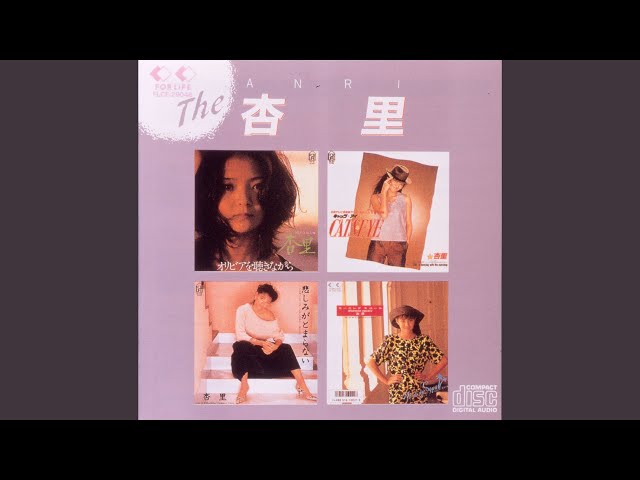
Anri, a city pop songstress who was active from the late Showa era to the early Heisei era.
Centered on the theme of heartbreak, this work is her 14th single, released in November 1983.
The contrast between the bright, quintessentially ’80s piano melody and the sorrowful lyrics is striking.
The painful turn of events—having a lover taken by a friend—is conveyed through Anri’s clear, translucent voice.
It was a major hit, ranking within the top 10 on the Oricon Singles Chart and appearing on TBS’s “The Best Ten” for nine consecutive weeks.
It’s a recommended track for when you want to heal the pain of heartbreak or sink into a wistful mood.
Surely more than anyone else in the worldNagayama Miho

Released in 1992, this duet by Miho Nakayama and WANDS gained attention as the theme song for the Fuji TV drama “Dareka ga Kanojo o Aishiteru” (“Someone Loves Her”).
Their sweet yet heartrending vocals leave a strong impression, and the love story—beginning with imagery that evokes the end of summer—strikes a chord.
Its message of a fateful reunion and the resolve to keep dreaming with a passion hotter than anyone’s blends perfectly with the drama’s narrative.
The song was also a commercial success, topping the Oricon weekly singles chart and selling over one million copies within just 20 days of its release.
Even now, thanks to frequent use on television and numerous artist covers, it remains widely recognized across generations.
Highly recommended for those who want to resonate with powerful feelings for a loved one and the pure determination to pursue one’s ideals.