

[Classic Showa Kayō Hits] The captivating Showa-era pop songs beloved even by younger generations


Nowadays, thanks to the internet, vinyl records, and other avenues, Showa-era pop songs have become popular with younger generations.
Here are some classic Showa hits that are especially loved by today’s youth!
We’re highlighting timeless songs that have been sung for decades, tracks that saw revival hits, and—city pop included—songs that are gaining fresh momentum by going viral on TikTok.
Many of these tracks are danceable, but part of the charm of Showa pop is how beautifully it lets you relax and sink into the music.
Let’s focus on that unique appeal of Showa-era pop.
- [Revisited] A roundup of popular and classic Showa-era songs that are trending now [2026]
- Showa-era nostalgic songs: Popular ranking
- [Songs from the Showa Era] Introducing classic tracks that are easy to sing at karaoke.
- Revival hits driven by social media! Classic Showa-era songs popular with Gen Z
- Heart-touching, tear-jerking masterpieces from the Showa era
- Thrilling to Cool Showa-Era Tunes! Classic Songs from Female Singers and Artists of the Showa Period
- Popular Showa-era pop. Timeless hit songs.
- When you can’t decide what to sing at karaoke: Easy-to-sing classic hits from the Showa era
- Cool songs from the Showa era. Masterpieces from Showa that shine with sensuality, passion, and rugged charm.
- Showa-era classic songs that brightened the 1990s
- Showa-era songs that went viral on TikTok / revival hit songs
- Hit songs in Japan in the late 1960s
- Showa-era kayōkyoku: hit songs by male singers, classic masterpieces of Japanese popular music.
[Classic Showa Kayō Hits] Captivating Showa-era pop songs loved by younger generations (31–40)
ControlKawai Naoko

This song, distinguished by its sparkling, pop-infused synthesizer sound, vividly portrays the shifting emotions of a woman in love.
Composed by Junko Yagami with lyrics by Masao Urino, it was released in June 1984 as Naoko Kawai’s 17th single and became a hit, reaching No.
7 on the Oricon charts.
Although it was released simultaneously with the album “Summer Delicacy,” it carries the unusual distinction of not being included on that album.
The lyrics, which express the complex feelings of a woman swayed by her partner’s actions, continue to resonate with listeners struggling with love, making it a beloved song to this day.
Message of RougeMatsutoya Yumi

This is a song distinguished by its lively rhythm and refreshing melody.
The story of a woman who discovers her boyfriend’s infidelity, leaves a message written in lipstick on the bathroom mirror, and boards a train to visit his mother is bold and humorous, making it especially appealing.
While it carries a cautionary message about cheating, it also presents a positive, strong female figure—one of Yumi Matsutoya’s masterpieces.
Released in February 1975 and included on the album COBALT HOUR, the track features chorus contributions from Tatsuro Yamashita and others, resulting in a vibrant sound.
In 1989, it was chosen as the opening theme for the film Kiki’s Delivery Service, and it has continued to be loved across generations.
With its bright and cheerful tone expressing powerful feelings toward a lover, this song gently encourages women struggling with romance and is highly recommended to many listeners.
EnchantedJudi Ongu

Some people have probably heard the striking intro or chorus on TV and elsewhere.
It’s a classic that was even performed on NHK’s Kōhaku Uta Gassen, and the choreography where Judy Ong spreads her dress while singing the chorus became a huge talking point.
The exotic mood of the song is inspired by the Aegean Sea, and the word “Aegean” even appears in the chorus.
It’s different from today’s J-pop, yet it’s also a highly distinctive work within Shōwa-era kayōkyoku.
In 2011, Saori Yuki’s “Yoake no Scat” took the top spot on the iTunes chart, and riding that momentum, ballads by artists like Ouyang Fei Fei and Judy Ong began to attract renewed attention.

The Day the Seagulls FlewWatanabe Machiko
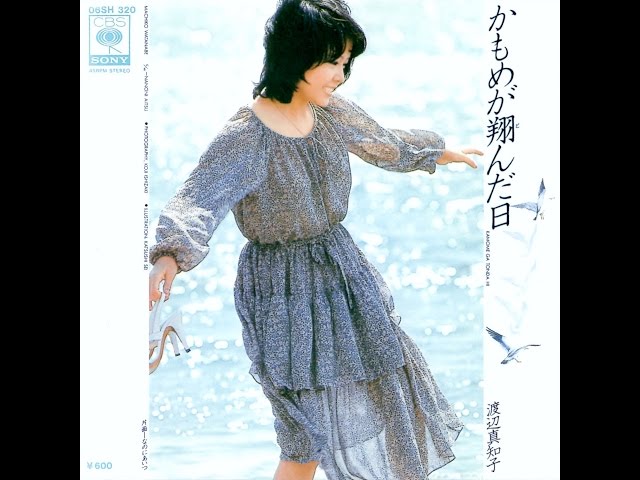
Released in 1978, this work continues to shine with undimmed brilliance as one of Machiko Watanabe’s signature songs.
Its lyrics, depicting a seaside scene, skillfully express both lingering feelings for a former lover and the courage to move forward, resonating deeply with listeners.
It became a major hit, selling 460,000 copies, and won the Best New Artist Award at the 20th Japan Record Awards.
In 2007, a special stadium version was produced for Chiba Lotte Marines games, showcasing a new charm.
It’s a song you’ll want to listen to quietly while gazing at the sea—perfect for moments when you need a bit of calm in your heart.
Until we meet againOzaki Kiyohiko

A signature song by Kiyohiko Ozaki, who took Japan by storm at the time with his overwhelming vocal prowess and strikingly deep, handsome features uncommon among Japanese artists.
It was released in 1971 as his second solo single.
With lyrics by Yuu Aku and music by Kyohei Tsutsumi—both iconic creators of the Showa era—the song is a grand kayōkyoku ballad about love and parting.
It’s not that they’ve fallen out of love; the two choose to part ways to move on to the next stage.
Though bittersweet, they face forward and walk toward hope—lyrics that resonate across generations.

I LOVE YOUOzaki Yutaka

Singer-songwriter Yutaka Ozaki, celebrated for his charismatic appeal and songs with direct, powerful messages, continues to influence many musicians even after his passing.
His signature 11th single, “I LOVE YOU,” drew fresh attention in recent years when his son, Hiroya Ozaki, also a singer-songwriter, performed it.
Its sentimental lyrics and melody, woven with a husky vocal tone, move people across generations.
It’s an immortal classic, beloved as a go-to song for karaoke as well.

If I Could Play the PianoNishida Toshiyuki

Toshiyuki Nishida is a singer who continues to make a strong impact with his distinctive performances while remaining highly active as a veteran actor.
“If Only I Could Play the Piano,” originally created as an insert song for the TV drama he starred in, Ikemoto Genta 80 Kilos, became a major hit and was ultimately chosen as the show’s main theme due to its popularity.
The lyrics, which reveal the protagonist’s feelings and background, carry a poignant quality that resonates even as times change.
With its beautiful melody and piano line that touches the heart, it stands as a classic representative of Showa-era pop.
foreignerKUBOTA Saki

From an intro that exudes an exotic atmosphere, Saki Kubota’s debut single draws you in before you know it.
The lyrics, suffused with loneliness and a sense of loss, are sure to resonate with anyone who has experienced the pain of heartbreak.
Released in October 1979, the song was also featured in a Sanyo Electric commercial and sparked a huge response, reaching No.
1 on the Oricon chart in December.
It’s a track that fully showcases her talent as a singer-songwriter, perfect for times when you want to heal the wounds of a broken heart or take a hard look at yourself.
You’re 1000%1986 omega toraibu

The sparkling city pop by Omega Tribe, which was popular during Japan’s bubble era and later lost momentum, has come back into the spotlight thanks to Korean DJ/producer Night Tempo, who played this track at club events almost every time.
The high-quality groove played by a live band may actually feel fresh to the digital generation.
During the songwriting process, Carlos Toshiki, a Japanese-Brazilian who handled the vocals, pronounced the “100%” in the draft lyrics as cem in Portuguese, which sounded like “1000%.” Instead of correcting it, they decided it would be more interesting to leave it as “1000,” and that’s how the memorable chorus and title were born.
Sailor Suit and Machine GunYakushimaru Hiroko

The song that became a massive hit as the theme for a coming-of-age film was also Hiroko Yakushimaru’s debut.
Her clean, pure vocals perfectly match the lyrics depicting a girl’s growth, capturing the hearts of many listeners.
Released in November 1981, it became a major hit, selling around 1.2 million copies on the Oricon charts.
The jacket featuring visuals from the film is also memorable.
There’s even a self-cover version with a jazzy arrangement that exudes a more mature allure, offering a fresh way to appreciate the song.